PE Desk Name Plaque

My most wonderful wife has really knocked one out of the park by passing her Professional Engineering exam.  It takes years of experience, many referrals, and an all day examination.  Her year of studying really paid off.  Once you are a “Professional Engineer” you can legally put PE after your name, kind of like being a doctor.

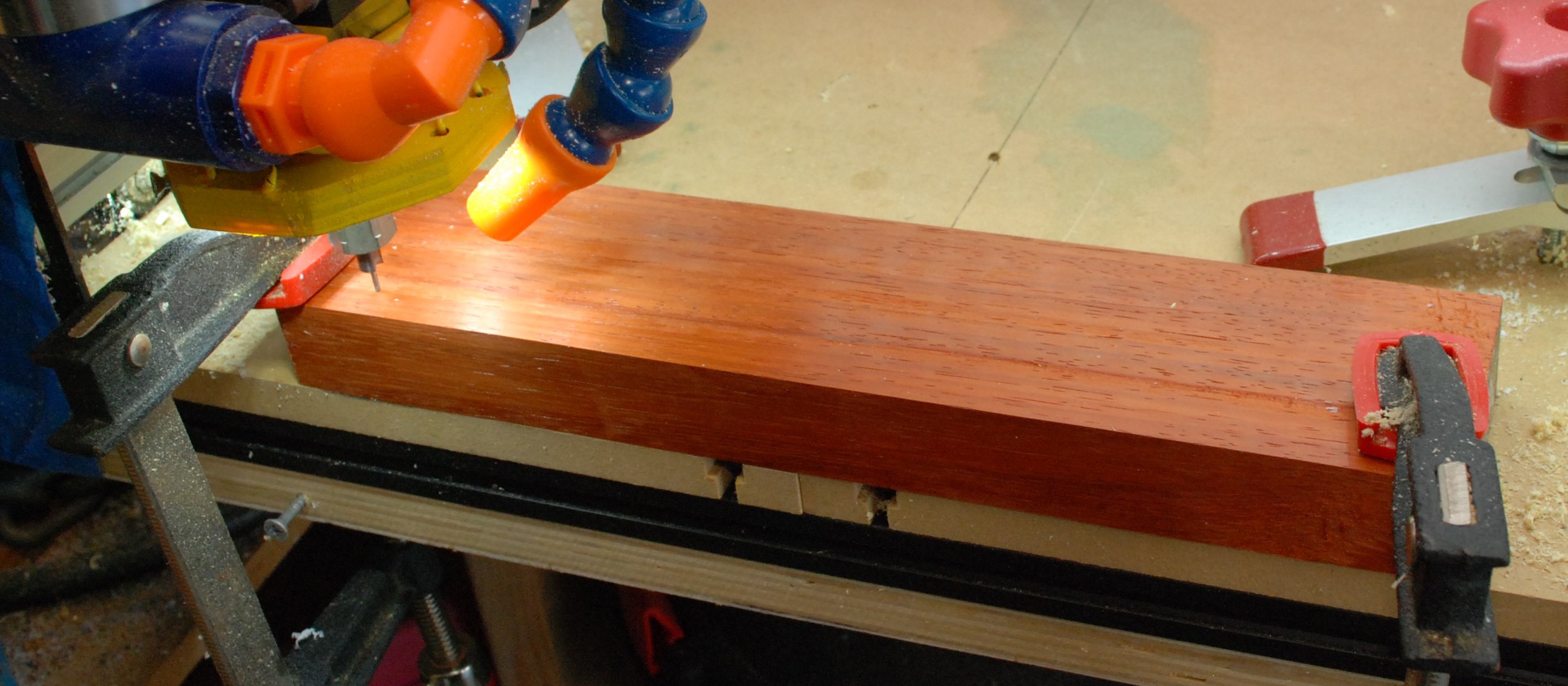
I thought she could use a new name plaque for work that showed off her accomplishment.  The day she left for the test I found a nice looking piece of padauk, her favorite wood, and got started.

DSC_0453

My first attempt was to mill in the letters and infill with black color.  My black infill resin has gone bad.  It came out kind of chunky and left a ton of voids in the infill.

DSC_0454

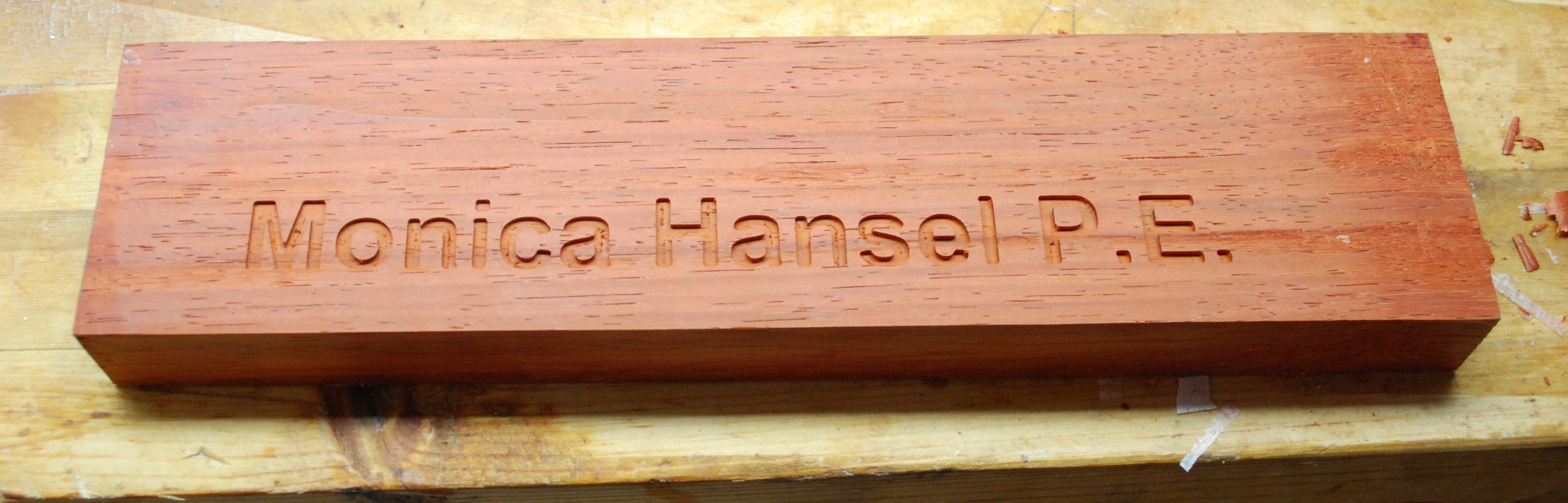
After that failure I planed off the messed up inlay, and started over.  Instead I tried painting the top surface black, then did a relief cut around the letters.  It was going ok, but the edges were left with a lot of fuzz and fraying.  Sanding the edges was ruining the black surface, so I planed all the paint off.  It looks good as all one color, so lets go with it!  Tons of sanding the mill marks off later, and I had this.

DSC_0003

It took a few weeks of working on this while she was out of the house, but luckily for me it takes the PE board months to get back about the results.  Finally this past week she got the got the good news and I was able to deliver her new desk trophy.  Congrats dear!

Bunny In The Hay Feeder

I didn’t bother with a lid for my hay feeder because I figured the bunnies couldn’t get inside, and there was no other reason to cover it.  Well, as it turns out, they can get in.

DSC_0592

That is a baaaaaad bunny.  I don’t know why sitting in the litter box and nomming the hay from the hole wasn’t good enough.  Maybe sitting in your food while eating offers some special pleasure.

New Bunny Hay Feeder

I made a quick feeder for the new buns in kind of a rush and without a lot of research.  It was a shallow 3 sided box with vertical dowels to hold the hay in across the front.  The dowel spacing was bad.  First it was hard to get their heads in because it was too narrow, then when I removed a few dowels it was too wide.  They tended to pull a ton of the hay out into their box.

DSC_0419

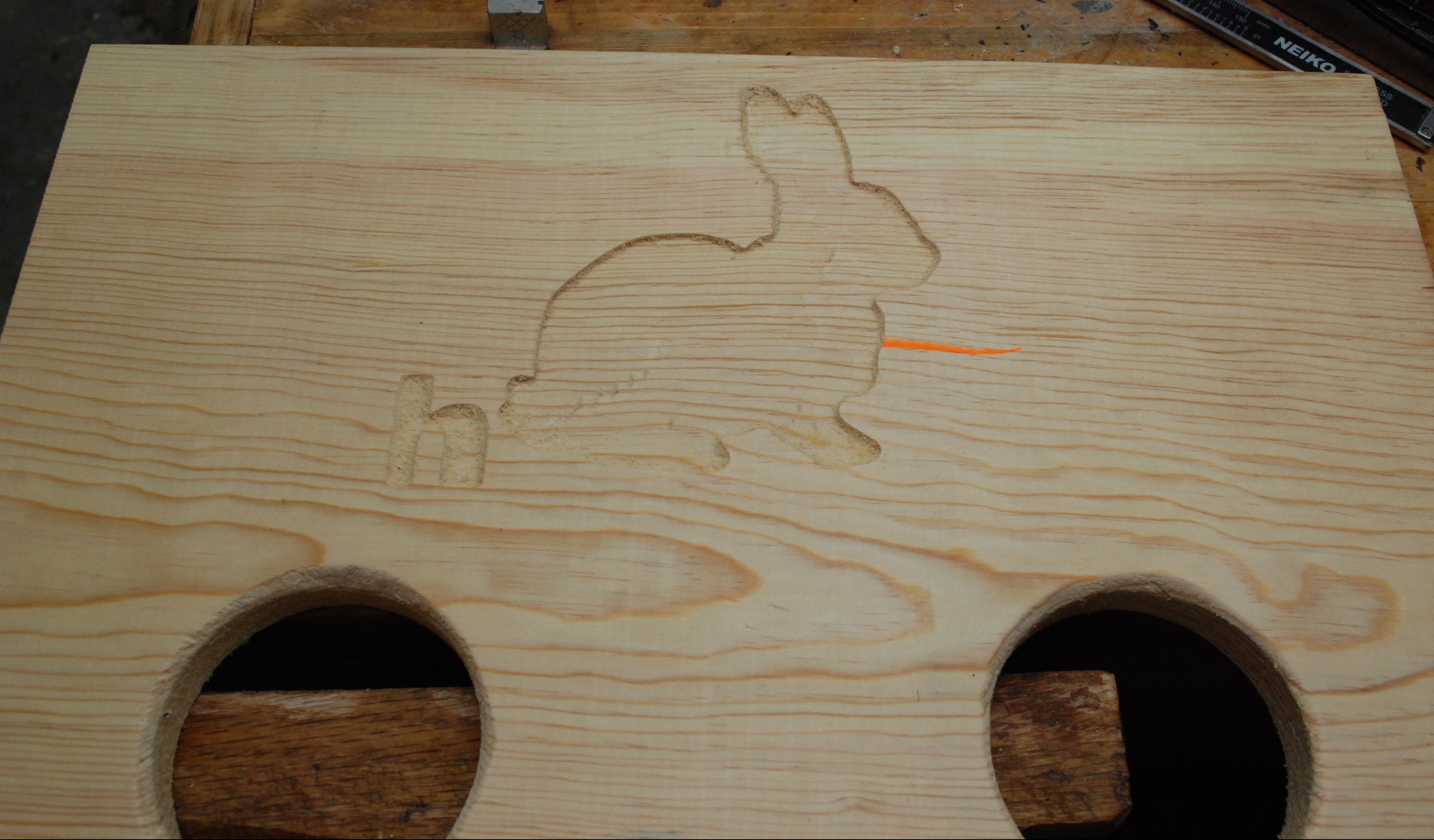
A solid box with two holes is the right way to go.  I used some 1×12 pine to give a nice tall body.  I wanted to engrave a bunny silhouette and the words “Chow Time” on the front.  Unfortunately I didn’t center the piece well and my CNC hit a hard limit.  It got to the “h” and I knew the rest would be ruined.  So skip the words and make the bunny bigger instead.  Had it gone well I would have taken the time to do some color inlay.  oh well, next hay box.

DSC_0492

I assembled the front with sides and a back to make a box with no top or bottom.  Instead of a flat bottom I used a plane to put a rough angle on the two edges of a board.  Once installed at an angle it made the bottom ramp towards the two feed holes.

DSC_0493

This picture shows the ramped bottom better.

DSC_0494

I installed it to the bunny fence set at a good height for their litter box.  There was going to be a lid, but I decided against it.  No reason really, just dump hay in when needed!  UPDATE: As it turns out, they can get inside.  A lid might not be a bad idea.

DSC_0495

This box has a ton of capacity, and because of the smaller openings than my previous attempt they tend to pull a lot less into their litter box.  This means less filling and less waste.  They can often be found with their little faces stuffed in nomming on bits of hay.

DSC_0504

Ham Shack Hutch

My father in law dropped a hint about his birthday/christmas present the last time he was over.  It was in the form of a sticky note drawing of a hutch to complete his new ham shack.  My wife is losing her old room, and he is gaining a shack.  He wanted something simple with light wood that would hold a bit of equipment.  Thankfully my years of having bought ikea furniture came in handy.

It was going to be over 30 inches wide, just under 2 feet tall, and 16 inches deep.  Fitting it inside a car for the long ride to their house would be trick.  Instead of gluing I decided to employ dados and have everything screw together.  Chase style flat pack!

DSC_0428

I took 8″ wide poplar boards and face joined them to make the 16″ depth I was looking for.  Saw benching is so much more peaceful and fun than using a noisy miter saw.

DSC_0429

Once jointed together I used the router to make a 1/4″ dado in the uprights for the middle shelf, and one along the edges of the top shelf.  That one probably wasn’t absolutely needed, but I felt it would help with assembly alignment.

DSC_0445

This was my first poplar project and I like the look of it, but boy is this stuff soft.  Planing without tearout was tricky and any misuse of a tool left gouges and dents in the wood.

I decided to try my new bottle of tung oil out and was not disappointed.  Tung oil is such great stuff.  Finishing was a breeze with everything disassembled and my new screw wax made putting it all together quick and easy.  When they stopped through on their way back home the car was full enough to make carrying an assembled hutch impossible.  No problem, it comes apart.  They could have fit 10 of the flat pack ones in!

DIY Screw Wax

Screw wax is a miracle of woodworking.  The original woodscrews were probably medieval or earlier.  There is debate on when they were first used.  I don’t know the correct time, but I bet they were universally hated until someone discovered screw lube.

With or without a pilot hole, by power tool or hand, waxing a screw makes it go in so much smoother and easier.  No stripped phillips slots, no broken off heads, and less arm ache if doing it by hand.  I picked up a little tin of screw wax a few years back, and it has become my best friend for doing anything finer than 2×4 construction.  I love the stuff so much, I wanted to create my own.  After all, what is having a backyard full of bees good for if not making your own beeswax products?!

DSC_0473

My mustache wax experiments told me I wanted a few parts wax to a single part of something with a lower melting point.  Beeswax alone is just too hard to be really useful, so I chose petroleum jelly.  I had 32g of wax in this little puck.  I wanted to start with a 5:1 ratio, but my scale had issues measuring the jelly weight.  Not sure why, but I guessed at somewhere between 5 and 10 grams.

A soda can made an excellent disposable double boiler.  Once melted and consistent I let the contents set.  I wanted to test the wax before pouring it into a bunch of small containers.  I broke out some commercially bought wax, my attempt at screw wax, and straight beeswax.  A finger nail impression, while not exactly a rockwell hardness test, showed my version to be similar to the store bought stuff.  Beeswax barely leaves an impression with your nail.  Screws seem to pick it up just like the commercial stuff too.

DSC_0476

DSC_0477

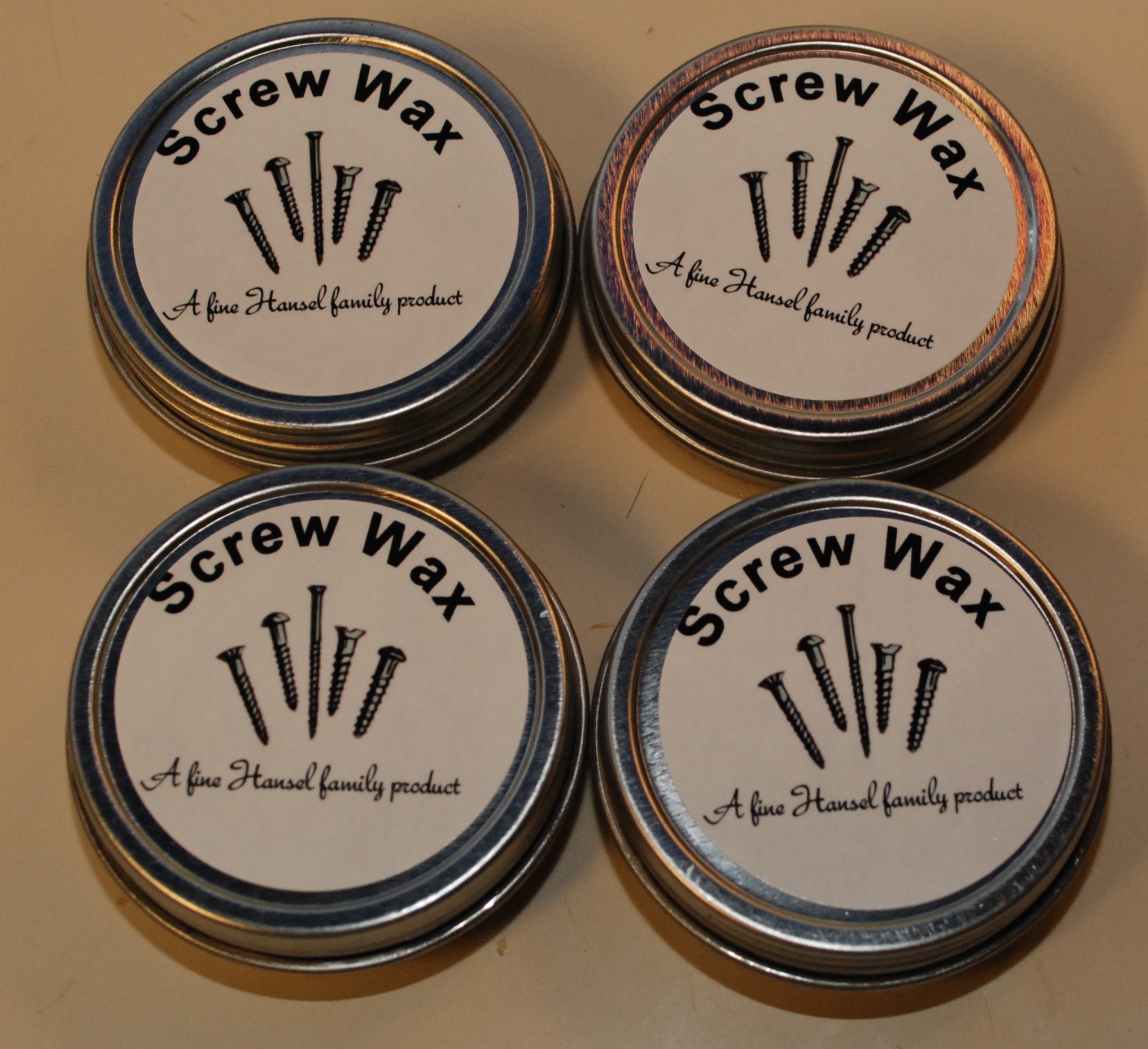
Satisfied with the results I remelted the puck and poured it into small 2oz metal tins with nice screw tops.  I ended up having to do a second batch to get 4 tins full.  Between my dad, my father-in-law, and myself, I needed at least 3.  Two tins for me probably represents a 10 year supply.  Who knows though, with labels that snazzy, I might find myself reaching for it even more.

DSC_0478

DSC_0479


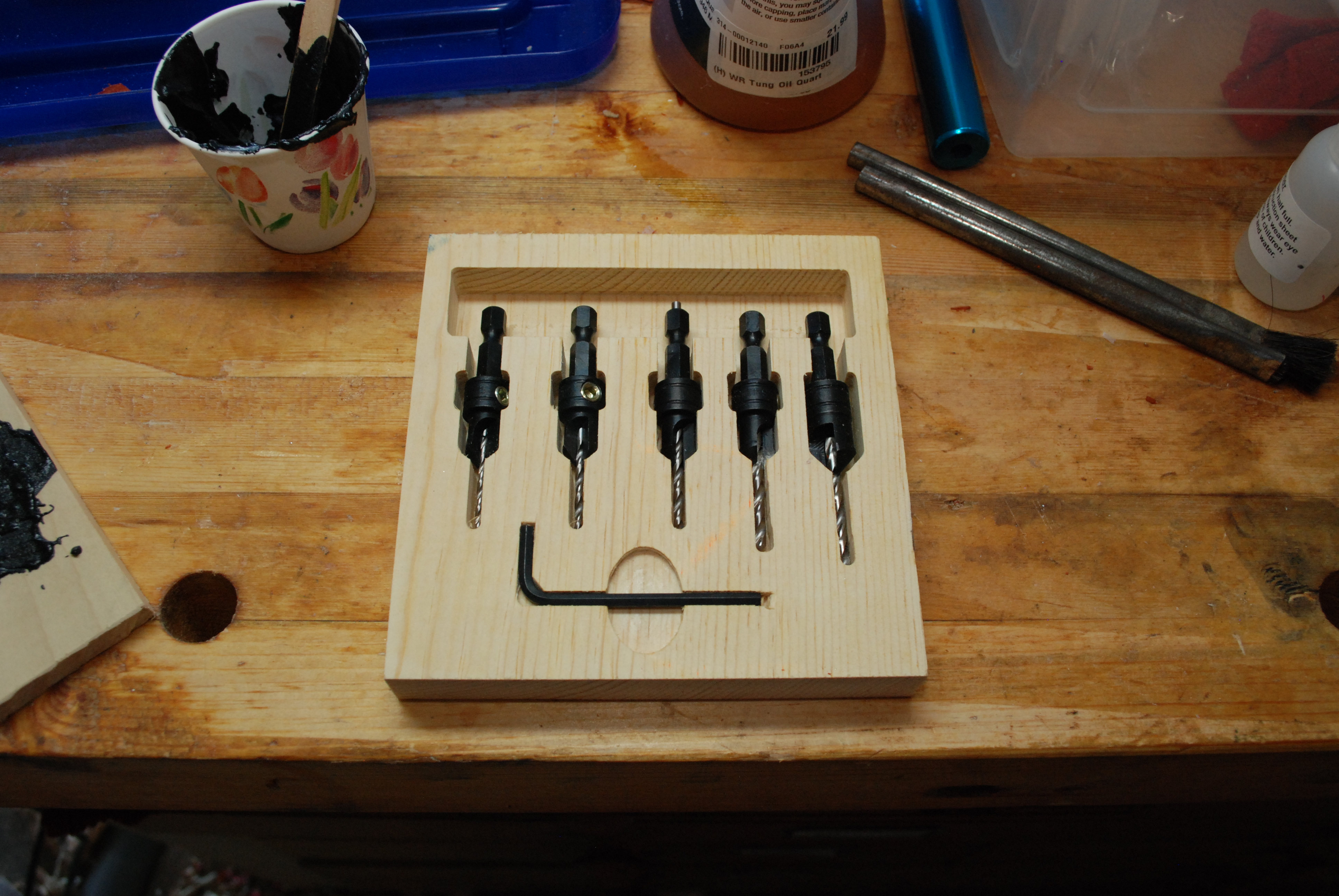
Countersink Bit Set

Countersink bits are supremely useful.  Screws that are run flush look nicer, they are easier to install with the pilot hole, and are much less likely to split wood.  The set is from woodcraft and came in a plastic package.  It wasn’t useful for long term storage, and the simpler older set I had kind of rattles around in a drawer somewhere.  I wanted a better fate for this set, so I got to making a nice box for myself.

DSC_0455

I started with a piece of pine in my mill.  I milled everything in the bit area to the same depth that would accommodate the thick ring with the set screw.  In retrospect I would mill multiple depths so the chuck posts don’t rattle around as much.  Nothing is going to fall out with the lid on, but it would have been nicer and rattled less.

I was thinking about milling some numbering in but It would have required a lot of cam work and careful milling to individually make each number.  Instead I used my punch set to put in corresponding numbers.  A fine black sharpie really makes them pop.  I did the sharpie before I spray lacquered the wood.  The marker bled a bit on the soft pine, doing it the other way around next time would be better.

Next I milled a label into the lid and used some acrylic infill to make it really pop.

Everything got a coating of spray lacquer as a protectant.  A simple set of brass hinges made it an official lid, and some magnets keep it closed.  In retrospect, having magnets below each bit would have made this a really snappy cool set.  I guess its not too late!


Bonus Coaster

A co-worker I know is getting a tesla soon, so I figured he needed a nice coaster to go with it.  I was milling the day away, so why not?!  Also I am hoping this will get me a ride or two to lunch.

DSC_0457


Hurricane Boxes

Living in the land of sunshine can have its downsides.  One is the summers here.  It is still super hot here, though I think we are done with the 90+ degree days for the year.  The other issue is hurricanes.  I had a loose setup of batteries on an ups to provide 12V power for charging phones and whatnot.  It was kind of a mess and the batteries were pretty well shot.  Our most recent hurricane scare pushed me into action.

I wanted something more compact and organized with greater capability than my first setup had.  I am making two boxes to use as general sturdy hurricane supply storage.  A third box will house a deep cycle battery and have some tricks up its sleeve.  Everything is made out of either 1/2 or 3/4 inch plywood.  These all got assembled and painted at the same time I was building my bee cabinet.

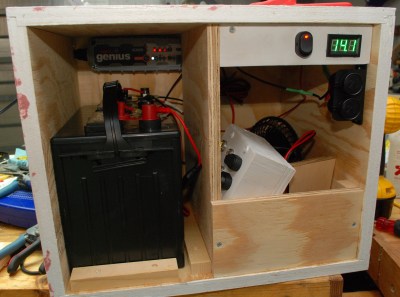
Once the painting was complete I started assembling the battery box.  First I used cleats to kind of clamp in the battery a bit.  It can still move vertically, but I don’t ever plan on flipping the box over.  The charger goes in the back, with its cord coming out the side of the box.  A divider keeps most things away from the battery and allows for some storage space.  Next came a terminal block screwed to the roof, and a switchable panel voltage meter.  This will let me monitor the voltage during charging and operation.  Next came some 12V car power sockets so I can plug in all my accessories when I need them.  Finally I stuck some black plastic HDPE over the terminal block to keep anything from accidentally shorting.

Once I had that all wired up and tested out I put in a front divider to make the lower right area a storage bin of sorts.  It holds a 12V fan, inverter, USB phone charger, and a special LED light box.
DSC_0347

Speaking of light box, here it is.  I found some bright LED car lights that run directly from 12V.  They got installed in a custom box with switches and a 12V car plug.  Now I can plug these in and use either 2 or 4 lights to help light up a room during a power outage.

With all the innards assembled I put hinged doors on all the boxes and some beefy folding handles.  The battery box got a locking mechanism to keep the doors closed.  The battery box is really heavy.  To help with hauling around the house I screwed it to a small fold up hand truck.  This means that just about anyone can move it around the house without causing a hernia.

The two storage boxes are about 14 per side on the inside.  The size worked out pretty well.  One holds a pile of expandable 5 gallon water containers.  I figure instead of trying to buy water ahead of each storm or season, I can just bottle it myself right before a storm hits.

The other box carries a wide variety of odds and ends including solar cells and a charging circuit to charge the deep cycle up, candles, matches, other fire starters, soap and disposable bowls/utensils, playing cards, a weather radio, lantern, and other odds and ends worth keeping around.

Now that I have gone to all this trouble and expense to be really prepared, we probably wont have the power go out for many years.  Wouldn’t that be nice!

 

Bee Storage Cabinet

Our back porch is a hodge podge of furniture, bbq stuff, and bee equipment.  The bee equipment is starting to get in the way and makes it harder to use the porch.  In comes a bee stuff storage cabinet.  It will have enough room to store extra hive body equipment, my scale, the tool tote, our veils and the other odds and ends.

I started with a 3/4″ plywood open faced box.  The box is 4 feet tall, which made dimensioning from a 4×8 sheet of plywood easy.  The legs are there to allow for a plastic straw storage tub to sit underneath.

A morning of cutting and assembling and I was ready to paint.  I moved it out to the back porch and began to prime and paint it along with another project.  I am working on hurricane supply storage boxes that got made at the same time.  More on that at a later date.

DSC_0331

I couldn’t help the use of that wild yellow paint again.  Anything bee related gets it!  The black strap hinges, handle and bee spray logo really pop and give it some life.  I might have to come up with another spray pattern for that big untouched left side.

Everything went inside just as planned.  The straw tub (smoker fuel) fits perfectly underneath.  The bottom shelf has our feeder, an extra super, winter inner cover and bottom board, and the mite screen equipment.  The other shelves hold our protection gear and some odds and ends.  On the right side a set of decorative plant hangers holds the tool tote, and a less than decorative shelf bracket holds the hive body scale.

Everything we need is exactly where we want it and there is storage room to grow.  The total cost was probably under 50 bucks assuming you don’t count labor.  I doubt I could find anything out there for that cost that fit my needs so perfectly.

Circular Saw Guide

I do a lot of rough processing of plywood from the back of my truck into my shop. I’ll bet a lot of people do, because plywood is really heavy!  I thought this was going to be a super simple project, and it mostly was.  As always though, there has to be a hitch or two in my simple plans.

My main goal was to be able to cut off segments from the short side of a 4×8 sheet.  I started with a 5 foot section of 19/32″ plywood.  Don’t you love all the bizarre sizes at the lumber yard?  A 7 and 2 inch strip would be glue and screwed to form a guide.  You make a first cut with it, and from there on out, the fence is matched to your saw.  No more guessing, just line up the edge, clamp and go!

The clamping was the problem.  My little battery operated saw hugs close and doesn’t give room for a clamp.  I can raise the saw up to avoid the clamps, but this thing will only cut 1/4″ ply if I do that.

Try try again.  Now, using a 12″ base piece I attached my old guide as a new fence.  The sizing is right now, and it makes processing big sheet goods a breeze.

A few lessons from this for anyone looking to make their own.

  1. Having the guide be longer (mine is 5 feet) than what you are cutting helps align and guide the saw
  2. Make the guid plenty wide enough to clear the motor housing with a clamp installed.
  3. It is ok to go thin, I used 1/2″+ and this sucker is heavy!  3/8 would be just fine

Ukulele Strap Button Installation

I got a ukulele a few weeks back and have been learning to play.  One issue I have run into is with holding the instrument while playing.  The instrument is rather small and doesn’t sit well on its own.  My left hand ends up holding up and stabilizing the instrument as well as trying to hold the strings for chords.  It makes playing difficult and tiresome.

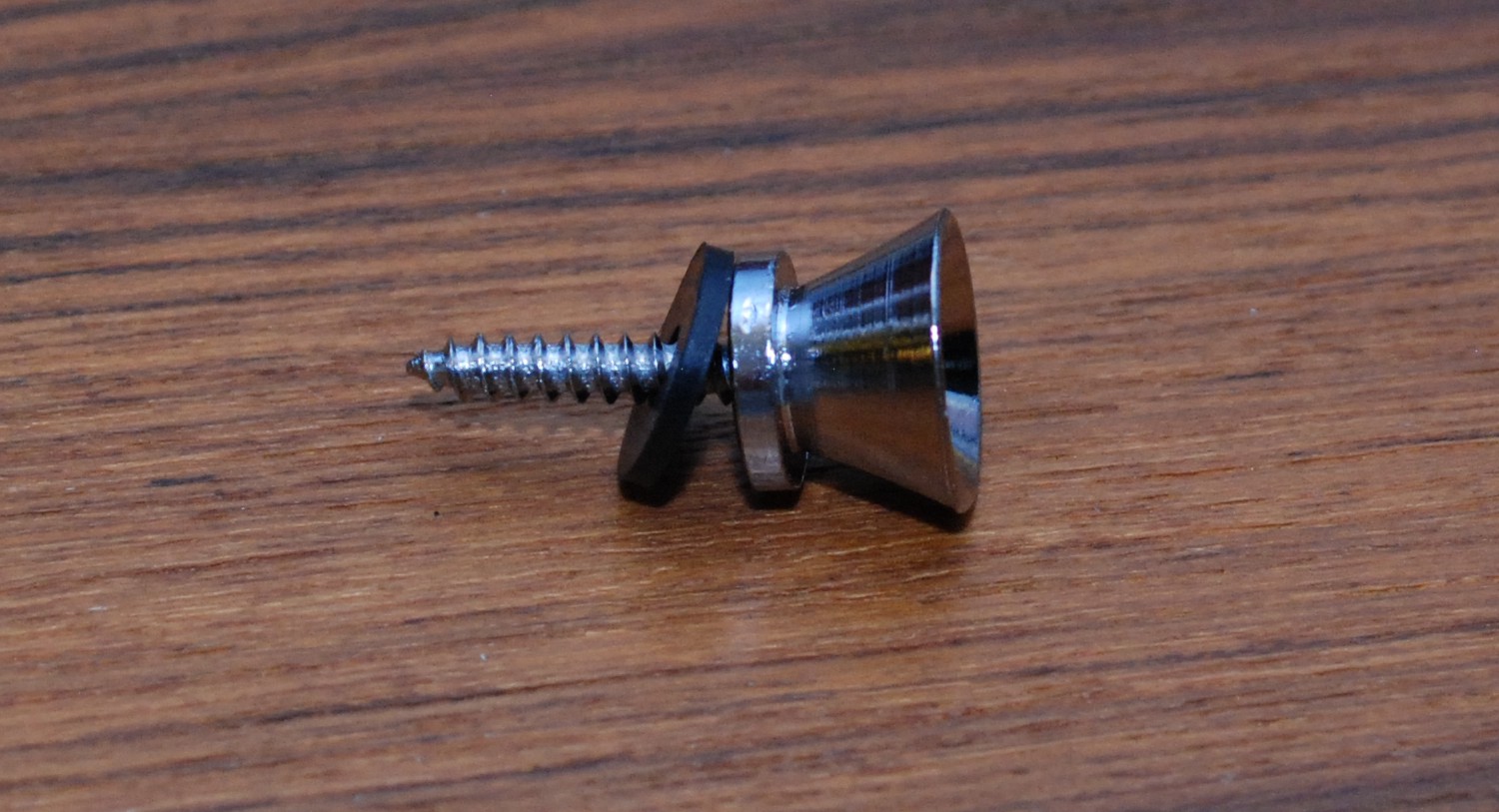
In comes a strap to keep things stable and supported.  My ukulele didn’t have a strap or even a button, so I decided to install one.  An experienced musician friend of mine warned against messing with buttons in instruments.  It seems like it should be a simple enough woodworking operation.

DSC_0316

After watching a few guides I decided to create my own video with some steps that would be natural for woodworker, but that musicians might not be as familiar with.


Written Instructions

  1. Use painters tape to mask off the area
  2. Measure twice and carefully mark your button location with a pencil
  3. Use a nail or awl to create a small indent
  4. Drill slowly with a bit just smaller than the shaft of the screw, hold both up to a light to check
  5. Use some kind of wax to help the install, very little is needed
  6. Install screw slowly by hand, you can always tighten more later

Things you will need: masking tape, pencil, awl or small nail, drill, drill bit, wax, and screwdriver.  A ruler would be helpful.

I hope this helps others be more confident about installing a strap button.  The method can be used to install a button anywhere on the instrument.  Just go slow, tape the area and be mindful.