Foam Drawer Organizer

Organization is a constant battle in my shop.  I vary my interests and tactics a lot, and I am into a lot of different types of making.  Woodworking has been pretty consistent and hand tools are probably here to stay.  I built my workbench a few years back and added a lot of drawers into the base.  It has been good, but the drawers turn into a mess.  Stuff sliding everywhere and items ending up crammed in the back.

Enter kaizen foam.  There are a few products out there like this, but I happened to find it at my woodcraft less than a week after researching it on the manufacturer’s website.  It is super expensive to ship unless you buy a lot, but woodcraft had it at a good price so I picked up two different thicknesses.

20160527_141330

This was the only drawer I had in mind.  It has some delicate measurement devices in it, and they get banged around and lost often.  After doing this drawer though, I got inspired.

20160527_160424

Gorgeous!  Can I just say that I love marking gauges?  At first I really wanted their product that had the white core and black outside.  Now, I think that is a mistake.  My cut jobs were kind of poor in places, but it looks fine because everything is the same color.  A white core would show any mistakes.  Seriously, go with all black.  Or white if they have it, I bet this will show sawdust like crazy in a few months.

20160527_160350

The foam is in layers.  You cut to a depth and tear out enough to make a pocket for your tool.  Tearing layers wasn’t bad, but sometimes making consistent levels was difficult.  The foam is tough enough to stand up to abuse, but easy to cut.  It is kind of cathartic to trace everything out and slowly cut the shapes.  I will not be using this in all my tool boxes, but will probably pick up a few more sheets the next time I have the chance.

Storage Bed Frame Phase 1

Storage is a premium in our house and rarely used bedroom items like blankets and extra pillows take up a lot of space.  I looked around for ideas and instead of trying to build a better chest of drawers than we currently have, I went for a new bed frame with storage.  I couldn’t find many good examples of bed frames that keep the boxsprings and provide a decent storage solution.  So I designed my own.

The frame is going to be in two halves that are joined by a narrow bit of plywood to tie the two together.  This makes each half narrower and lighter, and get it the right size for drawers.

Most of the body parts are made of plywood that will get covered in maple face framing.  I used pocket holes to aid in assembly and came back afterwards with screws from the other side to help with strength.  Each base has 3 cavities of the same size.  The ones closest to your head will have a false drawer front because our night stands sit too close for them to be useful.

The drawers are going to be big and heavy, so instead of messing with metal drawer slides I am just going to have them slide on the floor.  Each drawer cavity got some clean pine along the edges to help horizontally guide the eventual drawers.  Everything is recessed 6″ to prevent me from banging my foot on the corners like I always do with our metal bed frame.

DSC_0164

The left and right half with drawers all needed face framing.  I hand planed all the surfaces, and went with waterlox varnish (a thinned tung oil) for the finish based on my lessons at the tampa woodworking show.  I am pretty sure I applied it too heavy, but I really like the results.

I did the same for two long sets of rail to go across the upper portion of the drawer area.  It isn’t a traditional way to do face framing, but it was much easier to do and will still look good.  Everything got strapped down with pocket hole screws.

DSC_0209

With all the face work done I could finally assemble the whole lot.  Pocket holes around the edges will hold on the lip that keeps the box springs from falling off.  I screwed up a cut and had to do the center spanner in two pieces instead of one.  A few alignment instructions later and it was ready to install in the bedroom.

DSC_0163

The installation went pretty well and after a few weeks of sleeping on the frame we are really happy.  The height is good, the frame is sturdy and no banged toes!

20160524_184303

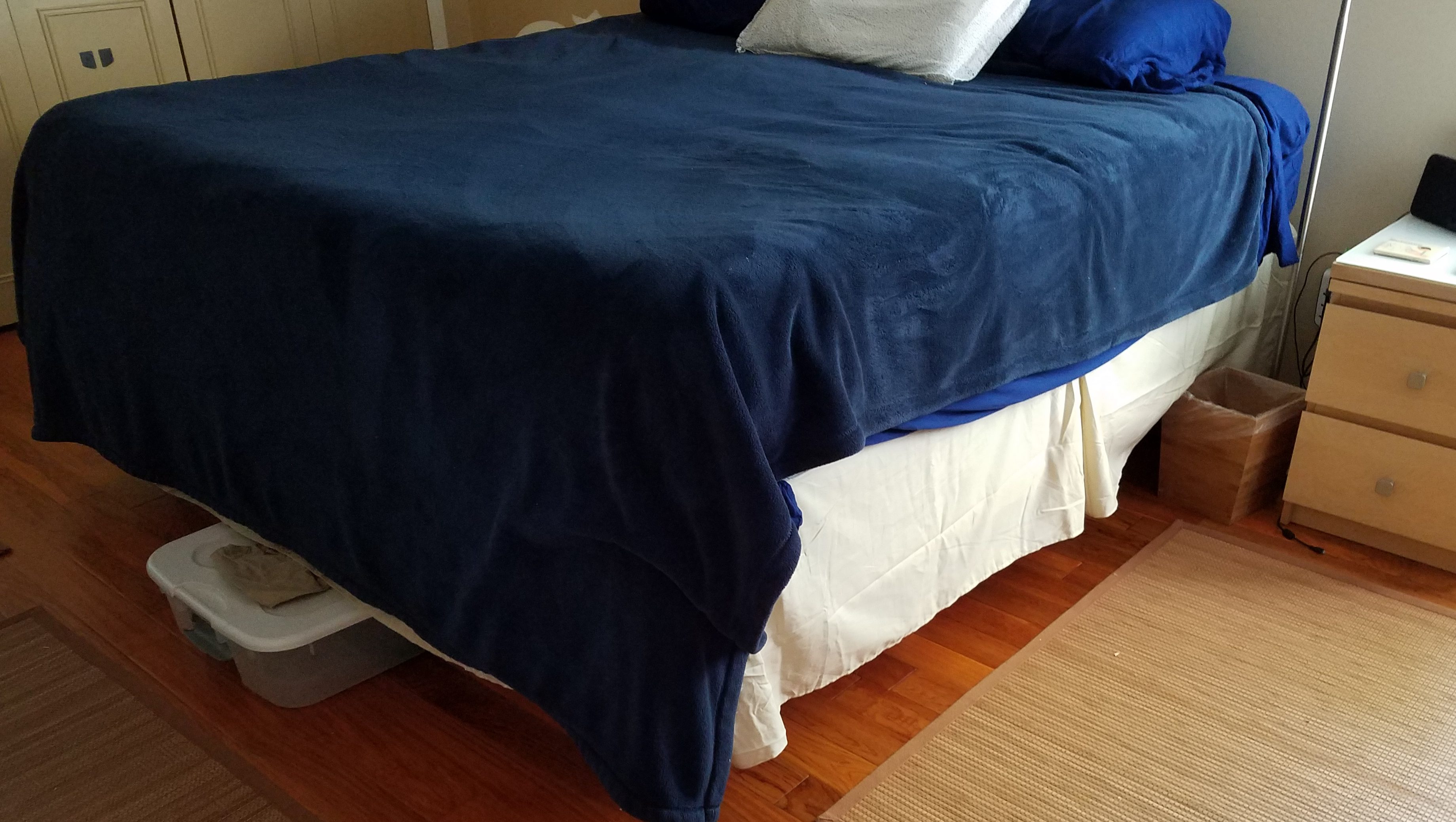
Currently I am using a few pieces of pine as the boarder to keep the box springs in place.  I need one across the head, because the boxsprings have slid up since we installed them.  The bedskirt ended up covering most everything.  I was going to be more decorative with the box spring trim, but now will probably keep it simple.  Phase 1 complete, phase 2 will be the trim and a piece to cover up the bottom face, and phase 3 will be the drawers.

20160524_184325

Adirondack Add-Ons

I was a bad woodworker and bought a set of adirondack chairs.  Yeah I know shameful.  In my defense they were really cheap and reasonably comfortable.  They are going to sit on the porch with the buns and they are just going to chew it half to death anyways.  I felt we needed a few accessories to go with the zazzy new chairs.  First, a cup holder!

Being that they are wooden chairs I can screw or glue anything I want to them!  I took a 3 inch hole saw and made a cup sized hole biased slightly to the one side of a board.  I used my largest forstner bit to make a depression for the cup to sit in.  Unfortunately even my narrow based pub glasses were too big, so I ditched that part.  A bit of sawing and sanding later and I had a notch for my coffee mug handles to fit into.

I made two sets and attached them to the end of the arm rest on each chair.  A spare block added more distance between the top retainer ring, and the base.  I did some shaping with saws, spokeshaves and sanders to get something a little curvy after the fact.  Not exactly gorgeous work, but it does a great job of holding your drink!


Side table

The arms on an adirondack are supposed to be mega wide for holding spare items like drinks and plates.  I got the drinks covered, but a side table would be helpful.  I had some spare pine lying around so I put it to good use.

Speaking of good use, I made use of my dividers and compass.  The dividers helped center up the upright board quickly, then the compass made some pleasing curves for the band saw.  The top sections turned out great, but the feet are a little awkward.  I still have a lot to learn about curves and proportions.

I assembled everything with screws because it was quick and this is going to see a lot of abuse on the porch from rabbits and spilled food.  Not exactly fine furniture.

Though not fine furniture, it looks really good considering it is about 15 dollars of pine, and a single evening of work.  It will hold our plates and various other outdoor items for years to come.  That is assuming the buns don’t chew it down first.

wp-1463785412002.jpg


Mother’s Day Gift #2

I had another gift in mind using the family wood.  I couldn’t leave my mother-in-law out.  She is an avid reader, so I stuck with the book theme and made a set of bookmarks.  This is the thinnest resawing I have done, and I was planning to sand down even further.  We are getting into thin veneer territory here.  A fun project with a little skill building thrown in.  Cue up that gorgeous family walnut!

DSC_0210I planed the right side flat to have a good surface to start with, then used a marking gauge to mark off a plank of about 1/8″.  I might try my hand at doing thinner next time, but this was pretty thin for me.

DSC_0211

I cut two just in case, but as it turns out each one was wide enough to make two bookmarks.  I left one quite long, and kept a full thickness of the top inch or so.  The rest of that one got thinned dramatically.  The intention is that the thicker portion will add strength, and keep a portion of it proud of the book when shut.

The shorter one was thinned across its entire length till it was pretty flexible.  To keep it from splitting It found a small piece of purpleheart and glued it on with the grain running perpendicular to the walnut grain.  A lot of shaping at the sanders gave it a nice look and feel.  The purpleheart piece will also keep the bookmark from slipping down inside the book.

Once sanded smooth both pieces got a few layers of spray lacquer.  The shorter one should be good for novels and other small paperbacks while the big one should be great for larger hardcovers.

DSC_0238


Mother’s Day Gift

There are some pieces of walnut that have been in my family since my mom was a small child.  They were used to hold things down and as ballast in a sailboat.  Some sections are incredibly solid, while others are somewhat worm eaten.  I needed a good mother’s day gift and got inspiration from what I call, the family wood.

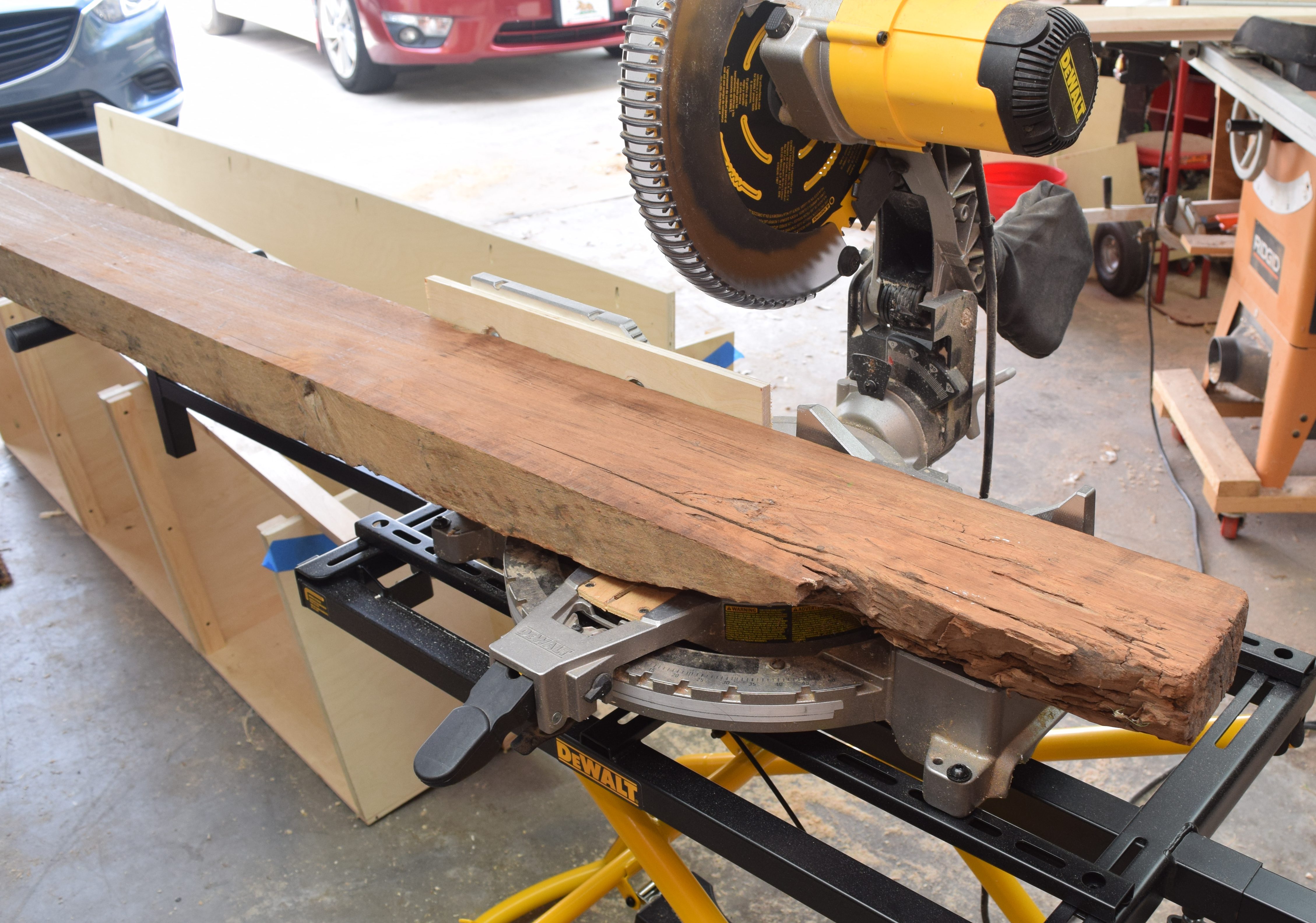
The pieces are 2-3 inches thick and 6-8 inches wide.  Quite a heft to deal with on the miter saw.

DSC_0196

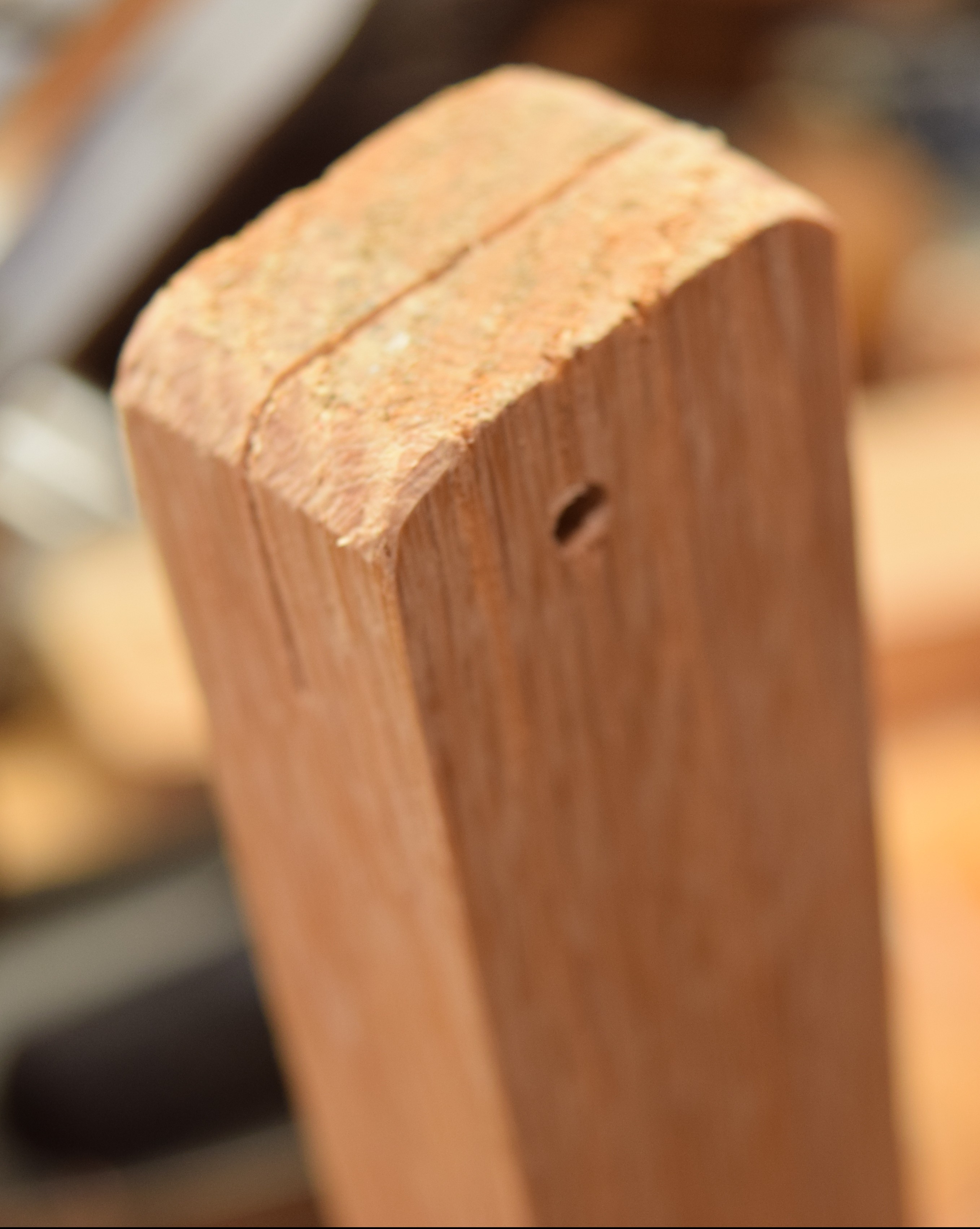
I chopped off that nice rotted wormy section at the top for this project and a few others I have in mind.  I think with a bit of cleanup this could be a perfect book end for all of mom’s fancy book creations.

DSC_0198

It probably isn’t heavy enough on its own to hold the books up.  I considered drilling it out to add shot and a grippy bottom.  Instead I cut a small relief in the bottom to allow a metal tongue to protrude.  The weight of a few books on this tongue should resist movement.  The metal is a bit of 20ish gauge sheet steel.  A good hit with a center punch depressed the area enough so that a countersink screw wouldn’t protrude.  Two part epoxy was probably overkill, but it will keep it from rattling.

I pulled off the really loose chunks, brushed everything down, and planed the 3 vertical sides that weren’t wormy.

DSC_0203

No project is complete without a little message to remember it by.

DSC_0205

I may have gotten carried away with getting it finished and off to her early.  I did a number of coats of spray lacquer and never took a photo of the finished product.  Luckily for me, mom is a great photographer, and sent me some really pictures of it in use with her homemade books.  Happy Mother’s Day!

IMG_0230

IMG_0227


Frame Saw – Giant Hack Saw

Paul Sellers has a really great video on making your own frame saw from a band saw blade or blades available specifically for frame saws.  It is a wonderful project that can be done with a minimal amount of tools and material.

DSC_0154

I started with a metal bandsaw blade and a few pieces of scrap oak I had around.  Typical hack saw blades are only 12″ long.  This one is going to be 18″.  The extra length should translate to a much faster more comfortable cut.  I will also have a lot more fine control on blade tension vs a normal hack saw.

DSC_0143

DSC_0144

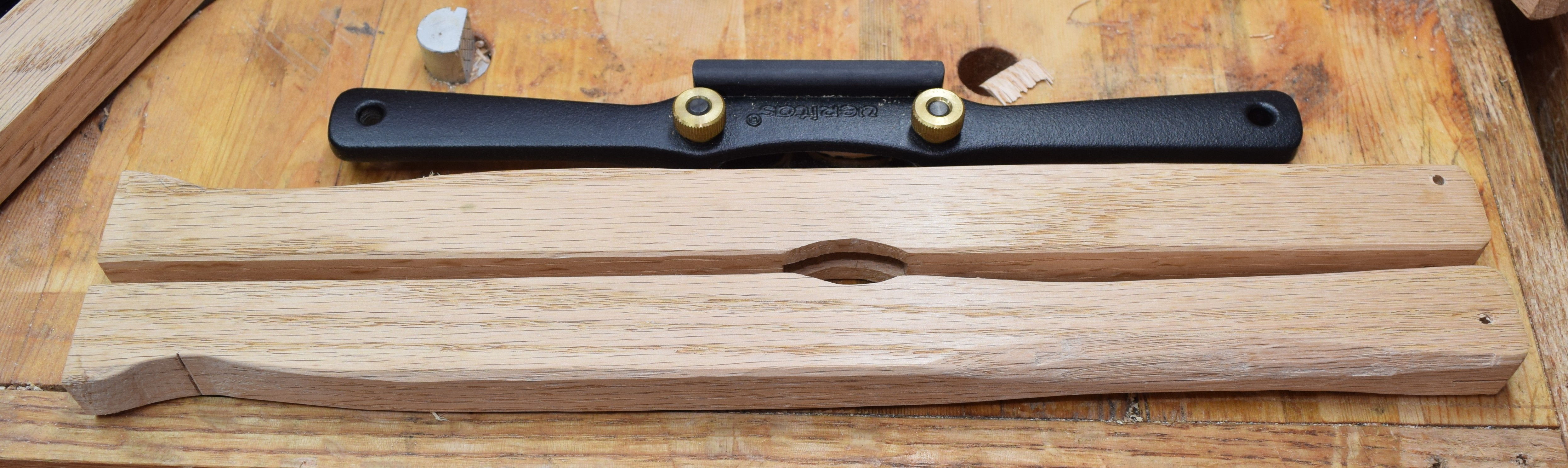
The shorter pieces will make an upright and the long piece will act as a pivot bar in the center.  The uprights got a small set of mortises with a rounded relief to let the pivot bar do its pivoting!  The bar got a matching tenon on each end with a rounded section.  I did the round with a few saw cuts to get it close, then finished with a rasp.

When I got those fitting reasonably well I moved on to the bottom.  A saw cut will let the band saw blade in, and a hole set 3/4 of the way over will accept a nail to hold the blade in place.

DSC_0149

To hold the string I cut a small notch down, then used a chisel to sculpt both sides into that saw cut.  Once roughed in I pulled out the ole spokeshave and went to town.  What a fun tool to use.  It can be hard to see in the picture, but I did a lot of subtle shaping on the handle side.  Being able to hold it, then shape, then hold again is a fast way to make a part like this fit you really well in a short amount of time.

DSC_0151

DSC_0152

When everything was rounded I assembled, tensioned the bow by twisting the strings with another small scrap of oak, and tried it out on a bar of steel I had around.  Very nice!  The saw is light and well balanced, and the 18 inches of length meant I could really get into the cut without having to hold back.

DSC_0153

Next time I will work harder on making the rounds at the mortise/tenon joint more consistent, but otherwise I am very happy with this.  With testing done, I disassembled it, coated everything with BLO, and reassembled when dry.  The first picture of this post shows the saw with finished and in a low tension storage state.

Stop Loss Bag Jig

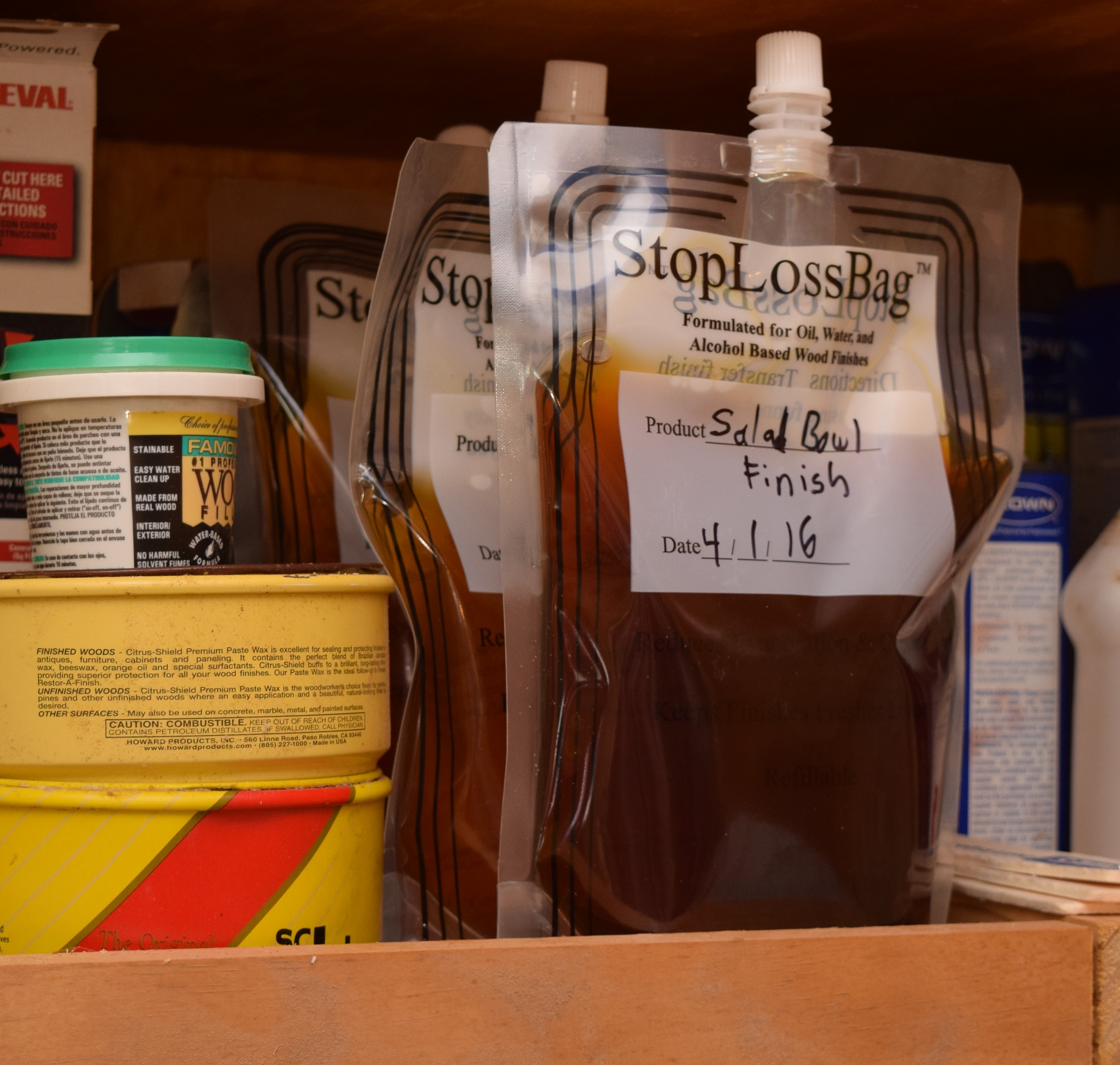
I never intended to do any reviews when I made this blog, but I have picked up a few things recently that I feel warrant some ranting and raving.  This is only half of that.  I have been moving away from new finishes like polyurethane, and towards older finishes like tung oil and shellac.  The problem is some of them spoil easily if not stored properly.  That is where stop loss bags come in.  You can fill them up and push all the air out every time you use them.

Filling is a bit of a problem though, they don’t stand up on their own when empty, and are pretty floppy even once filled.  Buying the bags gets you free plans for a funnel and turkey baster stand.  To fill, you push this tubing thing on your bag and a funnel and sit in the stand.

The filling is fine, but I am honestly going to use this thing a few times a year at best.  I hate having a thing around that rarely gets used and takes up space.  Instead I took a small funnel and screwed the holding tab into a board.

I clamped the board in my front vise and adjusted the height until the bag was at a good level.  This worked out really well.  Any board will do, and you can throw it back on the scrap pile when done.  Don’t bother with the jig, do this.

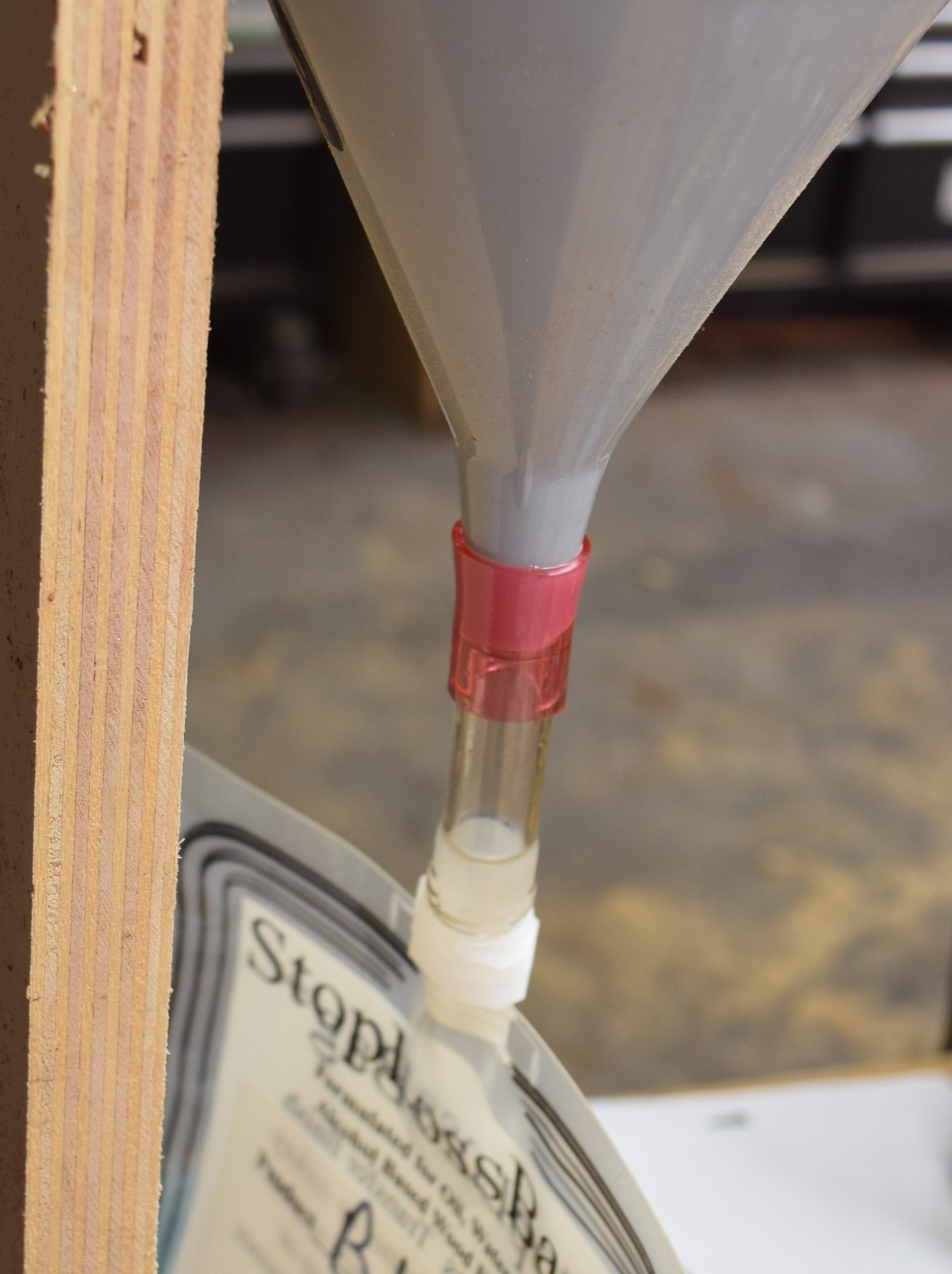
Off we were to the races until the bag started to slip off.  It turns out the clear tube should go over the bag, and the red part should go over the funnel.  Oops!  The picture below is the proper setup.

DSC_0131

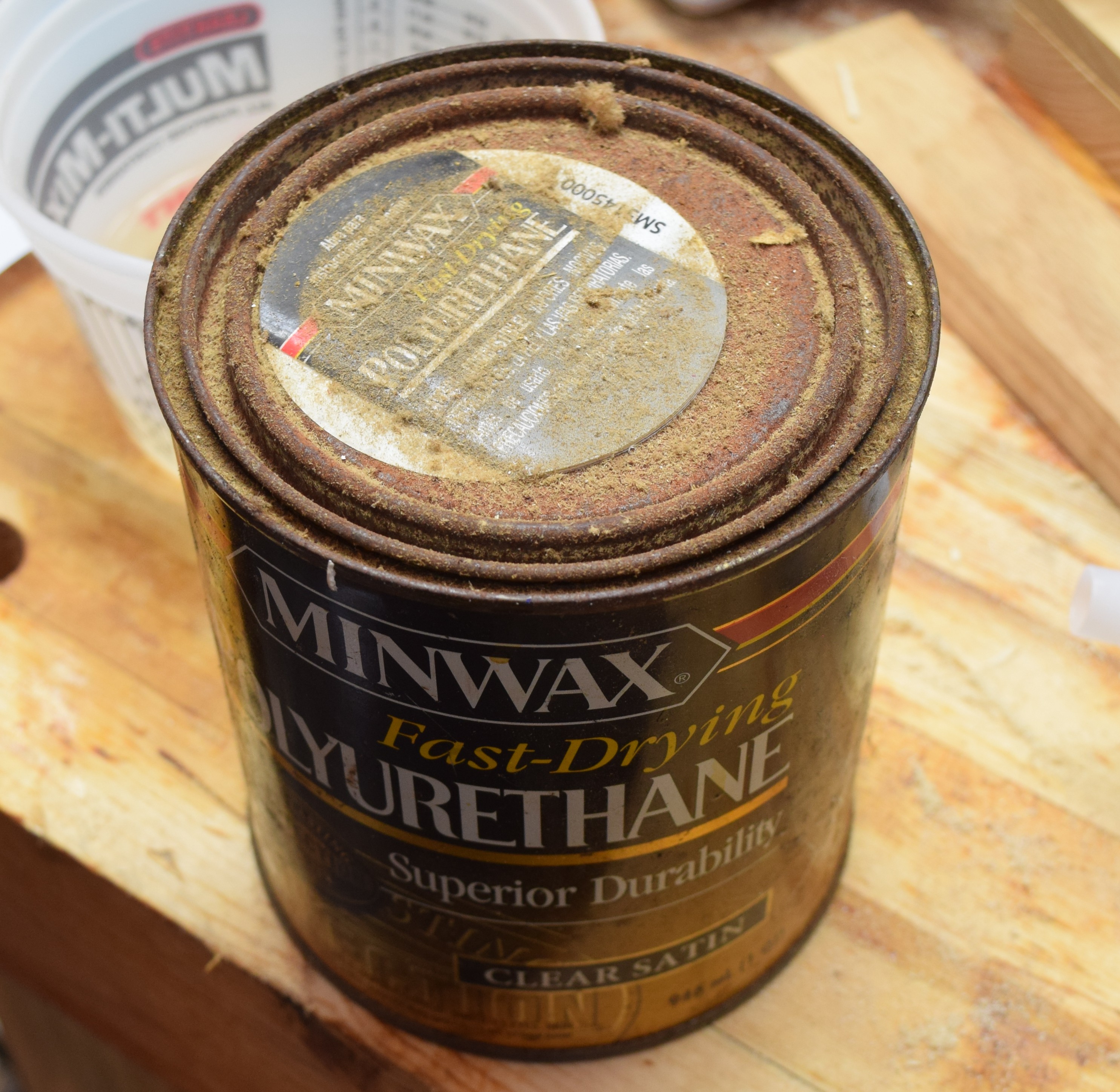
Getting the air out involves an awkward squeeze and screw on of the top.  It does stand up reasonably well once past about half full, and pouring has been easy.  I went into my boiled linseed oil bag twice so far and both times I found it easy to do a controlled pour.  Time will tell if these are a keeper or not.  Over all I find them a little finicky, but worth the effort.  They help me get rid of rotten rusty cans like this one, and stack nicely in my finishing cabinet.

DSC_0132

DSC_0133

Conclusion:

Filling is a bit finicky, but very doable with help of a single board.  Long term storage remains to be seen, but he principle seems sound.  Labeling is easy.  Pouring is a big bonus that I hadn’t thought about.  I hate pouring out of cans, you always gunk up the rim.  Even the big upright tins get the finish all over the threads.  The difficulty of pouring finish back in is also kind of a feature, you shouldn’t be doing it.  I want to start using a lot more tung oil and varnish, and this should facilitate!

Giant Jenga

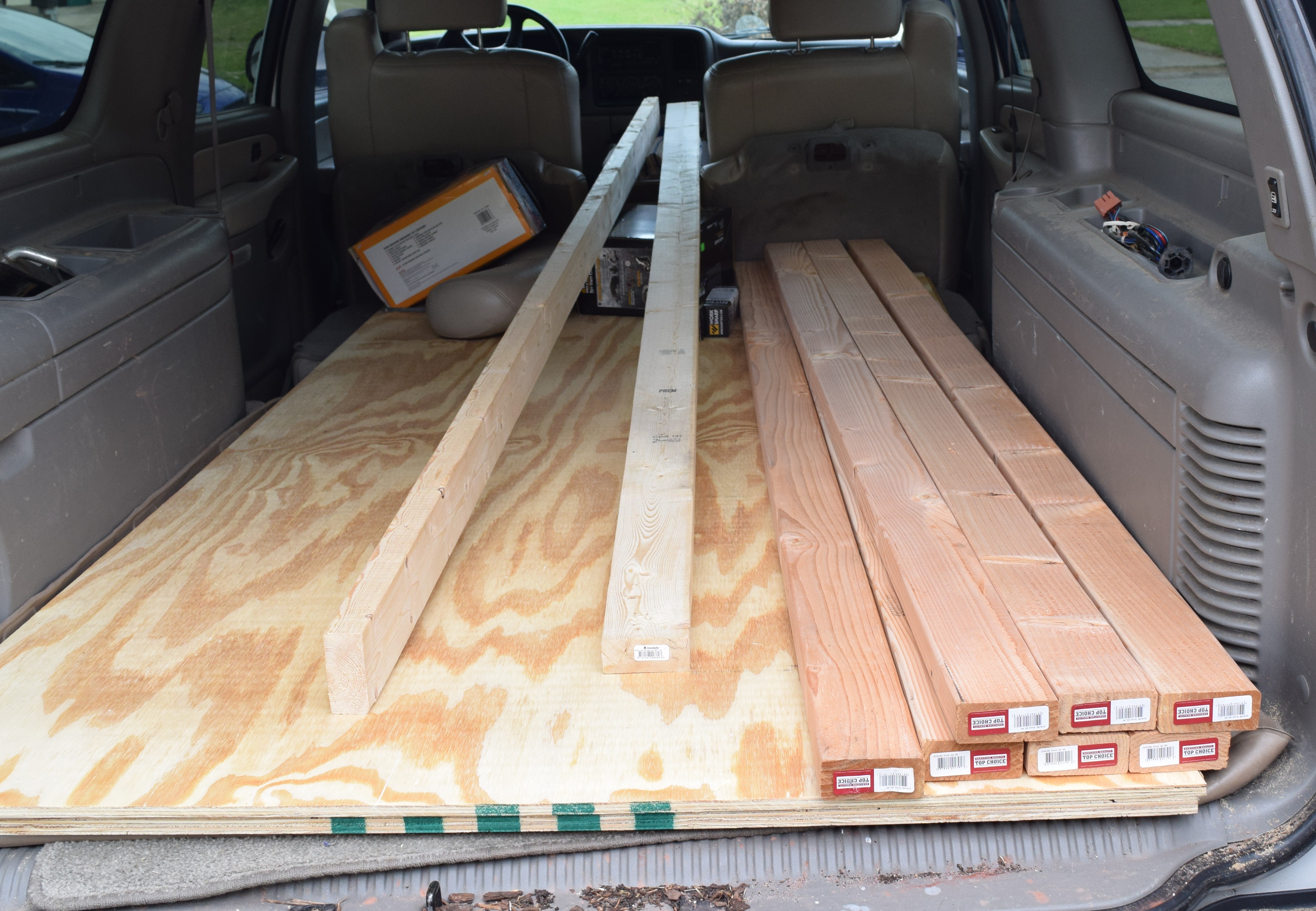
A few weeks ago a friend of mine asked for help making a giant jenga game.  It sounded like a lot of sanding, luckily I could make him do that part!  Step 1, acquire a lot of 2x4s and plywood to make a box.

DSC_0090

Now, cut a minimum of 72 10.5″ sections.  We cut a few extra 2x4s so we could be choosy and kick out ones with bad knots or dings.

The stack up comes out to 3 feet tall.  It is the equivalent of eight 8 foot 2x4s.  That is a lot of weight.  How about a box to move it around?  Stacking them 6 wide gives a box that is more or less square in width and height.  It should be a good dimension for picking up and transport.  We used pocket holes to tie it all together.

Once the box was assembled the moment of truth came.  Would it all fit?  I left a 1/2″ in length so the wouldn’t get bound up coming out of the box, and added an inch in width to help get fingers in for pulling them out.  It worked well, you can comfortably stack 3 wide at a time from the tower to the box.

Best of all, the box fits perfectly in the back of his hatch back.  It is heavy enough to require two people to haul across any distance, but it is a good size for one person to carry for a short bit.

DSC_0109

Dread Knot

I posted about attending the Tampa woodworking show just after I got back.  What I didn’t talk about was some of the cool people I met.  Lots of fellow hobby woodworkers attend the show and you get to talking.  One super cool dude also happened to do a bit of blogging himself.

Darryl has a really clean and well organized shop on youtube.  Take a look if you want a garage setup that will make you drool!  He even has really well done stickers to hand out.  This badboy went on my bandsaw along with a few others.  It makes me want to step up my game and do more all-video posts and maybe even get artsy and do my own logo with sticker.

wp-1459460721270.jpg

wp-1459460721243.jpg

Rule To Sector Conversion

I have been reading a set of books that are directed at teaching the old methods of design using simple tools and ratios.  How did people build so many things and design such gorgeous furniture before industrial era tools and production?  A lot of it had to do with ratios.  They noticed basic ratios and proportions of the body, and used them to create furniture that fit our proportions and was decorated with ratios that are pleasing to the eye.

Getting ratios can be tough, but one tool helps a lot.  The sector.  I will start with a sector demonstration, then go through converting a ubiquitous folding ruler into a ratio tool.

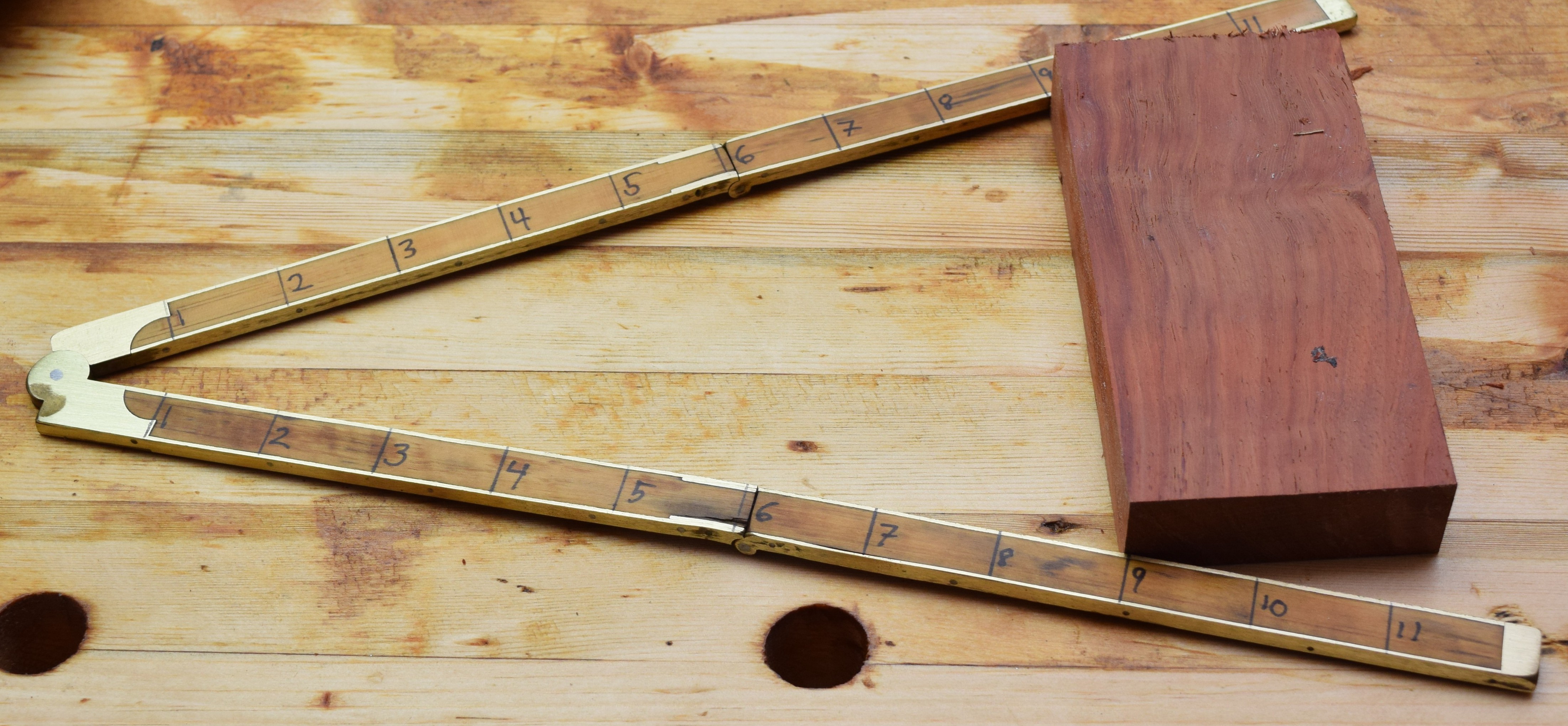
SO!  Say you have this nice block of wood, and want to divide it into 3rds for some reason.  Instead of reaching for the fine ruler and calculator, take this pivoting stick with equal divisions on it and line both edges up on the 9s.

DSC_0084

Now you take your divider, (it looks like a compass, but only has points, no pencil) and line it up with the 3 marks.  The 3 to 9 ratio is also a 1:3 ratio.  The dividers are now set at 1/3rd of the width of that piece of wood.

DSC_0085

Line up one leg of the dividers with an edge of the wood and step in twice.  You leave a little pin prick in the wood as you step over.  Put a sharp pencil or marking knife in those divots left by the divider and use a square to transfer across the piece.

DSC_0086

Bam!  Divided into 3rds in no time.  Find the center point of something in a snap, set drawer pulls up 4/7ths from the bottom of a drawer face, or divide an area up to figure out how wide a mitered framing should be.  The possibilities are endless and require almost no math skills.  Now you know how an early 18th century woodworker could divide something up with extreme precision even if their ruler had nothing finer than 1/4″ marks.


Sector Construction

You can build a sector out of any two straight pieces of wood or other material, and a tight hinge.  I opted to start with a folding rule.  There are plenty to be had on ebay for ~10 bucks, and they look really nice when cleaned up a bit.  This one started with a lot of years of use, and a brass edge that was coming undone.

DSC_0060

I sanded a mountain of nasty finish and imprinted lettering off before getting to clean bare wood.  I fixed the splayed brass edge with epoxy and put a nice set of markings down.  The divisions I used are arbitrary, but they must come from the center of the pivot point, and must be consistent across the sector.

All that hard work didn’t really matter though, because a coat of spray lacquer lifted the sharpie text and bled it everywhere.  Now my lines are blurred beyond use.

DSC_0067

Pro tip: Don't use spray lacquer over sharpie!

Rule #2 Conversion

Luckily I am addicted to buying old tools on ebay and purchased not one, but two folding rules!  While the first one sits in time out, take another rule you haven’t ruined, sand it down, put equal marks on both sides, and use BOILED LINSEED OIL to finish it.  It will look great.

I left the backside unchanged so I could have a basic ruler handy when using my sector.