When I first built our apiary I put down a few 20×20 pavers to serve as a base for the hive and working table. It worked pretty well, but mowing has been a bit of a pill. I haven’t gotten stung in a while, but it is always pretty dicy. They just don’t like it when the mower gets right in front of the hive. I can’t blame them, it is noisy and vibrates a lot.
My solution was just to roll down a bit of weed screen and extend the area out by another set of pavers. We have already inspected the hive once with the new setup, and it makes seeing the bees easier in our immediate surroundings. The first mow went really well too. Just that little bit of extra space made a big difference in their comfort level. When planning your apiary, it might do both parties some good to plan a mower buffer zone in front of the hive entrance.
I have had the bee madness for about 6 months now. Our hive is going well, the honey is flowing and the girls appear to be relatively healthy. What more could someone ask for? Well community would be nice. Why not start one!
I have no idea how many people keep bees in the area, or if they are worth talking to. Time for a social adventure! If anyone reading this happens to live in Brevard county Florida, come on down.
Lots of new things are happening with the hive, and they aren’t all good. I will start with the great news. The girls have been packing away around 10 pounds a week lately. WOW!
Look at that honey super pack on the pounds. It has been going so quickly in fact that I didn’t have any supers ready to go. Luckily I had some time to build them up properly and even do a little extra decorating.
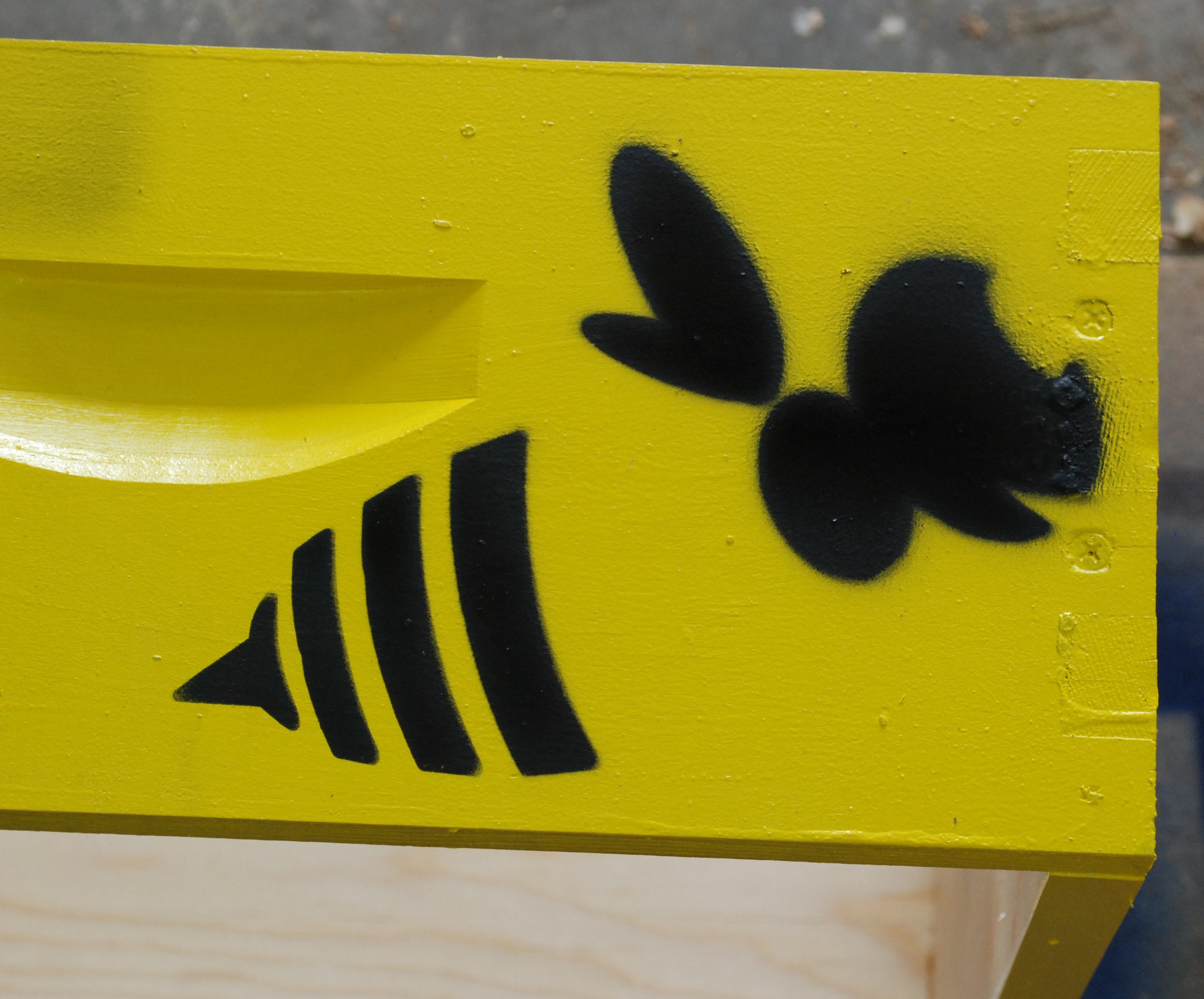
I broke out the mill and carved up a little cartoon bee spray paint stencil. I kind of want to try something different with the head next time, but for now it looks really good.
A full honey super weighs about 50 pounds. I subtract the weight of the box and empty frames, which is why mine appear to top out at 40 pounds in the above graph. The height of my hive was causing problems, so I ended up chopping down the legs a bit. It puts the heavy supers at a more comfortable lifting height. Before and after shots show what I mean.
Before
After
With the new lowrider setup, the 3rd super is now lower than the 2nd was previously. It was tons of fun out there sawing away with power tools while a bazillion bees flew around angry that their home was being disturbed. No stings while doing it, so booya!
Varroa Mites
The bad news is I put another sticky trap under the hive and came back with a pile of varroa mites. I estimated 12 per day, but it is hard when there are that many. Previously I had about 1 mite per day. One big difference was that I had the mite trap in place while we did our inspection. Between smoking, moving boxes and frames around, and taking everything off to chop down the legs, I probably knocked a lot of mites off. That is my hope at least. I will wait a day or two, then reset the trap and try again for only 24 hours. Doing it for 4-5 days at a time produces way too much debris on the trap. If the next test again shows a lot of mites, then we will probably institute powdered sugar treatments. Poor girls.
We placed a new super on the hive back about a month ago. The second super had been growing rapidly and was beginning to look full. Two weeks later they had packed another 10 pounds in the first super but had done nothing with the second. Check out the weight plot from then.
The naming might be a little confusing. I started numbering the boxes at the beginning. 1 is brood, 2 is the first super, 3 is the second super we put on. I wanted to keep them all numbered so in case I got a second hive I could track the history of each box.
See, the second super got ignored while the first one went gang busters. That was until it was full. Frames 2-9 are packed and capped. 1 and 10 are full on the side facing in, but untouched on the outside face. They had filled everything with drawn comb, and came to a complete stop. After a week or two of screwing around we decided checkerboard a little. I took frames 1 and 10 from the first super and placed them rotated in the second one.
A later check showed a little more activity upstairs. The state inspector said that sometimes spraying simple syrup on new frames will help them with acceptance. I tried that on frames 2-6 of the top super. A week later the results were in. Though they hadn’t started storing honey they were finally drawing out a ton of comb. The unsprayed frames didn’t have much going on. I don’t know what the issue was. The materials for both supers were bought at the same time. They took to the first in no time flat while the second one was chopped liver!
In conclusion, spray all the frames with a 1:1 syrup mixture before introducing them to the hive.
Our hive is happily gaining weight at a somewhat alarming pace. (Check out the bee log for details) Before too long we are going to have a pile of frames that need extracting. Honey extractors are quite expensive and take up a good bit of space. I have looked at dozens of designs online and don’t see any that I want to copy. I had a pretty good idea of what I wanted, but didn’t want to first test it when extracting. Extracting is a messy job, and I don’t want to get part way in and find out my rig doesn’t work.
A lot of people use metal or plastic trash cans for their extractor. They certainly work, but if you are only doing two frames at a time, then that seems like a lot of wasted space. A medium is about 20″ long and 6.5″ wide. The inside diameter of a 5 gallon bucket is 10.5″ at its smallest. This should leave enough room for two frames and a spinner. Lastly there is height. A bucket is about 15″ tall. This is too short to use by itself. If, however, you cut the bottom out of one and stack it on another it gets taller.
Any honey that hits the sides of the top bucket will just drip down into the next. The smaller hole in the right bucket holds the spinner shaft. I decided to go with 3/4″ PVC. It is light, cheap, and strong. I started with a cross fitting that goes down through the hole, out to two side posts, and up to a bolt that my drill can chuck up. The bolt is a 1/4-20 installed in a flat plug.
It looks good in the bucket, but I need some weight to really test it. A full medium frame should weigh no more than 5 pounds. I wanted to put bags of sand or water (5lb each) on the sides of the posts. I didn’t have any sand handy, so water it was. It didn’t go well. The bolt wasn’t perfectly centered and aligned to the shaft despite my efforts, so it wobbled even with out weight. Also the bags of water were horribly balanced which introduced really violent shaking.
Improvise Adapt Overcome
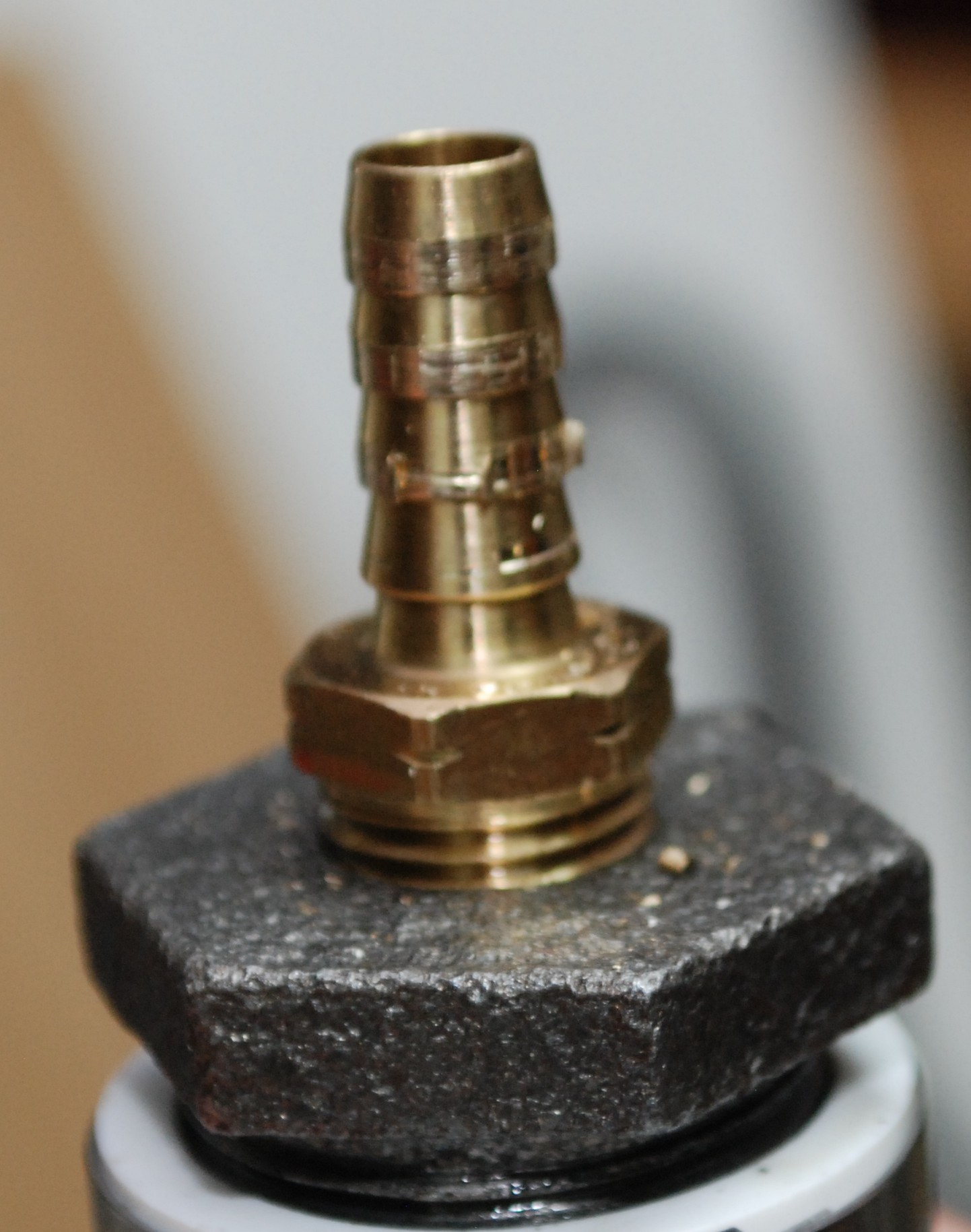
So what are the issues? First, the bolt trick was neat, but not well centered. I could try again, but wanted a different tack. Instead I will use pipe reducers to get to something small enough to chuck in my drill. It adds cost, but not much. This brass barb fits in any standard 3/8″ drill chuck. A pipe clamp helps prevent the PVC from splitting under the load.
hose barb to 1/4″ pipe, 3/4″ to 1/4″ bushing, 3/4″ pvc slip to threaded
assembled
Next I need to rethink the payload. It turns out standard barbell weights fit really nicely over 3/4″ pvc. I picked up a set of used ones and sank a screw in each pvc post to hold them in place. I made them slightly off balance to simulate a set of frames that wasn’t perfectly matched.
They are set 4″ apart and are centered vertically about where a frame would be. The spinner rig is the same height as it would need to be for full frames. Now that everything looks nicer, we have to ask, will it blend? I got out my zip tie GoPro mount and shot a tiny bit of footage.
Looks good to me. I only had two issues crop up. First, the hose barb is soft brass. The chuck teeth really dug it up and caused some shavings to come off. Next time I will tighten harder, and wrap the area with tape. That way any shavings that do come off don’t get into the honey.
Lastly, as I was taking my GoPro off its mount, the buckle clip broke. I own dozens of GoPro accessories. Most are cheap aftermarket knock offs, or something I built. But no, the first one I break is an official part! Oh well, at least the extractor looks like it will be a success.
After my disastrous attempt at trying to track the mite population in my hive I took a closer look at what I was trying to do. The bottom board is slotted, but does not have any method of sliding in a sheet or board that will keep the bees out. I have to build some kind of lid on the trap so that the bees can’t get in.
Online I see a reference to number 8 hardware cloth pretty regularly. It is a wire mesh that has 8 wires per inch, or ~1/8″ gaps. The bees can get through 1/4″ mesh. My hardware stores only sold the 1/4″ in hardware cloth, so I had to fall back to aluminum screening. It feels sturdy and will not get chewed up by insects.
I went with a similar cheap bottom board as before with a single sticky paper sheet tacked down. The lid is a simple 1×2 perimeter with the aluminum screening stapled on top. Nothing pretty, but it fits under the hive and keeps the bees out and the mites in.
I tested it out for a 5 day period under the hive, checking occasionally to make sure no bees were being harmed. It worked well. In 5 days of usage I counted 5 mites on the sheet. My current rate of 1 mite per day will help me keep tabs on what the mite population is doing. Up down or steady, I should have a decent finger in the wind.
I wouldn’t suggest placing this trap out much longer than a week. A lot of little bugs got in there, and the hive is always dropping debris. As it was, it took a magnifying glass with light to really make sure I could tell the difference between a dark spec of debris and a mite.
Lastly as a bonus of sorts, when I pulled the thing out it was covered in about a dozen small hive beetles. Horrible as it is to see them, I was able to carry them away from the hive and smash every one. I wonder if they are attracted to the pollen and other junk left behind by the bees. Could this make a good out-of-hive trap for SHB? Who knows, but I will be sure to observe the hive beetles every time I use this trap.
I have read that sticky paper is a good method of tracking the mite population in your bee hive. I bought a vented bottom board for partially this reason. Great, lets go buy some cheap insect paper, tack it down to a board and leave it under the hive for a few days.
Well crap. Bees are either attracted to this stuff, or just very exploratory. It might have a sweet smell to attract things like fruit flies. I got a lizard too, which is kind of impressive. Poor girls, I feel horrible. I need to either build a cage over it that they can’t get to or figure out how to get it under the hive in such a way that they can’t get in. I will have to inspect my bottom board closely next time I am out.
Might as well look over it carefully for mites. Do I have any amongst all these poor bees? Yep. Taking a picture through a magnifying glass is darn near impossible, but those two ovaly things are mites. The good news is that in 2 days I only count a hand full of mites on the sticky paper. So much for the sign keeping them out.
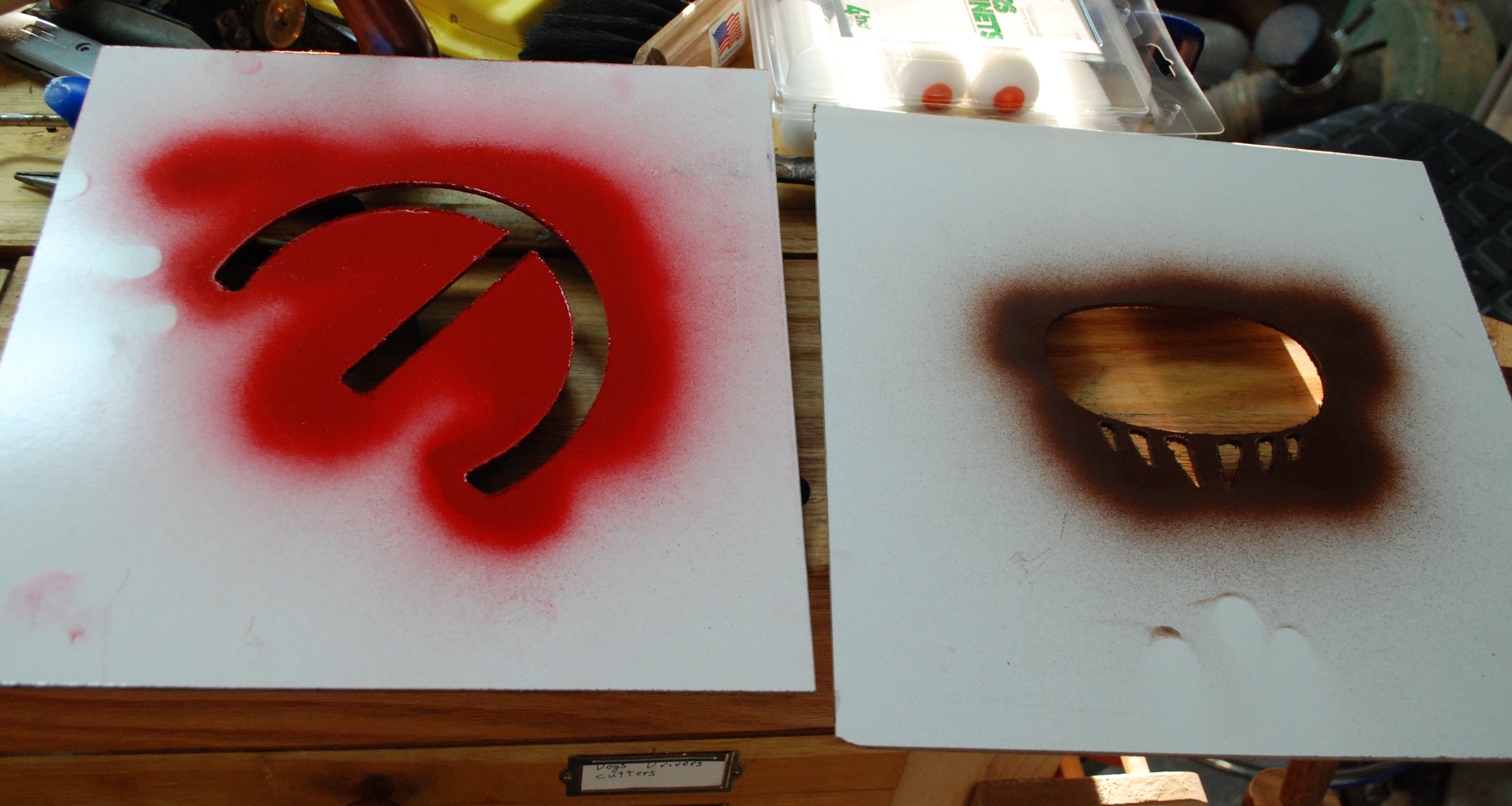
I have been trying to make spray paint stencils with my swivel cutter for a while. It isn’t going well. Not sure if there are tricks to clean cutting, or if my setup needs improvement. Probably both. Instead I decided to go a different direction and use hardboard (sometimes called masonite) to mill spray stencils instead. It is cheap, mills well, except for a bit of fuzz at the edges, and holds flat against the spray surface.
Our bees are doing well and they look really healthy. They are kicking so much butt, in fact, that the hive deserves some decorations. How about a nice “NO MITES!” sign. For anyone not familiar with mites and bees, look up varroa mites if you dare. They are horrible creatures that parasite honey bees.
I ran into a few small stencil problems. To do the NO cross out, I had to break up the spray job. You mill out the areas for the paint to go through, and there would be two floating half circles if I did that. Instead I milled most of the shape, but left some edging to hold it all together.
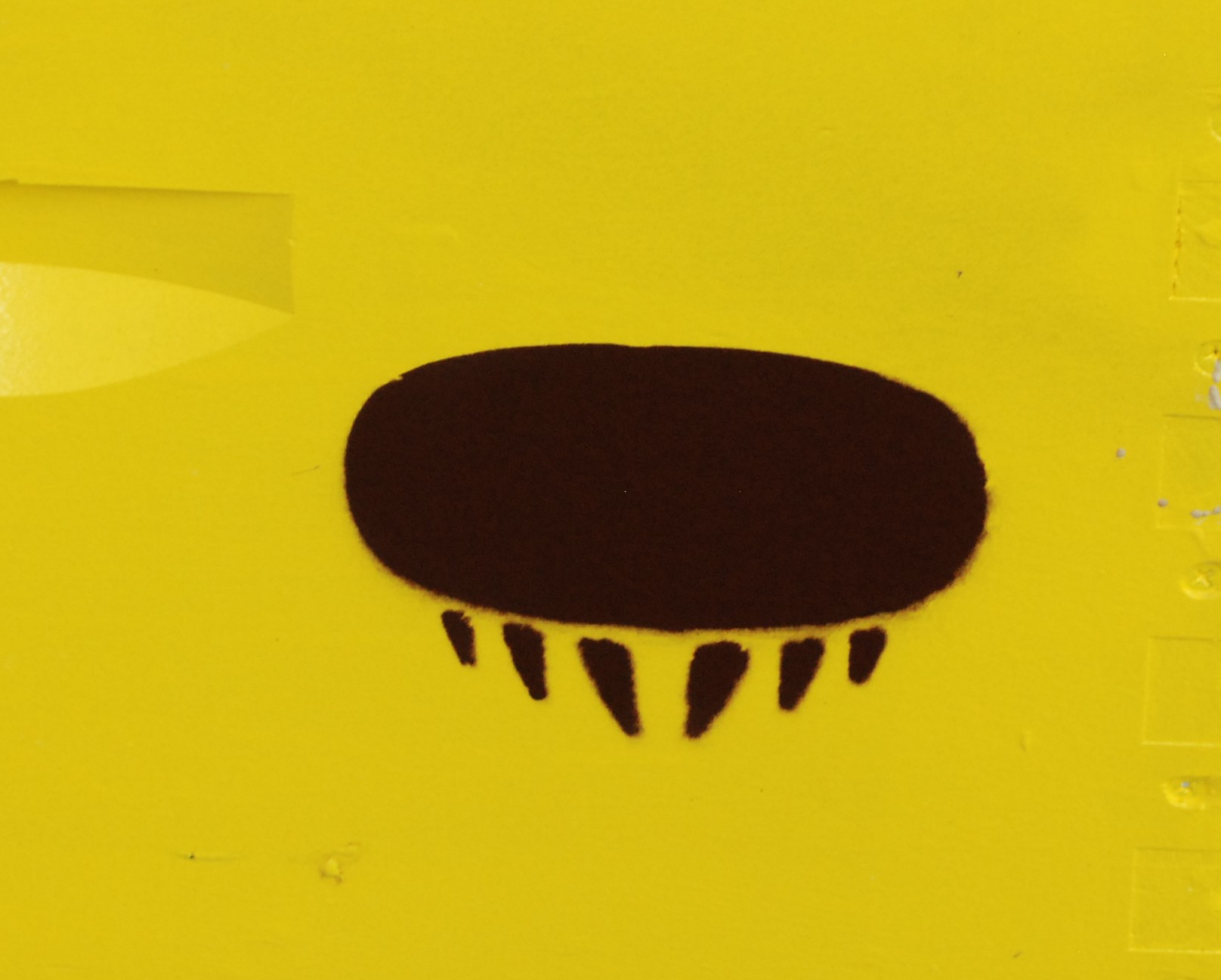
I thought this was a great solution! Spray the mite down, spray part of the circle, then just rotate, line everything up, and spray again. Apparently the cross portion isn’t symmetric. I must have eye balled it in the software. When you rotate, not everything lined up perfectly, sooooo I kind of fudged it.
When you stand back a bit, everything looks pretty good, but I need to work more on my spray technique. Lets just say I didn’t exactly do a lot of vandalism in my youth. Does that banksy guy offer classes? At least the mite turned out reasonably well.
The hive is going like gang busters! We had a weight increase of 4 pounds last week, and 5 pounds this week. They are starting to pack away a lot of capped honey in the deep, and they are filling the outside two frames. Time for a super!!!! Look at that gorgeous growing hive.
In bad news I got stung a few times. I didn’t have the smoker lit well at all, and managed to fumble getting the first frame out. Oops! From now on I need to make sure I always have the smoker going well before I crack open a hive.
For all the Florida heat and trials by sting I am still glad to have bees and look forward to seeing if they have done anything with the new super next week. I updated the bee journal to include the new super weight as well. I measured it empty so any weight reported is purely honey/bees/wax. The empty super weighs 11Lb 12oz.
I took some time out to stick my GoPro at the entrance of our hive. There was a lot of activity, and if you look carefully you can see some coming in with pollen on their back legs. Almost therapeutic to see and here them coming and going like that.









 Kilted Craft Works