Saw Renovations

I have been collecting old panel saws for a while.  Some are in decent shape and only need a sharpen, some have bad rust and hard bends in the saw plate.  In this endeavor, no saw will go untreated.  I tried to straighten when possible, but a shortening happens.  Check out these work horses of american history.

DSC_0079

They have seen better days, and the one in the middle has some serious bend to it.  Still, all indications are that the age of these saws is pre-WW2.  That was a golden era of saws where you probably can’t go wrong with anything you find.  I started by removing the handles and ran into my first serious snag.

DSC_0081

Someone had lost all the split nuts and decided to replace them with wood screws.  Based on the screws it was probably a number of decades ago.  They were screwed or pounded in, then had the tips bent over.  After a lot of messing around with pliers and cutters I eventually grabbed a hack saw and sawed the screw off between the plate and handle.

DSC_0084

Next the saw plates went into a shallow tub with Evapo-Rust.  I found that one of those under-bed storage containers was perfect.  Once again this stuff is amazing.  It works pretty well over night, but there appear to be no ill effects from leaving it longer.

After their bath they look almost black.  I tried a few different techniques and found spraying down the blade with WD-40, then scrubbing with a sanding sponge did the best.  A 220 grit 3M sandblaster sanding sponge did a fantastic job.  It holds together really well under wet conditions, even with the saw teeth raking it, it doesn’t get loaded, and it cut through the grime quickly.  Each side took less than a minute to clean.  I have never used sanding sponges, but I can see why they are popular.  This poor plate had to get cut down a bit, but I saved the cutoff for use as scratch stock and tools.

The handles were mostly in decent shape.  Lots of scratches, and small breaks from getting dropped.  The finish was stripped off with a corse sanding sponge.  Again these sanding sponges surprise me.  They do a really great job of adapting to all the handle contours.  Once smoothed and cleaned up I rubbed a coat of boiled linseed oil on each one and let it dry.  Everything went back together quickly.  The tall saw had to get a new set of hardware.  Luckily my local Ace had brass plated binding post hardware.  Not exactly authentic, but it is a huge improvement over the wood screws the last guy used.

DSC_0092

Sharpening is the next step.  I have everything I need, but my table is covered in saw rebuilding stuff.  I will keep the refurb train going until they are all done, then convert over to sharpening.  In the mean time I need to come up with a good measure for saw sharpness.  Maybe some time trials are in order.

Saw Sharpening Vise

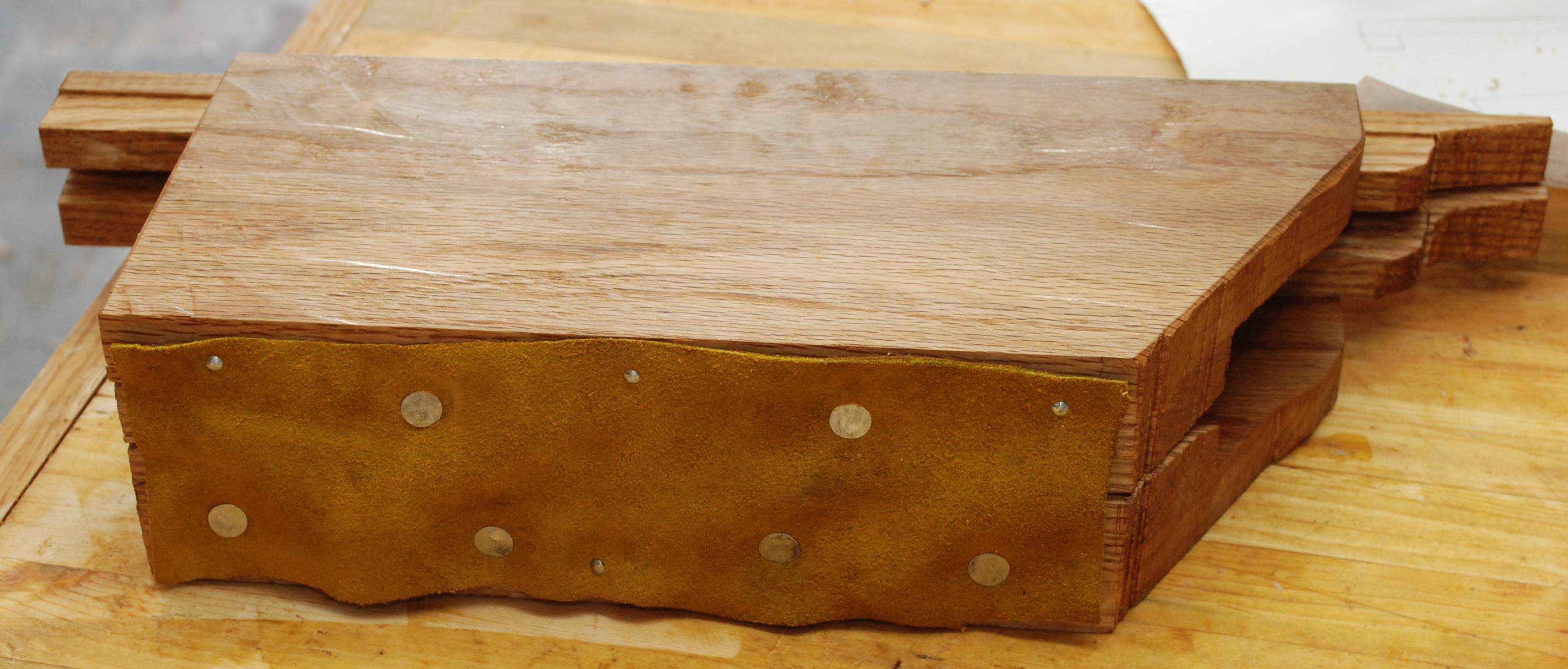
My Summer Saw Stravaganza! began with a lovely saw bench pair, and will continue with this saw vice.  It is used to clamp a saw very near its teeth during sharpening.  The design is similar to a number of others out there, but with dimensions that matched the scraps I had around.

DSC_0063

The long pieces will contact the saw.  I wanted them proud of the side plates to allow for more clearance for sharpening files, and depth for big saws.  To align them during clamping I used my rabbet plane to make a shallow alignment recess.

Once both halves were glued up I took a rough plane and did some shaping.  The bottom cleat was relieved at the top so I could get a taller saw in, and to make sure it pivots at the bottom.  The top got a lot of rounding and relief to help the files have clearance.  Lastly, the inside of the top jaws was sloped to make sure that the clamp engages at the very top, right below where the teeth will be.

DSC_0074

I love hand tools for doing stuff like this.  This is a rough jig and doesn’t require everything to look perfect.  I can grab a plane and shave a little here and a little there.  To help support saw teeth close to the handle I had to cut a number of notches out of the one side.  It was mostly setup for by biggest rip saw, but should help accommodate all my saws.

I am happy with the results.  This could operate as is, but I have seen people nail a strip of leather across the bottom to help act as a hinge.  I used really light leather, so it doesn’t help much, but it should improve alignment while clamping.  Before the leather went on I hit it with a coating of boiled linseed oil.  Up next I will take some of my saws and attempt to refurbish them.

DSC_0078

Sous Vide Steaks

My madness for cooking gadgets knows no bounds.  I saw a sous vide cooker on sale for fathers day and couldn’t help myself.  A coworker friend of mine has had one for a while and made some awesome meals in it.  His enthusiasm for this method of cooking was infectious and I had to do it.  If you are not familiar with the method, basically you bag food, ideally in a vacuum sealer, and place it in a water bath of the desired cook temperature.  You basically can’t overcook things!

I got an Anova cooker, and I will talk about it more at some later date.  For now I had to rush head first into this new world and try out steak.  Cooking steaks is one of the things sous vide is famous for.  I lined up some test subjects (coworkers) picked up a pile of steaks from the local meat market, and got to cooking.  Take a look at these gorgeous steaks.

DSC_0067

While sous vide cooks the meat and pasteurizes it to a food safe level, it doesn’t look that great.  Kind of wet, grey, and unappetizing.

DSC_0069

That is where a good searing comes in.  You want to cook in sous vide and then brown with high heat.  I got 4 steaks, and seared each with a different method.  On the grill, on the grill with steak seasoning, cast iron, and with a blow torch.

after

  • Blow Torch: I used my mapp gas plumber’s torch to sear the outside.  This was the softest because of how little time the steak saw the heat
  • Grill: Great steak.  Probably the most cooking on the outside.  The outside had some good chewiness while the inside was still good and tender.
  • Grill w/ Season: Same as above but with montreal steak seasoning sprinkled on before the sous vide.  Best flavor of all!
  • Cast Iron: I put a big cast iron skillet on the grill, and seared there.  Kind of in between the grill and torch.

All the steaks were good.  The torch was definitely the softest if that is what you are looking for.  Seasoning goes super well with the sous vide process, so that one is a winner.  Really there are no losers here.  I think we will try the cast iron next time with seasoning on it.

As a curiosity and because I have always adored time lapse, I did a time lapse shot of the steaks in the sous vide cooker.  They were in for about 1hr 45minutes.  It took me about 5 minutes to get the GoPro setup, but in that time they had already started greying quite a bit.  Amazing how fast that happens!


Bonus steak and eggs

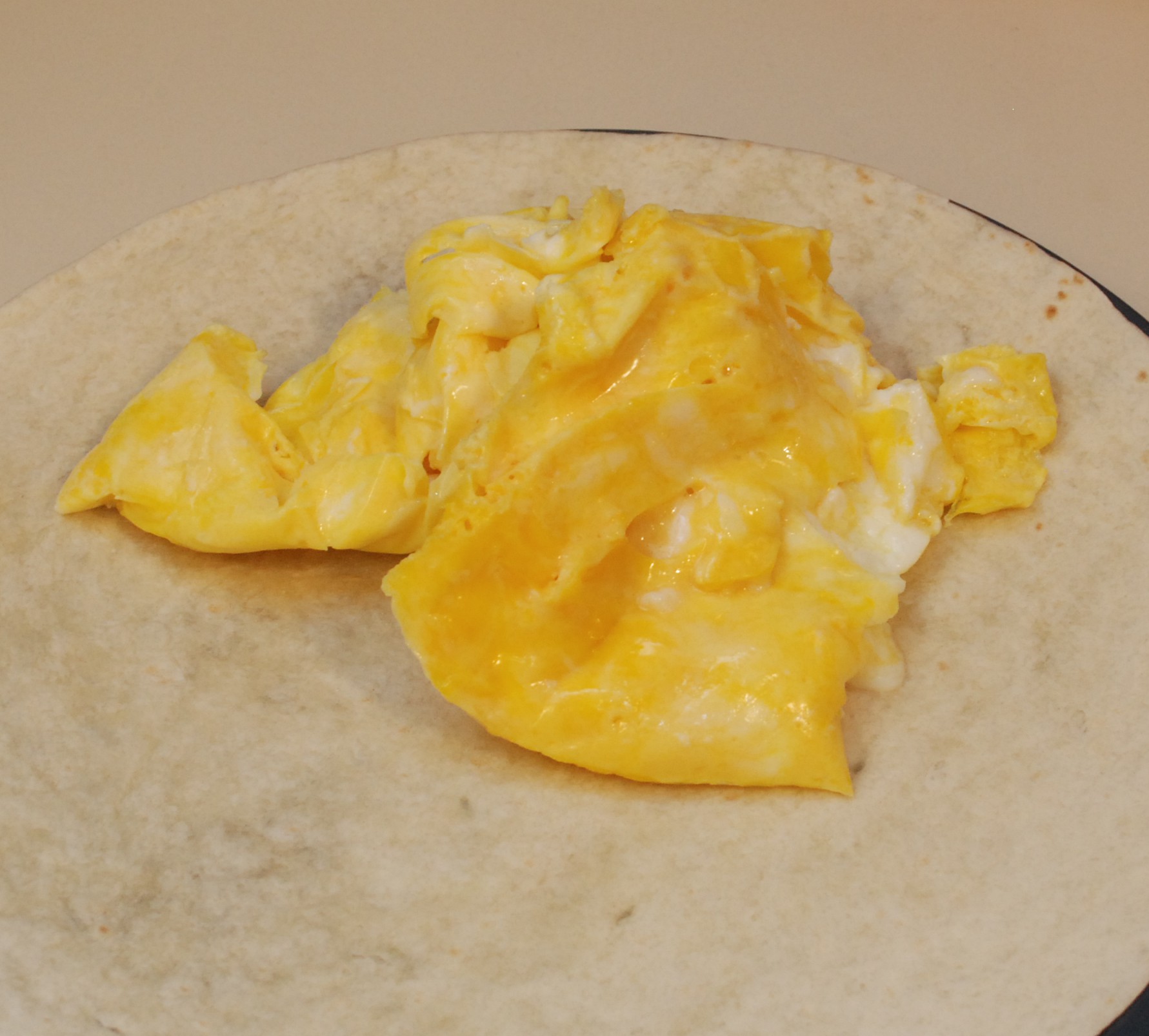
The next morning I warmed up some left over steak, and did scrambled eggs in the sous vide.  I set the cooker in my mini crock pot and tossed in the eggs when it hit the right temperature.  20 minutes later it was finished!

DSC_0072

I broke it up with a fork and sprinkled on my steak.  It was a good breakfast, but the texture was a little odd.  I don’t mind my eggs being a little loose, but these were really consistently so.  I almost feel like eggs need searing for the same reason steaks do.  It adds flavor and provides a good texture contrast.  The experimenting continues.

DSC_0073


Saw Bench Pair

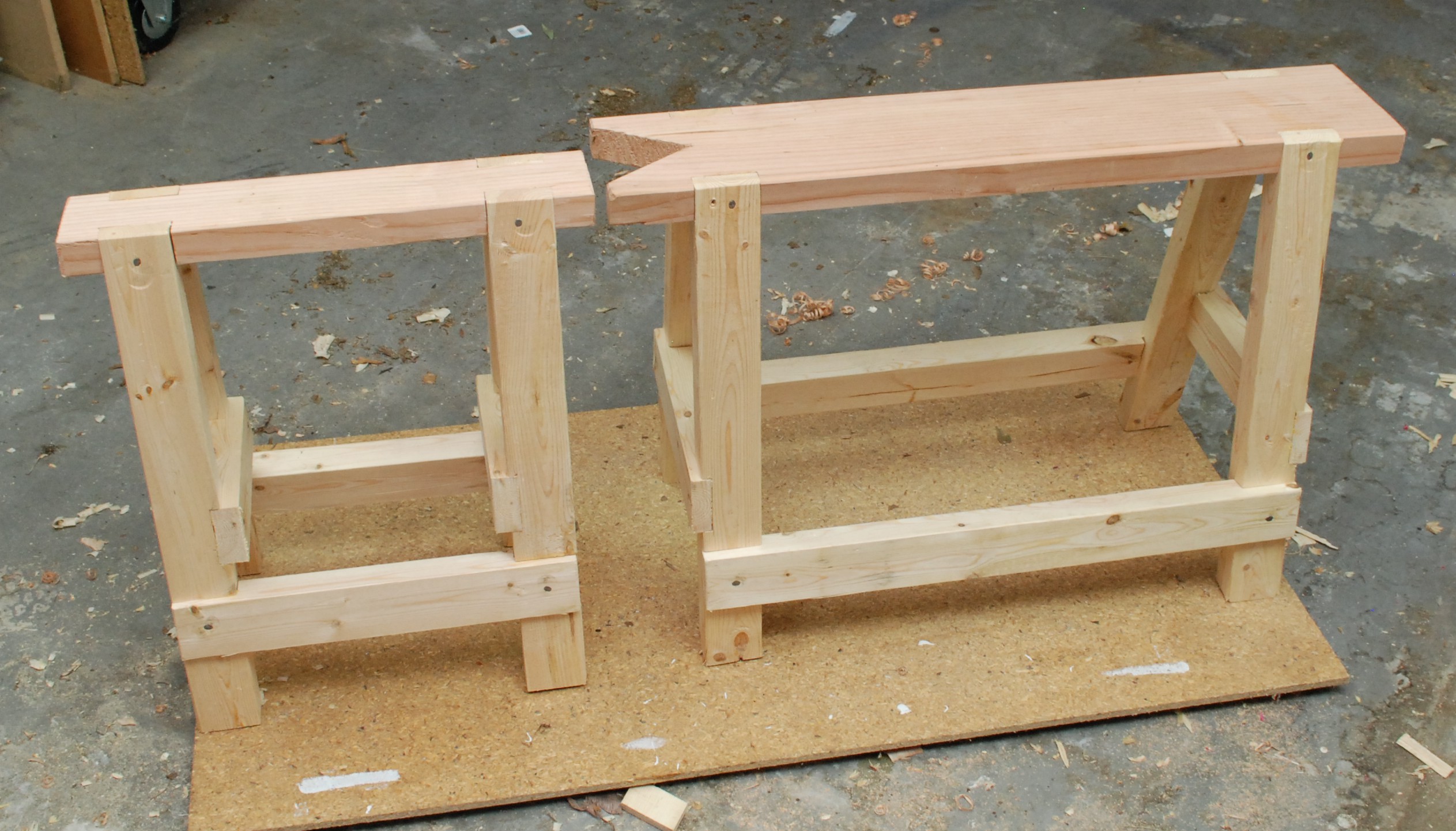
In an effort to increase my use of hand tools I need a better way to saw big boards.  Right now I can only cut smaller things on my work bench.  If anything needs ripping, or a bigger board needs cross cutting it has to go to either the chop or table saw.  With that, I present my saw bench set!

DSC_0052

I can’t take credit for the design, it is a rough copy of Chris Schwarz’s.  The one on the right is called a saw bench, and the left is a saw horse.  Most saw horses are hip high, so I will call this guy a mini horse!  I made the mini horse a lot shorter in length because I didn’t think I needed to be as big.  Hopefully I am right!  I started by chopping everything to rough length and gluing together two 2x4s for the top of the bench.

DSC_0016

The top was then planed smooth, had a vee cut in the front for ripping clearance, and was notched vertically to allow for the legs to have room to inset.  My first set of notches were pretty rough, but by the end of this build I had some very clean looking ones.  I set all the joints for the legs and the spreaders that ran front to back then assembled.  I waited until after the first glue up to make the spreaders that went left to right.

The bench was made over a number of evenings as I made mistakes and tried out different techniques.  By the time I got to the mini horse I had a good plan on what to do, and was able to knock out all the joinery in just a few short hours.  It turned out a lot better than the bench.  I wish I had started with it, then moved onto the bench.  You may notice that the top is shorter in the last picture.  I realized the extra length isn’t helpful and cut it down.

Once everything was assembled I set about trying to level the legs.  I had left the bottom of each leg square and figured I would saw them parallel to the ground once assembled.  Each leg has a 10 degree flare with respect to the ground.  Trying to saw each leg at 10 degrees once the thing was assembled was a bear.  Next time I will not plan to do any sawing on something like this after it is built.  Once I did manage to level and set the feet, I applied a coat of boiled linseed oil and called it finished.

I have had trouble explaining how useful these are to people.  Words don’t really do it justice, and even pictures don’t tell the full story.  I shot a video of me using the bench because of a few conversations I had when people asked what I was building.

As summer sets in here in Central Florida it gets harder to spend time out in the shop.  Luckily for me I have a window shaker in my garage.  I can keep it at a reasonable temperature in there with the AC on, but can’t run any big tools.  Summers are a great time to work on lighter activities such as dovetails.  I will use this summer to renovate a pile of saws and drills I have waiting.  Some just need sharpening and some need serious rehab.  I will call it my Summer Saw Stravaganza!

Honey Extractor Test Article

Our hive is happily gaining weight at a somewhat alarming pace.  (Check out the bee log for details)  Before too long we are going to have a pile of frames that need extracting.  Honey extractors are quite expensive and take up a good bit of space.  I have looked at dozens of designs online and don’t see any that I want to copy.  I had a pretty good idea of what I wanted, but didn’t want to first test it when extracting.  Extracting is a messy job, and I don’t want to get part way in and find out my rig doesn’t work.

A lot of people use metal or plastic trash cans for their extractor.  They certainly work, but if you are only doing two frames at a time, then that seems like a lot of wasted space.  A medium is about 20″ long and 6.5″ wide.  The inside diameter of a 5 gallon bucket is 10.5″ at its smallest.  This should leave enough room for two frames and a spinner.  Lastly there is height.  A bucket is about 15″ tall.  This is too short to use by itself.  If, however, you cut the bottom out of one and stack it on another it gets taller.

DSC_0044

Any honey that hits the sides of the top bucket will just drip down into the next.  The smaller hole in the right bucket holds the spinner shaft.  I decided to go with 3/4″ PVC.  It is light, cheap, and strong.  I started with a cross fitting that goes down through the hole, out to two side posts, and up to a bolt that my drill can chuck up.  The bolt is a 1/4-20 installed in a flat plug.

DSC_0045

It looks good in the bucket, but I need some weight to really test it.  A full medium frame should weigh no more than 5 pounds.  I wanted to put bags of sand or water (5lb each) on the sides of the posts. I didn’t have any sand handy, so water it was.  It didn’t go well.  The bolt wasn’t perfectly centered and aligned to the shaft despite my efforts, so it wobbled even with out weight.  Also the bags of water were horribly balanced which introduced really violent shaking.


Improvise Adapt Overcome

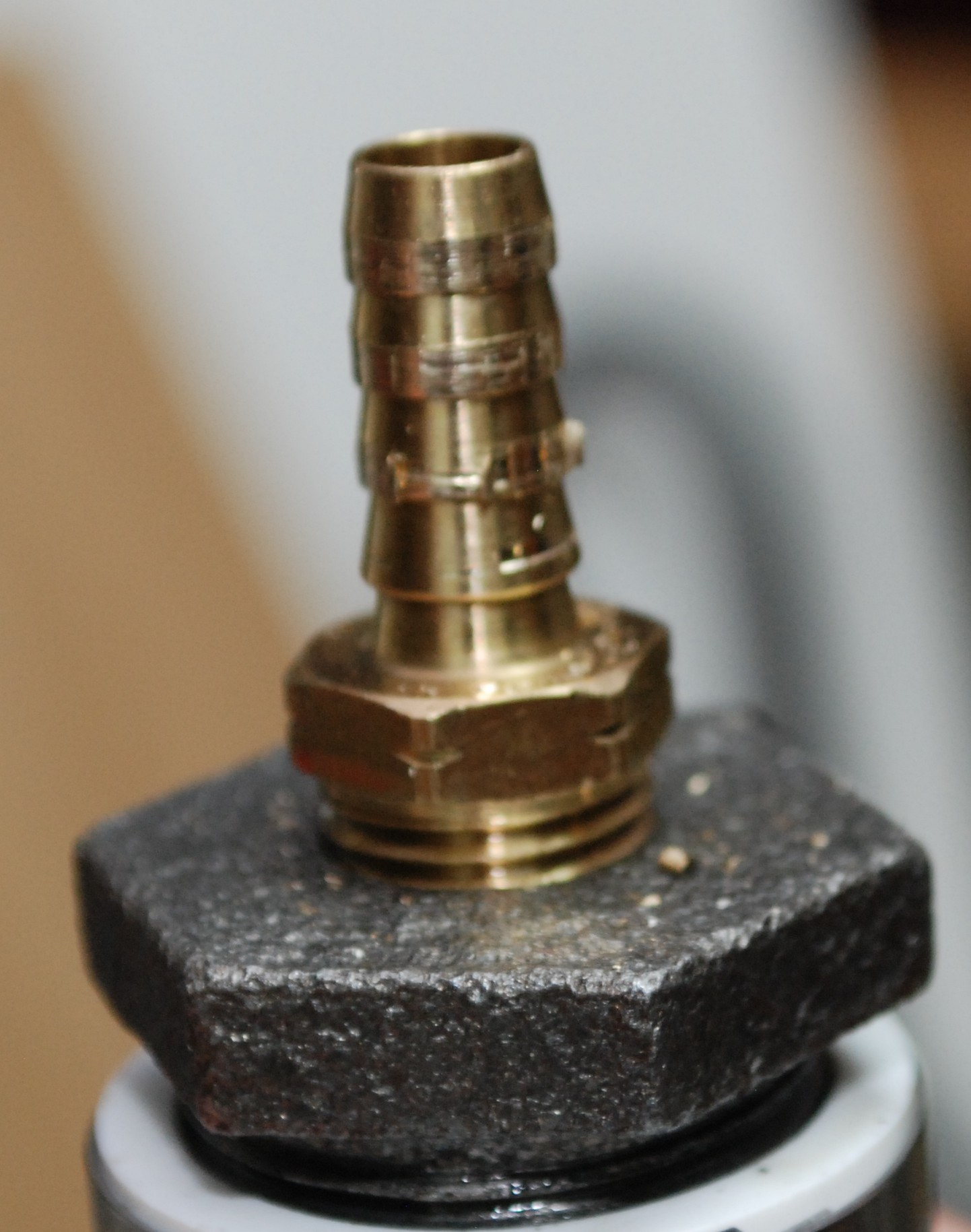
So what are the issues?  First, the bolt trick was neat, but not well centered.  I could try again, but wanted a different tack.  Instead I will use pipe reducers to get to something small enough to chuck in my drill.  It adds cost, but not much.  This brass barb fits in any standard 3/8″ drill chuck.  A pipe clamp helps prevent the PVC from splitting under the load.

Next I need to rethink the payload.  It turns out standard barbell weights fit really nicely over 3/4″ pvc.  I picked up a set of used ones and sank a screw in each pvc post to hold them in place.  I made them slightly off balance to simulate a set of frames that wasn’t perfectly matched.

They are set 4″ apart and are centered vertically about where a frame would be.  The spinner rig is the same height as it would need to be for full frames.  Now that everything looks nicer, we have to ask, will it blend?  I got out my zip tie GoPro mount and shot a tiny bit of footage.

Looks good to me.  I only had two issues crop up.  First, the hose barb is soft brass.  The chuck teeth really dug it up and caused some shavings to come off.  Next time I will tighten harder, and wrap the area with tape.  That way any shavings that do come off don’t get into the honey.

DSC_0058

Lastly, as I was taking my GoPro off its mount, the buckle clip broke.  I own dozens of GoPro accessories.  Most are cheap aftermarket knock offs, or something I built.  But no, the first one I break is an official part!  Oh well, at least the extractor looks like it will be a success.

DSC_0059

Improved Mite Measures

After my disastrous attempt at trying to track the mite population in my hive I took a closer look at what I was trying to do.  The bottom board is slotted, but does not have any method of sliding in a sheet or board that will keep the bees out.  I have to build some kind of lid on the trap so that the bees can’t get in.

Online I see a reference to number 8 hardware cloth pretty regularly.  It is a wire mesh that has 8 wires per inch, or ~1/8″ gaps.  The bees can get through 1/4″ mesh.  My hardware stores only sold the 1/4″ in hardware cloth, so I had to fall back to aluminum screening.  It feels sturdy and will not get chewed up by insects.

I went with a similar cheap bottom board as before with a single sticky paper sheet tacked down.  The lid is a simple 1×2 perimeter with the aluminum screening stapled on top.  Nothing pretty, but it fits under the hive and keeps the bees out and the mites in.

I tested it out for a 5 day period under the hive, checking occasionally to make sure no bees were being harmed.  It worked well.  In 5 days of usage I counted 5 mites on the sheet.  My current rate of 1 mite per day will help me keep tabs on what the mite population is doing.  Up down or steady, I should have a decent finger in the wind.

wpid-20150531_100035.jpgI wouldn’t suggest placing this trap out much longer than a week.  A lot of little bugs got in there, and the hive is always dropping debris.  As it was, it took a magnifying glass with light to really make sure I could tell the difference between a dark spec of debris and a mite.

Lastly as a bonus of sorts, when I pulled the thing out it was covered in about a dozen small hive beetles.  Horrible as it is to see them, I was able to carry them away from the hive and smash every one.  I wonder if they are attracted to the pollen and other junk left behind by the bees.  Could this make a good out-of-hive trap for SHB?  Who knows, but I will be sure to observe the hive beetles every time I use this trap.

Rotisserie Grill Upgrade

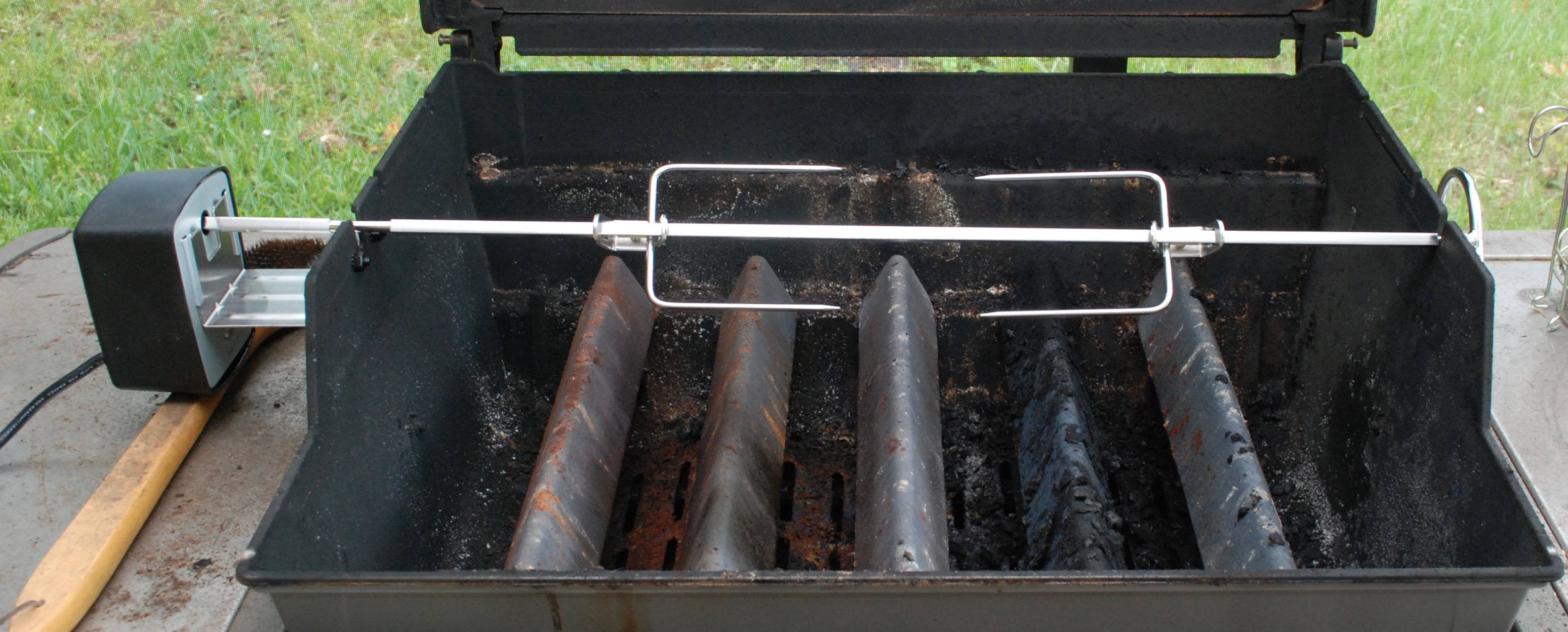
I have thought about making a rotisserie upgrade for my grill for a while.  It turns out they can be had for about 80 bucks on amazon.  Thus, the webber has a shiny new spit!

DSC_0033I couldn’t find tons of info online on how to best cook with this thing so trial and error it is!  I started with two ~5.5lb birds.  Both marinated for a day and a half, one in mojo, and the other in my first batch of home-made lizano sauce.

DSC_0034

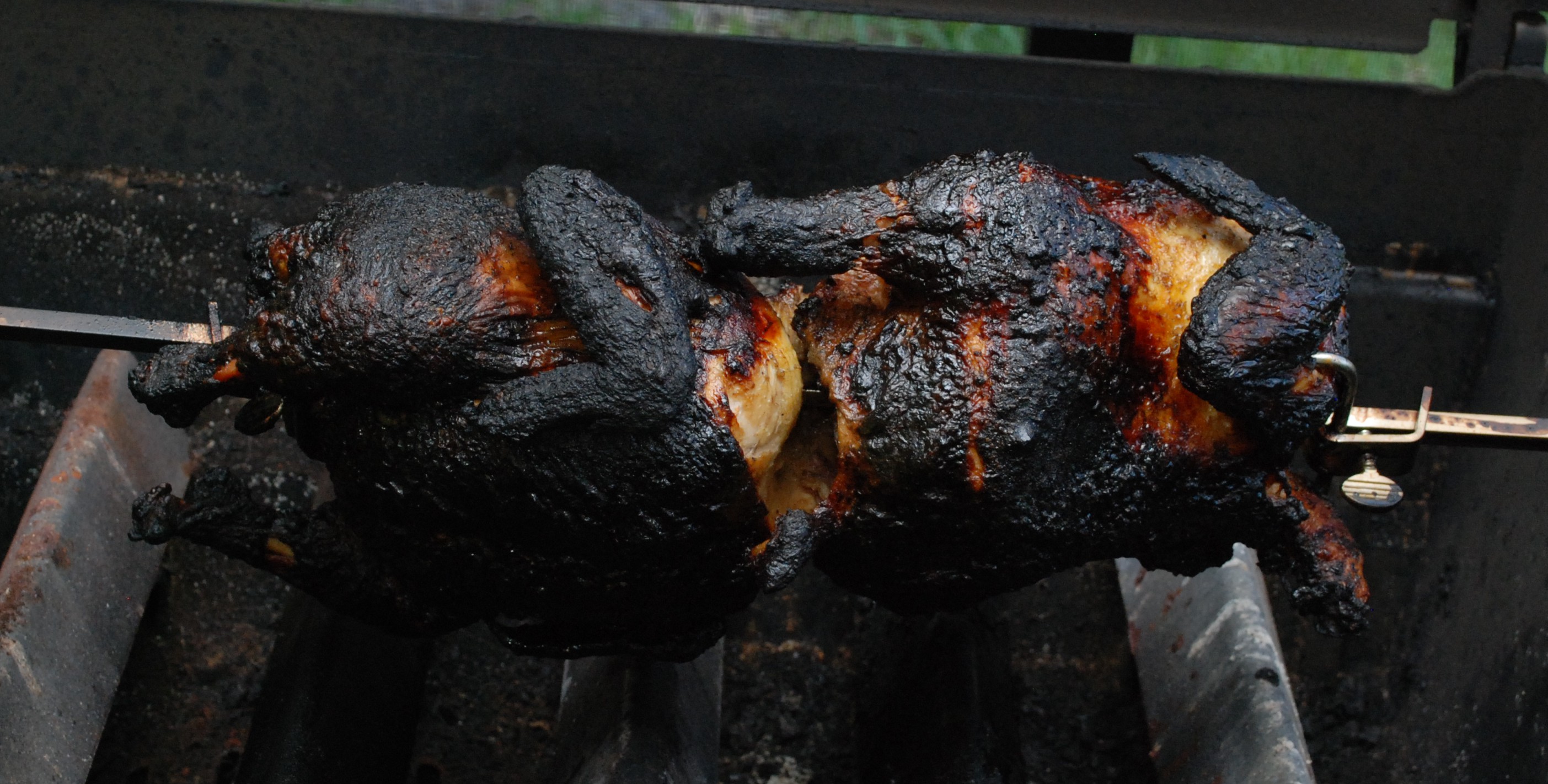
I started the two on medium heat, closed the lid and came back 20 minutes later to check.  FIRE!!!  Yep, medium was waaaay too hot.  Lots of drippings and lots of flare ups.  I pulled it back down to low, and carried on.  The results look terrible, but actually tasted quite good.  The fire must not have been going long, and only charred the skin.

DSC_0035

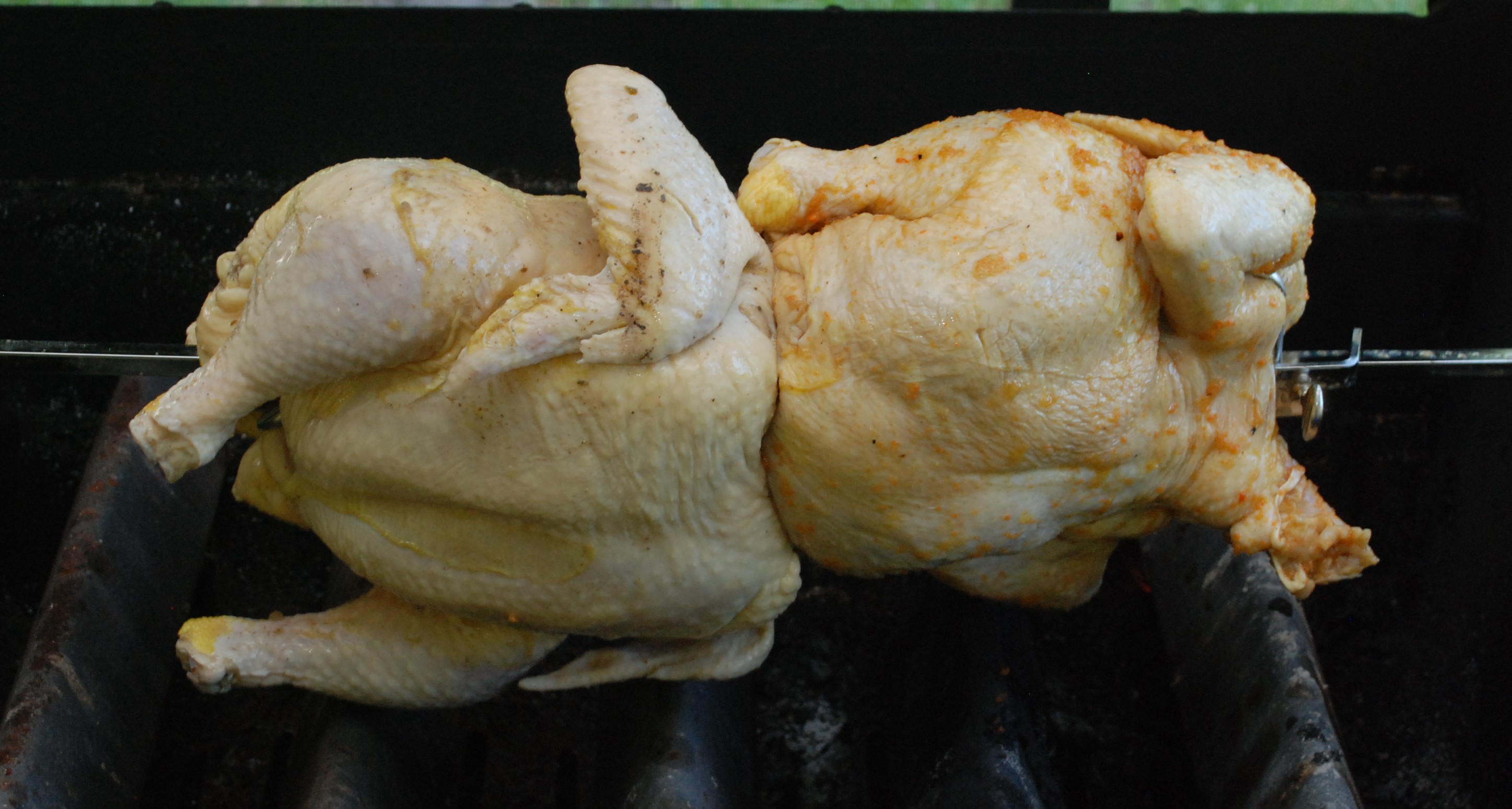
If at first you char your chicken, try try again.  I picked up another set of birds and set about doing a quick marinade.  One was a short brine session with sprigs of fresh rosemary, and the other marinated with official lizano sauce.  Instead of medium I stuck with the lowest setting throughout, and placed a cookie sheet under them to help deflect direct heat and keep drippings from flaring up.

DSC_0041

Much better.  I was so excited to dig in and eat, that after they rested I didn’t get a picture.  The taste was awesome, the skin delightful, and the breast meat was tender and juicy.  Big Success!  The only downside is that my cookie sheet was ruined.  Next time foil sheets.

A Costa Rican Miracle Sauce

I have found a miraculous sauce from the land of Costa Rica.  Lizano sauce (salsa) is a brown sauce that is apparently quite ubiquitous in the country.  There are a lot of different variations that I have tried, and I am sure in Costa Rica they have a lot of regional differences.  A local burrito shop has their own version that is a medium brown, and tastes amazing.  I found out half moon bay trading sells a “Caribbean Condiment” which is excellent and close to the burrito shop version.  I haven’t found a local source, so it is time to craft my own.

The sauce is rather strange.  It has vinegar and spices obviously, but also vegetables.  Not a sauced tomato mind you, but hearty root vegetables.  I thought they were pickled, but I couldn’t find evidence of that.  In first searching I came up with a recipe that is repeated a lot.  I don’t know who to credit, and spoilers, it isn’t quite right.  I will say that it has chilis, water, a bit of onion and carrot, 2T sugar, 2T lemon juice, 1T vinegar, 1T cumin, 2t salt, 2t molasses.

The results are pretty nice, but the first thing that strikes me is that it is too thin and has way too much cumin.  I love cumin, but this sauce shouldn’t have much, it is a really dominant flavor.  There are various ways to thicken sauce, so I will worry about that part later.  Other than the chilis getting a roast and simmer, the recipe didn’t call for anything else to be cooked.

I bought some “Official” Lizano sauce from an internet supplier for comparison.  It is pretty good, but isn’t as good as others I have tasted.  Looking below, the color is much darker than mine.  Digging deeper on the internet I found an alternate recipe that has more vegetables and less cumin.  There will be a part 2 in the near future!  I tried to marinate a chicken in the sauce and grill it.  Due to an unfortunate flare up the bird was burned beyond recognition.  It still tasted pretty good though.

Sticky Paper Mite Control

I have read that sticky paper is a good method of tracking the mite population in your bee hive.  I bought a vented bottom board for partially this reason.  Great, lets go buy some cheap insect paper, tack it down to a board and leave it under the hive for a few days.

wpid-20150520_172444.jpg

Well crap.  Bees are either attracted to this stuff, or just very exploratory.  It might have a sweet smell to attract things like fruit flies.  I got a lizard too, which is kind of impressive.  Poor girls, I feel horrible.  I need to either build a cage over it that they can’t get to or figure out how to get it under the hive in such a way that they can’t get in.  I will have to inspect my bottom board closely next time I am out.

Might as well look over it carefully for mites.  Do I have any amongst all these poor bees?  Yep.  Taking a picture through a magnifying glass is darn near impossible, but those two ovaly things are mites.  The good news is that in 2 days I only count a hand full of mites on the sticky paper.  So much for the sign keeping them out.

wpid-20150522_170248.jpg

Chalk and Magnet Board

Chalk boards are big now.  Not sure why, I can’t stand chalk.  Chalk markers exist though, and those are pretty cool with me!  Our fridge is stainless and doesnt allow for the typical magnet and picture collection that I am used to.  I combined the new trend and my old fridge problem to make a magnetic chalk board.

I cut down a sheet of metal to 18in x 24in.  I picked up a spray can of chalkboard paint from valspar to give it the right surface.  The metal got a light sanding to rough things up, then a wipe down with alcohol to clean everything up.  1 coat of primer and a few coats of chalkboard paint and it looks like a disaster.

DSC_0007The spray chalkboard when on really patchy and irregular.  I tried sanding it a bit between coats to help even things out, but it isn’t going to happen.  I flipped the piece over, sanded cleaned, primed, and then switched to rolling on chalkboard paint from a can.

DSC_0006This looks much better, but it took 3 coats.  The first didnt appear to like the primer coat.  It had a crazed look to it after drying.  I just kept putting on coats until it had consistent coverage.  I took some decent looking walnut and made a frame.  No pictures of the progress, but it is a basic miter frame.  The metal plate fits in an inside groove.  After gluing it all up I used a lot of epoxy on the backside to keep the metal from bowing or rattling around when writing on it.  Tung oil is the finish.

The can of paint said to coat with chalk, then wipe off as a finishing move.  Once cleaned up I threw up some pictures and magnets and it looked perfect!