Stanley 71 Cleanup

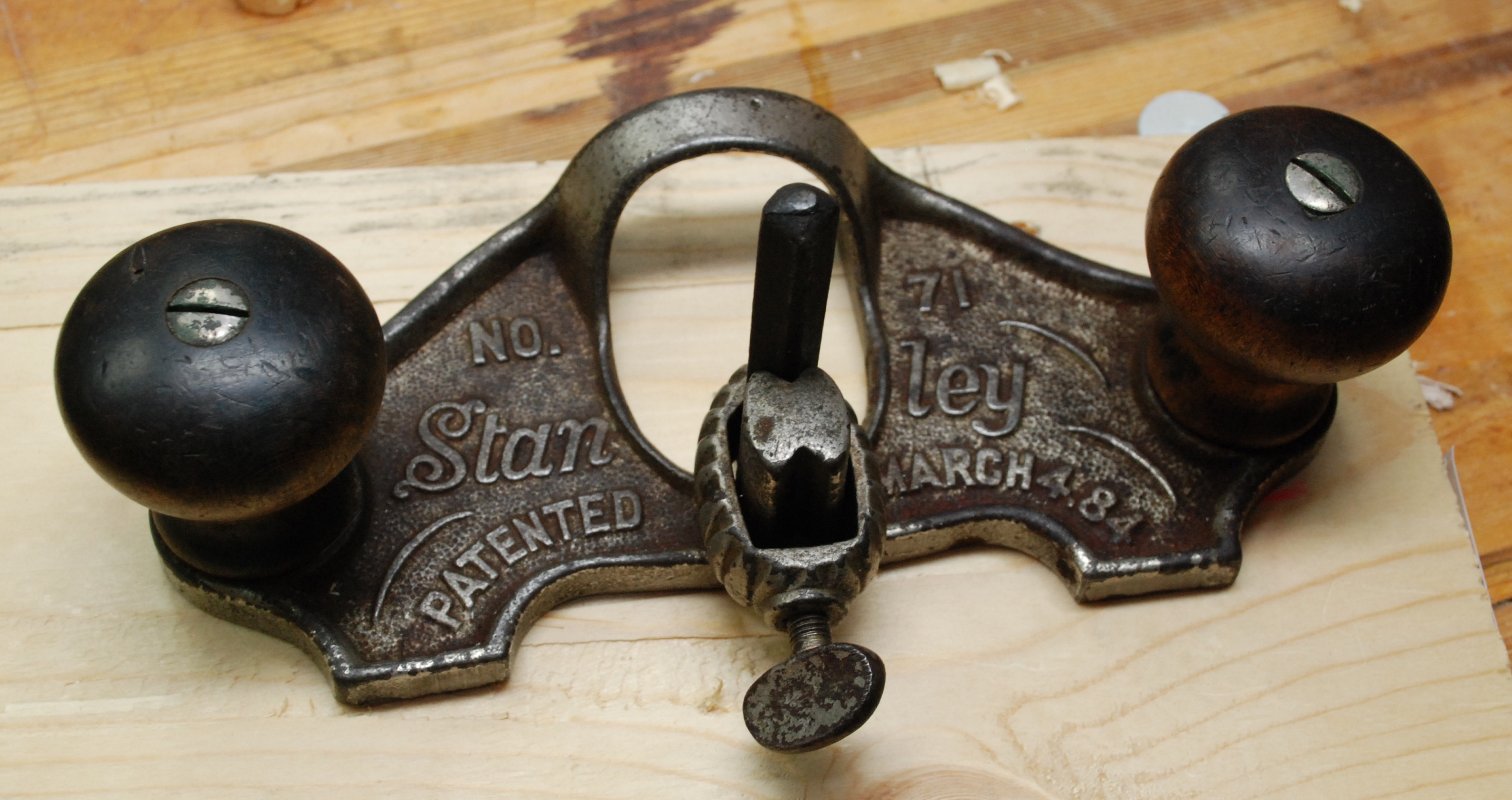
I have been wanting a router plane for a while now.  Veritas makes a nice looking version, but it is, like all new planes, rather expensive.  I did some lurking on ebay and came out with an older Stanley 71.  Based on my reading it is newer than 1890 when they arched the front throat area, but older than the mid 1890s when they added an adjustable support to said arch.  In short, It is simple but effective.  Later models had a lot of bells and whistles, but they are often missing pieces or are expensive if complete.
DSC_0117

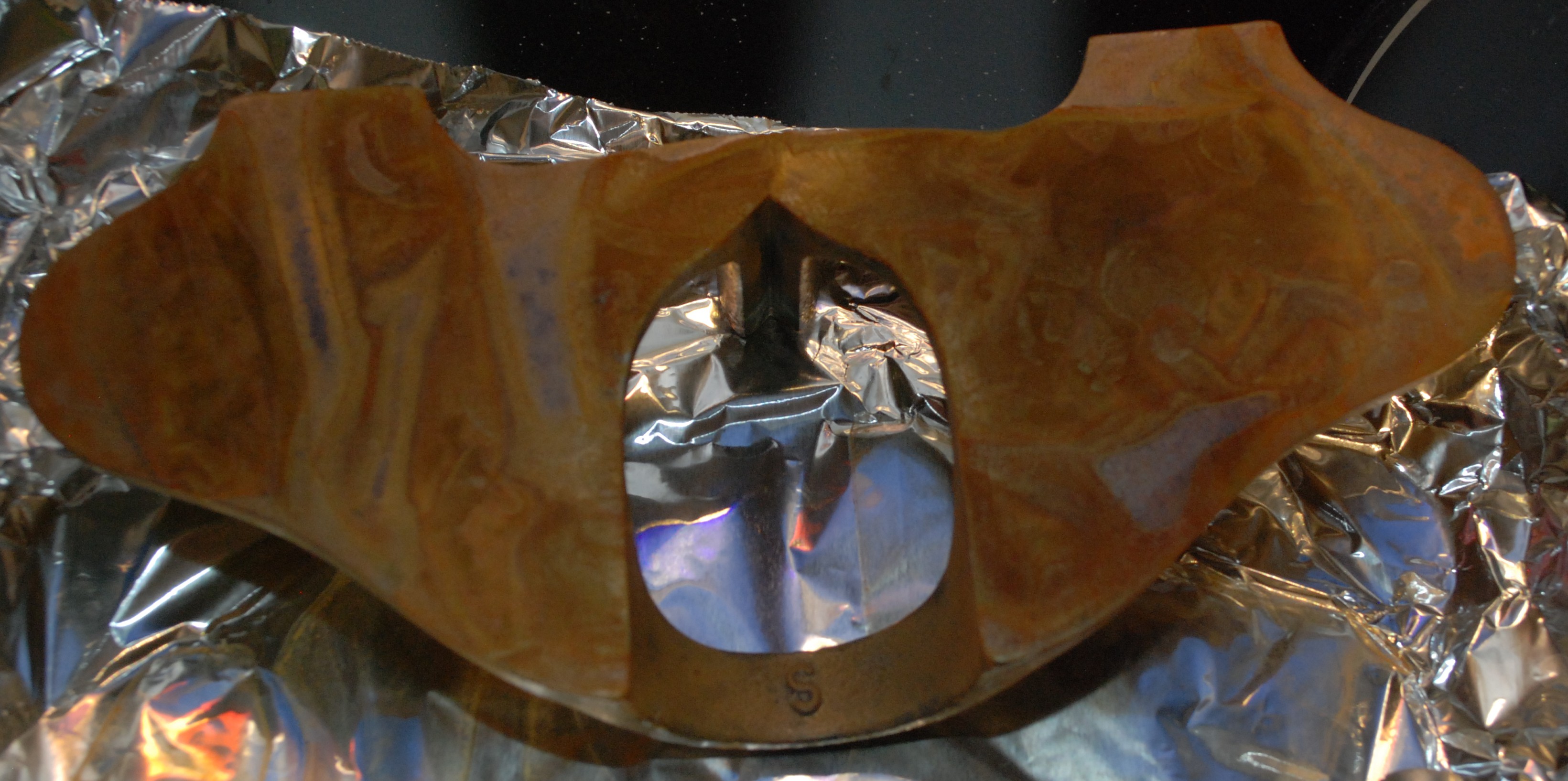
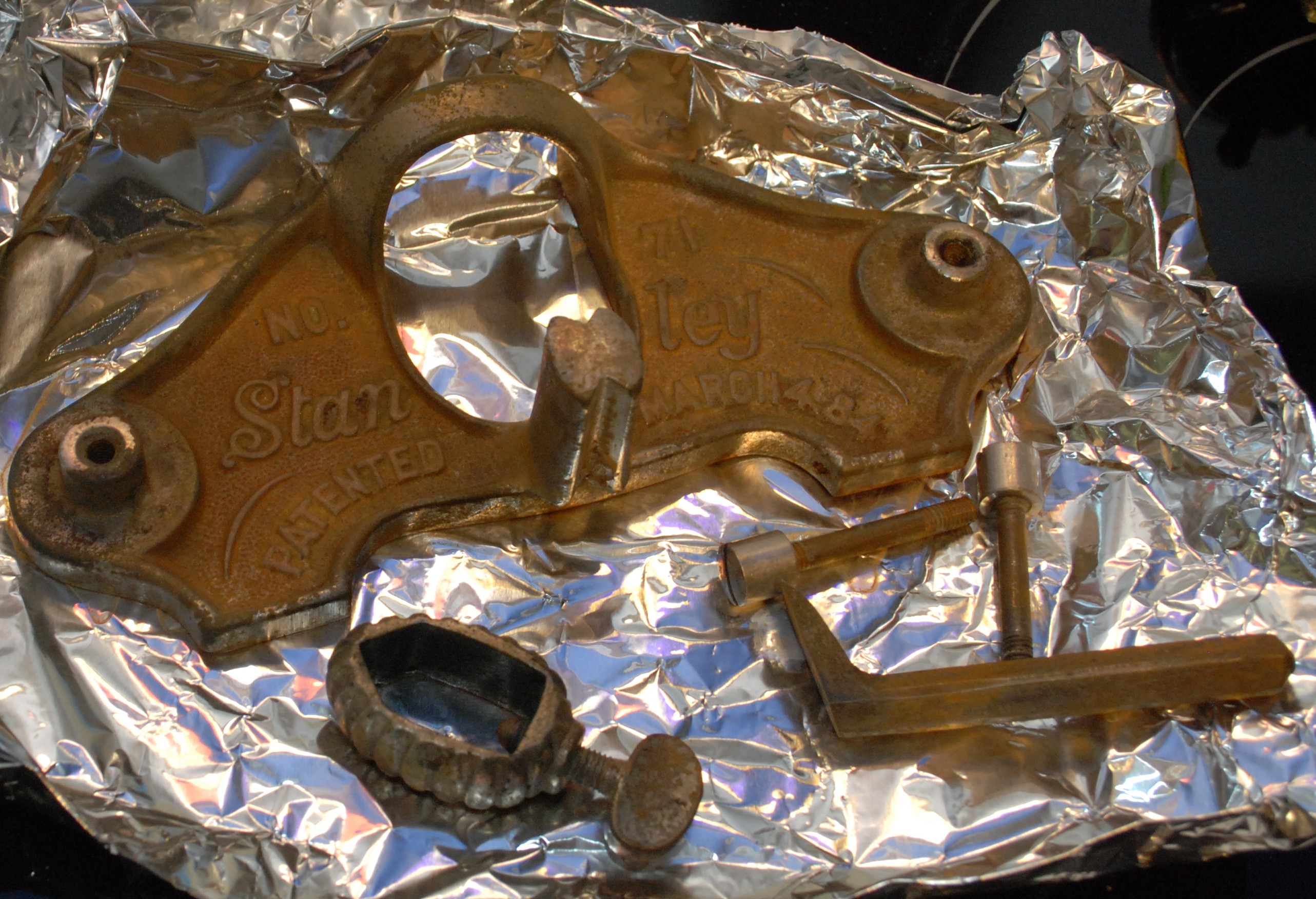
Step one, disassemble and scrub off the rust.  I used boeshield rust free because it was the only thing I had.  It took a lot of scrubbing and squirting, but I got most of the rust off.  Next after a wash to get the nasty stuff off I wanted to dry it really well.  In Florida things will rust pretty quickly if you don’t get them dry, so I decided to try a trick I had heard about.  Put the plane parts in the oven on low for a little while.  Well, cue the sad horns.
DSC_0123

DSC_0124

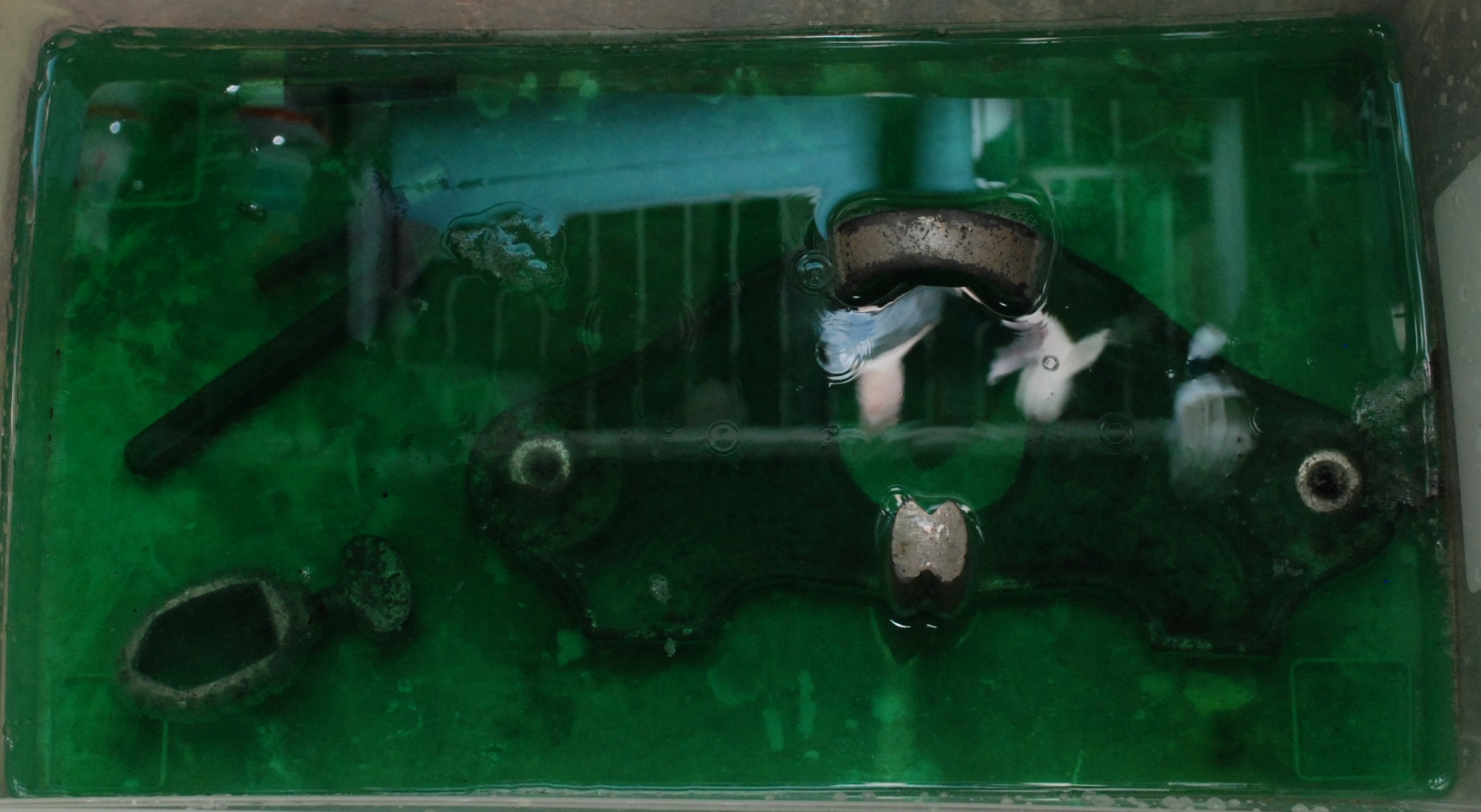
The rust isn’t deep, but with all the nooks and crannies on top scrubbing it out is going to be a bear.  Time to break out some bigger guns.  I have heard a lot about various rust remover baths such as Krud Kutter and Evapo Rust.  I found Krud Kutter at my local hardware store, so lets try that!
DSC_0127

This stuff has a pretty pungent smell, but it appears to work well.  It converts the rust so you end up with a very dull grey looking material left over instead of rust.  Wikipedia has a full explanation.  At any rate the results are pretty good.  It certainly isn’t shiny, but the rust is completely gone!

DSC_0128

Next, the knobs got a good sanding.  I didn’t get rid of every stain because some ran pretty deep, but I did get the worst of the big scratches out and gave them a nice smooth feeling.  A coat of tung oil should keep them safe for years to come.

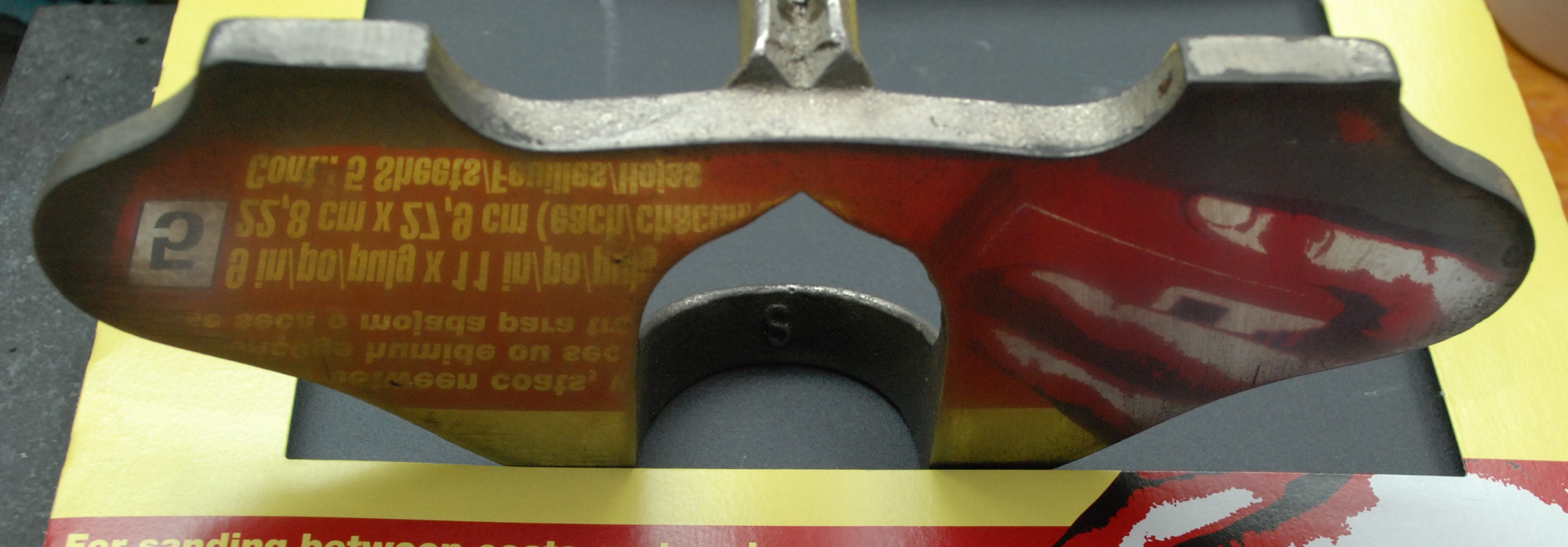
I spent some time on the granite block with different sanding sheets trying to flatten the bottom.  There were a few edge areas that didn’t quite get there but a majority of the bottom is dead flat.  I went a bit overboard and polished all the way to 1500 grit sand paper.  Not really needed, but once you get started it is kind of fun to see how shiny you can go!
DSC_0115

Finally everything started to come together.  The cutter spent a few minutes on my diamond stones till it felt sharp enough to run with.  I tried to get some shine going with a buffing drill attachment and compound.  It didn’t really do much.  I was trying to buff up all the intricate texture on top, but it only kind of got the letters.  Oh well, maybe I will break out my bench grinder buffing wheel at some point in the future.  On the bright side, for all my efforts, the rust is gone, it looks less grungy, and it is back in working shape.

To test it out I went back to the handle I made for my low angle jack in a previous project.  My paring work wasn’t bad, but the router plane made it a lot better.  The handle would rock a little bit on some high spot.  After a few minutes of work with the router it sits flat on the plane side.


 Bonus Bullnose Plane

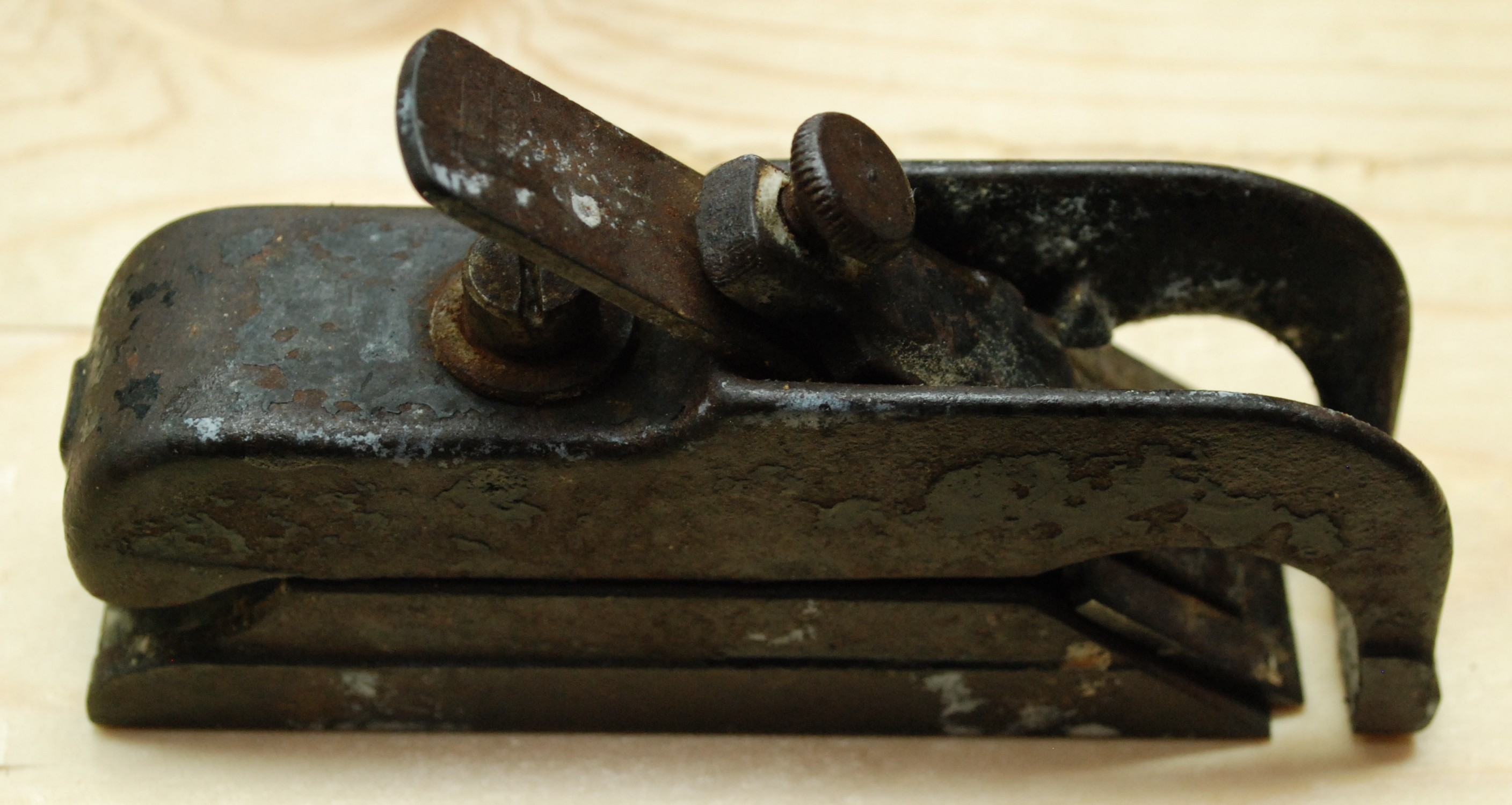
I was going to include a little bullnose plane that someone gave me a while back.  It had a lot of rust and small cavities that needed cleaning.  A great job for this Krud Kutter stuff.
DSC_0129

 Cue the Price is Right sad horns AGAIN!

DSC_0134

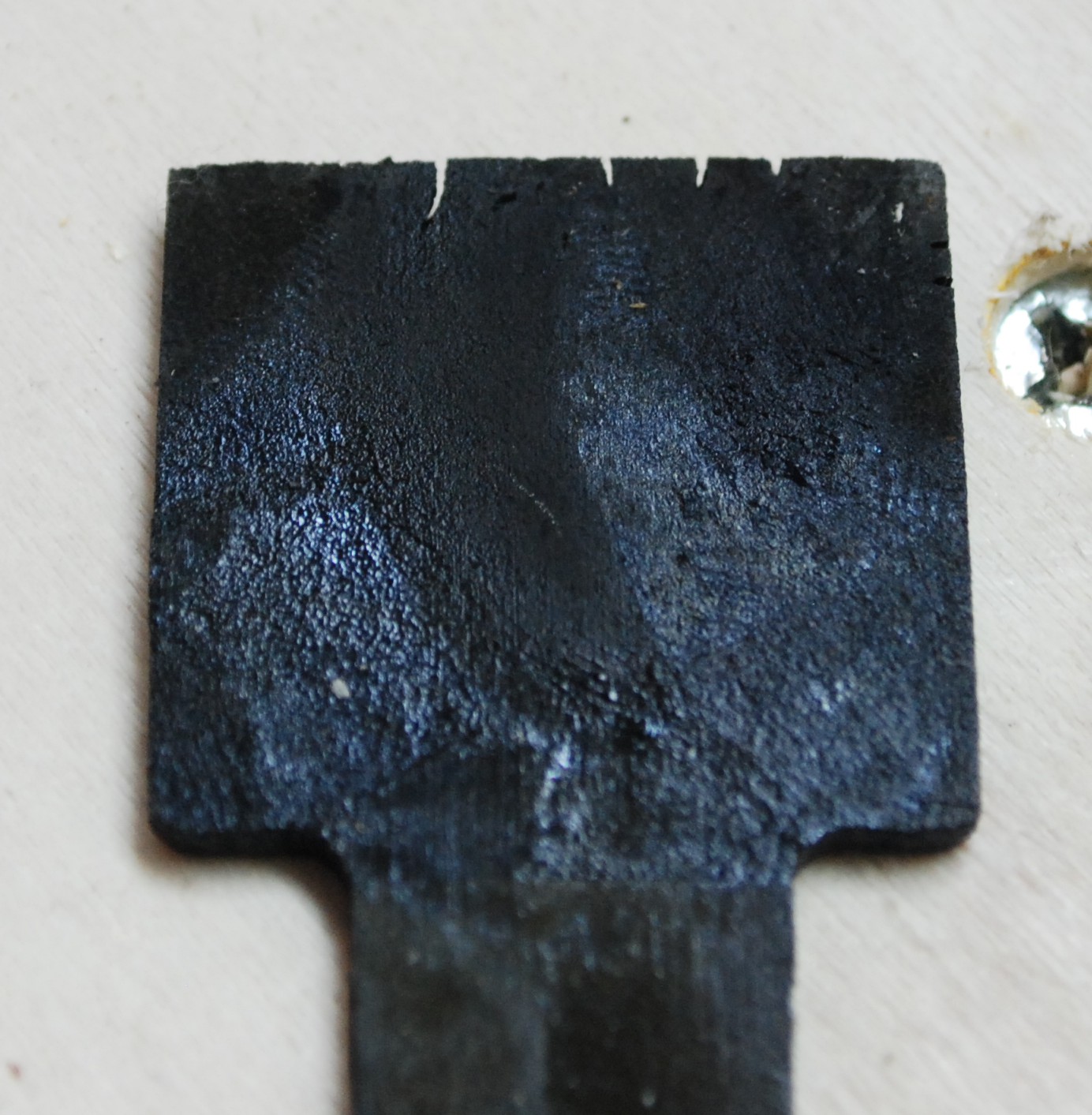
The Krud Kutter cut through enough junk for me to see that the blade had serious issues.  Talk about splits-ville.  I guess there is enough material there to grind back beyond those cracks, but I don’t really want to tackle that right now.  I don’t have a burning desire for this plane, so now that the rust is tackled, it will go back in the drawer.

Yarn Swift Add On

My wife is into knitting in a serious way.  She was given a partial antique yarn swift by my mom some time back.  It is missing parts, but otherwise should work just fine.  It needs some kind of base, and a clamp to hold up the upper umbrella portion of the swift.  With her birthday coming up soon she suggested finishing the swift would be a good present.  Great!  I hadn’t had any good ideas on what to buy, so lets make something.  I don’t know what the original was made out of, but the wood and finish were very dark.  I made mine out of maple because it was what I had around, and it distinguishes the antique from my work.

Start with the finished product in action!


Clamp

I started with the clamp.  A small block with a hole in it and a slit cut across it acts as a clamping mechanism.  I drilled a hole through the forked section, and even chopped a small square hole so the head of the bolt does not spin while tightening.


Base

Next I moved on to the base.  The post needs a place to rest in, and I have a bit brace and some old screw bits that belonged to my wife’s grandfather.  Might as well use a family heirloom to make something that should hopefully stay in the family a long time.  After a few minutes of sharpening the bit sailed through the maple stock with ease!

wpid-20141023_191807.jpg


To make the clamp portion I cutout a wide center section.  I sawed out the edges and carefully pared out the rest with a wide chisel.  Yet another time when having a router plane would have been useful.  I used another bit to bore from underneath and install a threaded insert in the bottom.  A modified 1/4″-20 bolt will act as a screw clamp so the base can be clamped to any ledge.  A piece of maple is captured on top of the bolt with a small bent metal clip.  This keeps the moving portion of the clamp from falling off.  I used tung oil on everything and glued leather to the clamp faces to promote grip and prevent scratching.

Happy Birthday Honey!

Inlay Experiment

After royally screwing up the inlay sign I made a few posts back I decided it was time to experiment with different inlay techniques.  I had mixed success, but will share my current round of results here.

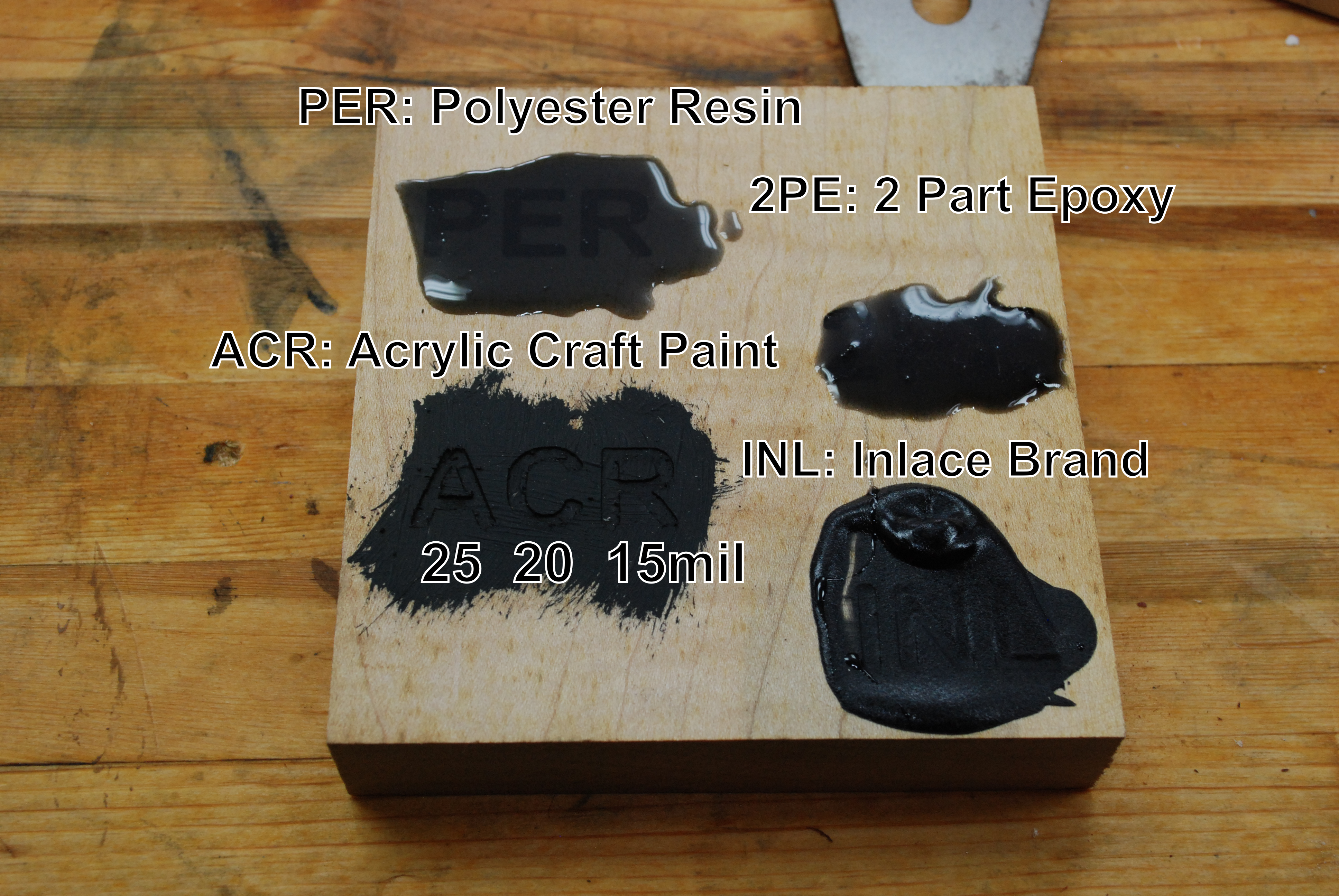
I started by milling some test shapes into a block of maple and sealing them with a few quick coats of spray lacquer.  I thought I had a picture before applying any inlay, but apparently I do not.  There is a section for each inlay technique.

annotations

  • Polyester resin with added “castin` craft” pigment
  • Two part epoxy with added “castin` craft” pigment
  • Acrylic craft paint like you can find in any craft store
  • Inlace brand black inlay fill

Each section is made up of 3 letters.  The left most letter is 25mil deep, the center is 20, and the right one is 15mil deep.  I wanted to see how shallow I could go and still have the results turn out well.

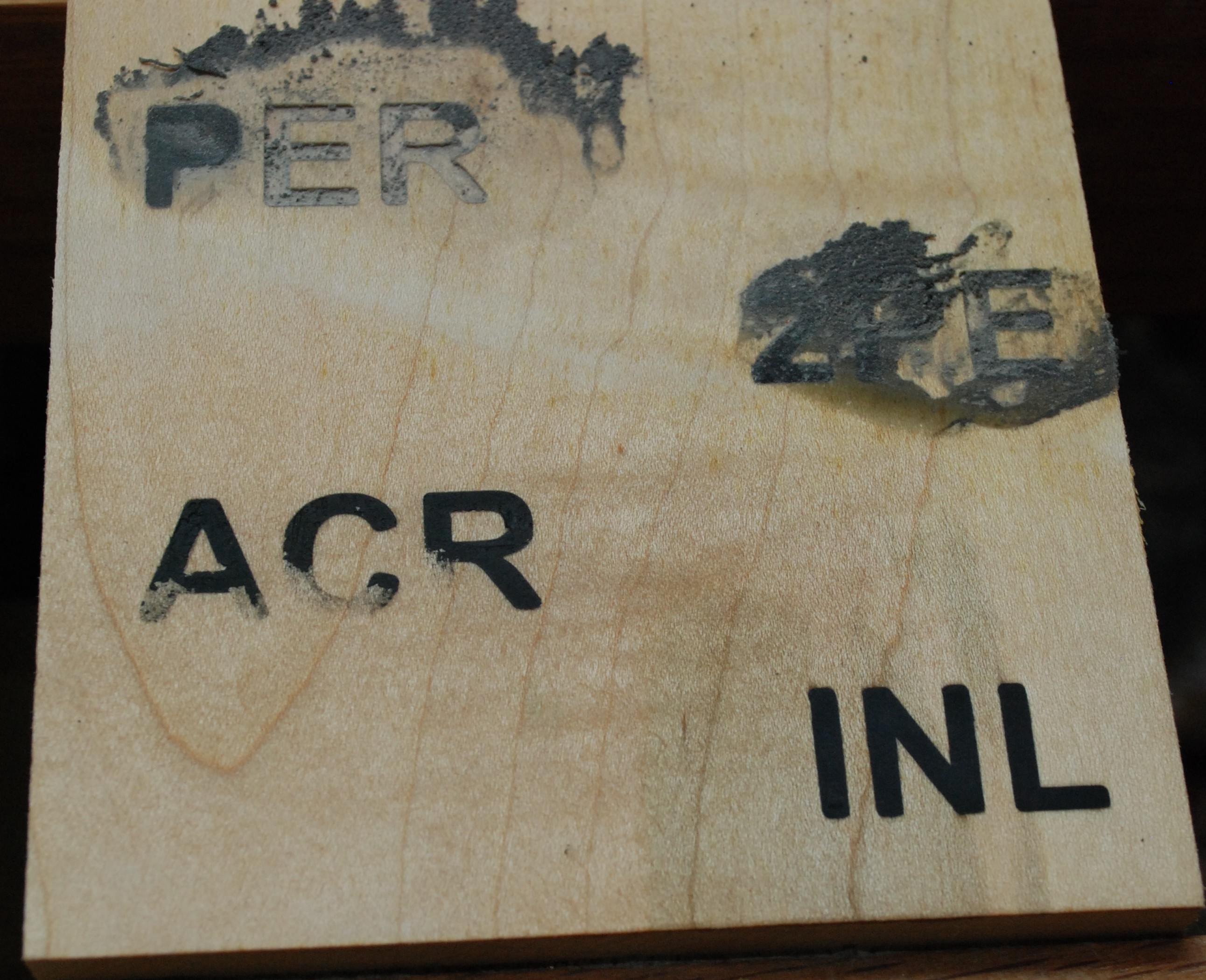
My first observation is that the the castin` craft additive did poorly with both the epoxy and resin.  For starters, it took a decent bit to get a good looking black.  I was worried about adding too much, and you can see the polyester section is fairly translucent.  Both were very soft and gummy.  Attempted sanding mostly just pulled them out of their inlay pockets.

DSC_0132

This is really disappointing.  I bought a few different colors of the castin` craft stuff which I don’t know what to do with now.  On top of that, I bought a container of polyester resin and don’t know what to do with that either… I really thought that was going to work.

There are a few bright spots.  The inlace material looks great!  It is pricey, but at least it works.  The acrylic was promising.  The picture looks bad because I over sanded it.  Looking at the first picture, I barely put any acrylic paint down, just enough to cover the wood.  The surface texture looked bad, so I tried sand the paint smooth and got too aggressive.  Acrylic paint is a good option if I can get it to look smooth.  It is easy to get ahold of, comes in lots of colors, and is color mixable.  My next test will be to figure out how to apply paint thick enough so that it can be sanded to look smooth.

Big Apple Batch!

I am getting better at batch processing food for canning.  There was a nice swing of chop-boil-mill going on yesterday  Apples are on sale here so we went to our local produce market and stocked up with 37 pounds of galas, pink lady, braeburns, fujis, and honey crisps.  I was going for 50 pounds, but stopped when the box they gave us was getting pretty full.  Good thing too, my sink can’t hold any more!

DSC_0130

I made a previous post detailing how I make applesauce and apple butter, so see that if you want instructions.  I filled up the crock pot for butter, and jarred the rest.  In all 37 pounds of apples produced a full crock pot (4 quarts of sauce -> 10 half-pints of butter) and 7 quarts of applesauce (a very full stock pot!).  This is a good size because my crock pot was full, and my canner only holds 7 quart jars.  Next time I have a weekend at home I can use a few sauce jars to make more butter.  Hooray for fall!

Based on my previous few attempts I am producing 1 quart of sauce for just under 3 pounds of apples.  50 pounds would get me a full crock pot and two rounds of quart jars in my canner.  That would be a full afternoon!

DSC_0138

DIY Moustache Wax (Part 1)

I entered into a beard off with a co-worker earlier this year.  We both stopped shaving at the beginning of August, and will not do so again until sometime in December.  We had an agreement that small trimming could be done for cleanliness.  I don’t like my moustache getting into my mouth, or tickling my upper lip.  One option would be to trim, but figured why not train it!  So I picked up a tiny comb and some moustache wax.  This is where my problems set in.

I have tried a hand full of different waxes available online, because I can’t find any in town.  All with the exception of one smelled so bad I couldn’t bring myself to apply them.  These things sit right under your nose for goodness sake!  Many of them are quite pricey too.  10-15 bucks for on ounce or two.  That is rich considering it is mostly bees wax.  How about I make my own?

I did some reading and found a whole host of recipes out there with a lot of different ingredients.  EXPERIMENT TIME!!!  Bees wax on its own is too hard to use, so oils are added to soften.  I used the following ingredients:  Bees Wax, Shea Butter, Cocoa Butter, Cocoanut Oil, and Vanilla Extract.  The ratios for the first 6 batches are:

Slide1Everything was measured out with a scale and combined in a double boiler.  I went through the week using one each day and recorded my thoughts.

  1. Way too thin and easy to spread.  Not enough hold for my course stache.
  2. Decent consistency and hold.  No bad smells.  This one has potential.
  3. Too little hold and the Shea doesn’t smell good in my opinion.
  4. Not enough hold for my liking, but the smell was light and pleasant.  With more wax, this could be a good one.
  5. Practically melted off my fingers.  No go!
  6. The vanilla extract didn’t mix well.  Oil and alcohol.  Anything I add should be oil based if I want to influence the smell.

In all it was a good round.  If nothing else, number 2 is probably an acceptable substitute for my previously preferred wax, and at a tiny fraction of the cost!  I kind of liked the cocoa butter additive.  My next round will be variation on that version with more wax.  I might try a round with petroleum jelly instead of cocoanut oil.  That seems to be a popular alternative to the cocoanut oil.  Until next time, let it grow!

Liquid Inlay Failure

AKA Always read directions carefully

The plan was to make a small sign that said “CUBE sweet CUBE” for a friend/co-worker and myself.  I was going to mill some lettering into a nice piece of wood, and fill the pocket with colored inlay resin.  I will introduce the mill in a post soon.  Until then, I want to share a complete screw up I had.

I started by re-sawing (Cutting in half length wise.  It turns a thick piece of wood into two thinner pieces of wood) a scrap piece of maple.  Some quick sanding got the tops flat and ready to go into the mill.  A 0.063″ mill bit did a great job of removing material where the text will be.  I sprayed both pieces with a quick coat of lacquer to keep the dye from soaking in along the grain.  With the woodworking over, I moved on to filling the text area with a colored epoxy resin.

I taped off the area to be filled with black and mixed up the product.  The inlay filler I used is a resin with dye made by Inlace.  I metered out an ounce of the black resin and put in the proper amount of hardener.  After a good mix I poured it into the “CUBE” letters and let it sit.  There was a bit of shrinkage, but the results seemed ok. Next I switched to the “sweet” area and mix up the red resin with a proper amount of hardener… or so I thought.

It turns out that the black I got was both resin AND dye pre-mixed together.  The red, was just dye.  It is supposed to be added to clear resin.  12 hours later, It is still liquid, and I am sad.  I can’t come up with any good way to wash out the offending dye.  I think this is going to have to be a do-over project.  In retrospect, the lettering is a lot deeper than it needs to be.  A big waste of resin.  Unfortunately this stuff is hard to get.  I can’t find it in town, and no one online carries inlace’s full product line.  I might try to find their clear resin and do it over, or I might try someone else’s epoxy dye that is more attainable.

Pint Canning Crate

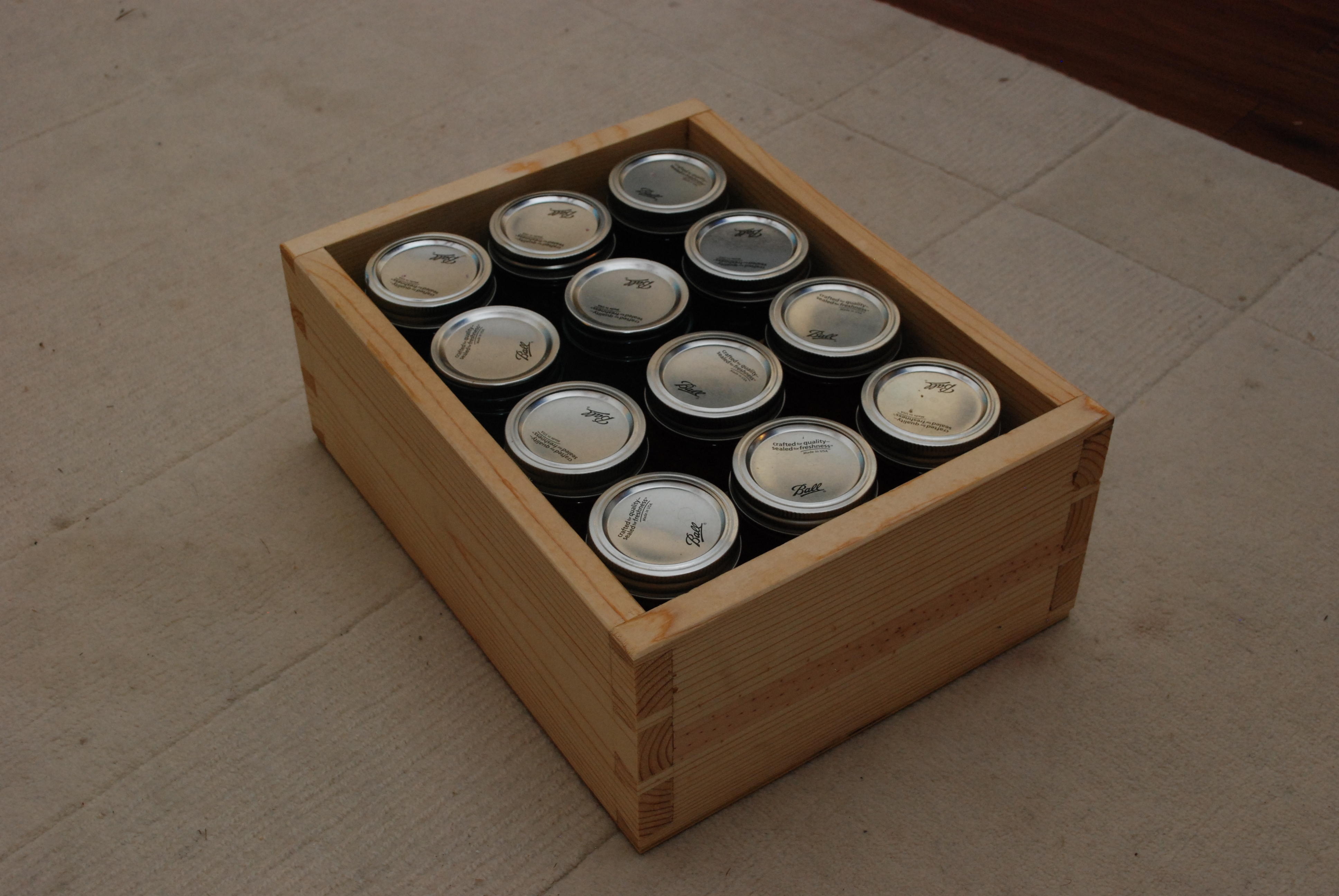
This is both a simple, and overly complex project.  It is simple in that I have made a set of pine boxes with glued on plywood bottoms.  Had I been only interested in making them functional, I could have finished these in an hour or two.  Instead, I wanted to practice hand cut dovetails, and make them look good.

If you want to make basic boxes to hold canning supplies, then cut the boards and attach via whatever method you like.  Screw/glue, pocket holes, nail, half lap etc…  1×6 boards are the perfect size for pint cans.  Remember they are actually 0.75×5.5″.  Cut them so the outside dimensions end up being 11×14.5″, and attach a plywood bottom.  1/4″ plywood seems adequate.  It took me a number of hours to finish the two crates, but the experience was worth it.

DSC_0106


Dovetails

If you are crazy like me and want to make basic utilitarian boxes with super fancy joints, then read on.  Or if you just want to see how I make dovetails.  There are a lot of good resources out there that detail how to make dovetails.  I am going to give a brief overview of how I do it now.  Maybe in a few years when I get good at them I will make another post with some sage advice.

  1. Cut boards to rough length, and use a shooting board to clean up ends and get lengths exact.
  2. Use a marking gauge to set tail depth to thickness of wood.  Pencil marks make everything easier to see.
  3. I start with an end pin mark, then use a divider to layout the remaining tails.
  4. The veritas dovetail marking gauge is quite excellent for marking up the tails.  Always use a knife for the best marks.
  5. I hand cut the tails on the waste side.  The hope is that they are cut close enough to not need any chisel work.
  6. Remove the waist material with a coping saw, then carefully pare out with is left with a chisel.
  7. Use the back side of the tails to guide a marking knife for the pins.
  8. Cut pins and clean waste out in a similar manner as the tails.
  9. After a test fit I apply glue to the pins and assemble the box.
  10. If everything was made right the box should go together square and require minimal clamping.
  11. Applying BLO (boiled linseed oil) provides an easy and cheap finish.

There were 8 joints total.  Most of them turned out decently, but not GREAT.  Practice will help out, but I think pine might be hard to work with.  I will have to try making dovetails in a harder wood to see what the results are like.


Shooting Board Handle

I have been using my shooting board a lot the past week.  It was becoming hard on my hand because of a lack of handle.  You just kind of grip the side and push.  After a while that starts to hurt.  Some of the more expensive planes made for this purpose have an angled handle, or a “hot dog” handle near the middle of the plane.  I decided to make one that sits in the middle of the plane.

I took a chunk of maple I had sitting around and got to work tracing out the shape of the plane onto the wood.  The edges of the trace were chopped out to allow for pairing with a chisel.  This is one of the many times that I wish I had a router plane.  Maybe next year.  With the center area cleaned out I cut out the handle and did some rough shaping.  The plane sits well in the cut out pocket, and with a strip screwed down across the back, It feels very solid.  I can still get the blade in and out even with the handle installed.  I might continue to shape the handle for comfort as I use it.  Otherwise, it is a huge improvement over the nothing I had before.

Shooting Board and First Dovetail

For further adventures in hand cut woodworking I will need a shooting board.  If you don’t know what one is, the use will become clear soon.  After my miter box debacle I should have gone simple for a shooting board.  I didn’t.  My first attempt had an adjustable and removable stop cleat on top with hand cut grooves and yada yada.  It didn’t work well.  I backed up and thought simple and short term.

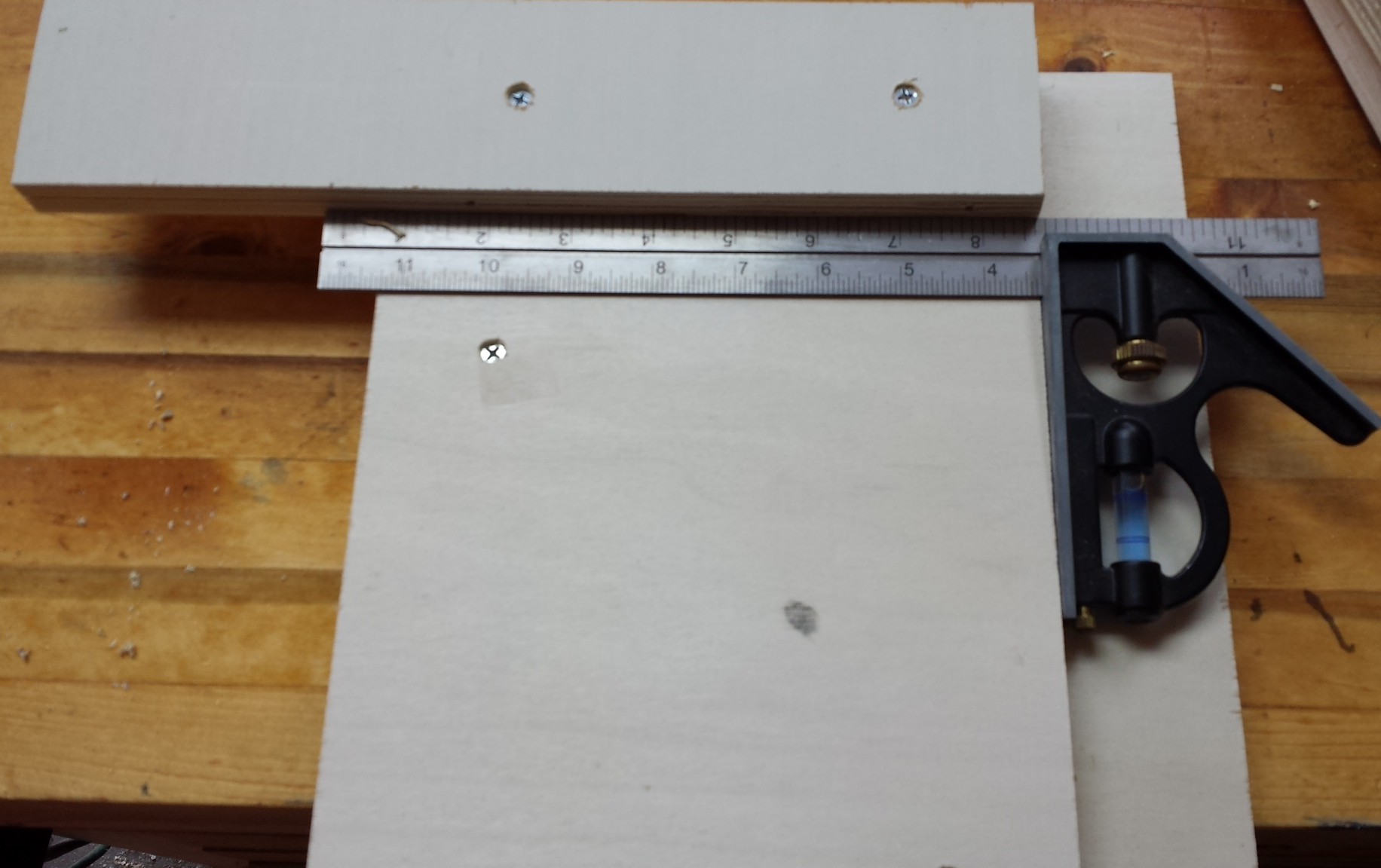
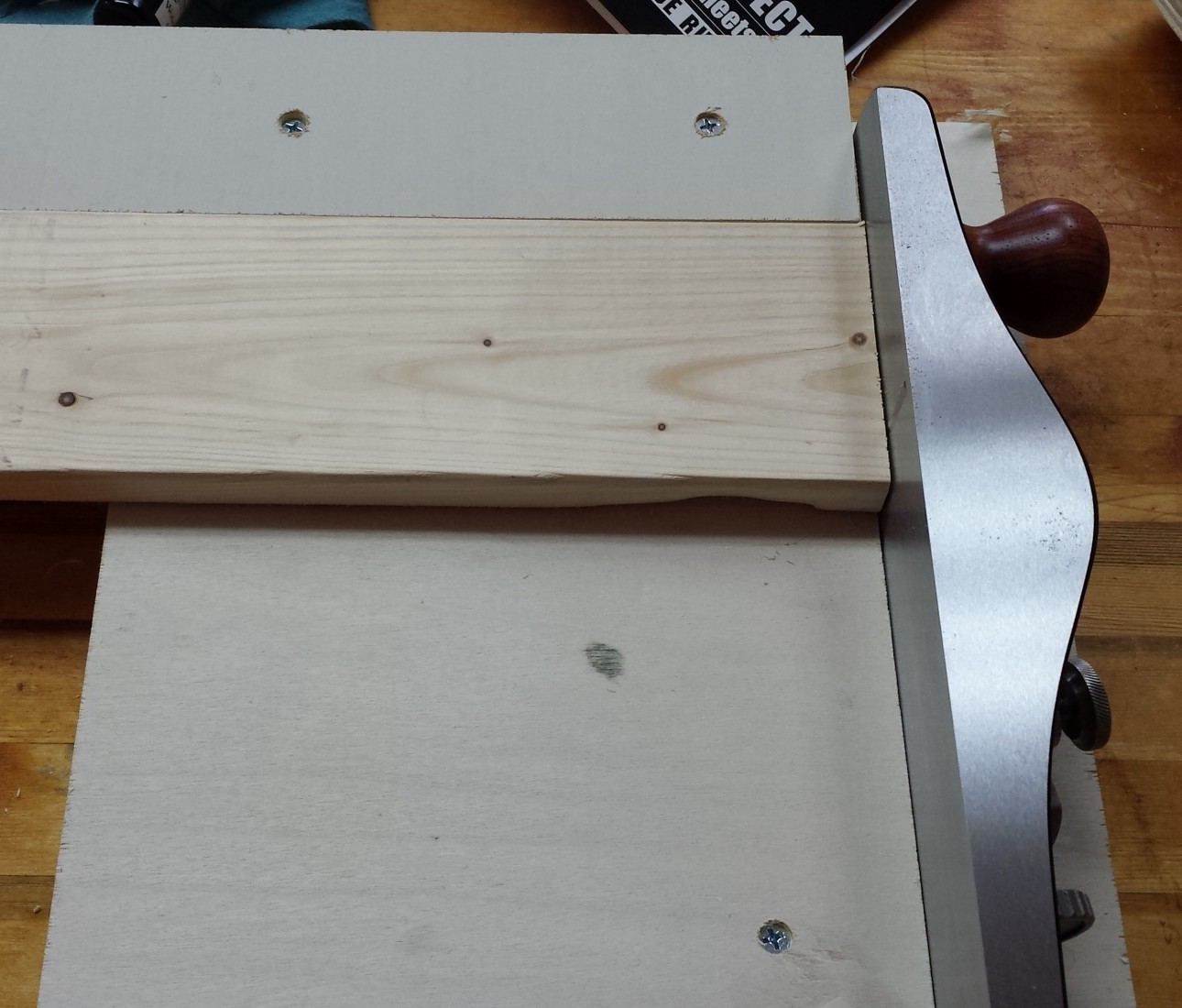
A shooting board lets you place a low angle jack plane (good for cutting end grain) on its side while holding a board to be trimmed square against a backer fence.  The plane runs across the end grain taking tiny shavings as it goes.  I attached two pieces of 3/4″ plywood to each other allowing a two inch strip on the right for the plane.  Then, at a 90 degree angle to the plane running slot I attached a stop fence.

wpid-20141012_151232.jpg

Here it is with a scrap pine board being trimmed.  The plane is my new No 62 woodriver low angle plane.

wpid-20141012_151610.jpg

As you push the plane forward, it cuts off tiny shavings from the end grain.  If the original cut wasnt perfectly square, the shooting board should fix it.  Also, It makes the end grain finish look much nicer than any saw could.

wpid-20141012_151624.jpg wpid-20141012_151918.jpg

The top piece of pine was saw cut, the bottom was cleaned up with the shooting board.  I will have to monitor the squareness of the fence.  If it wonders over time, that will introduce errors into my work.  Until then, this one works well.  So well, I had enough time to start some dovetail practice parts.


TADA!  My first hand cut dovetail.  I needs some cosmetic help, but holds well and is a really sturdy joint.  I will post more details once I have been through a pile of them and have a more solid procedure.  The shooting board did a good job of squaring up the pine and giving me a workable surface.

wpid-20141012_161352.jpg

Next, dovetail joined crates to store half pint jars.  Practice makes perfect.

How Not To Make a Miter Box

I have been slowly getting into more hand tool woodworking as time goes on.  I am starting to practice dovetails, and instead of using one of my power saws to cut the wood down to length, I wanted to do it by hand.  A miter box helps this by aligning the saw square every time, and providing a zero clearance backing to prevent tear-out.  I thought building one would be super simple and straight forward… I was very wrong.  Follow my misadventure, and learn from my mistakes.


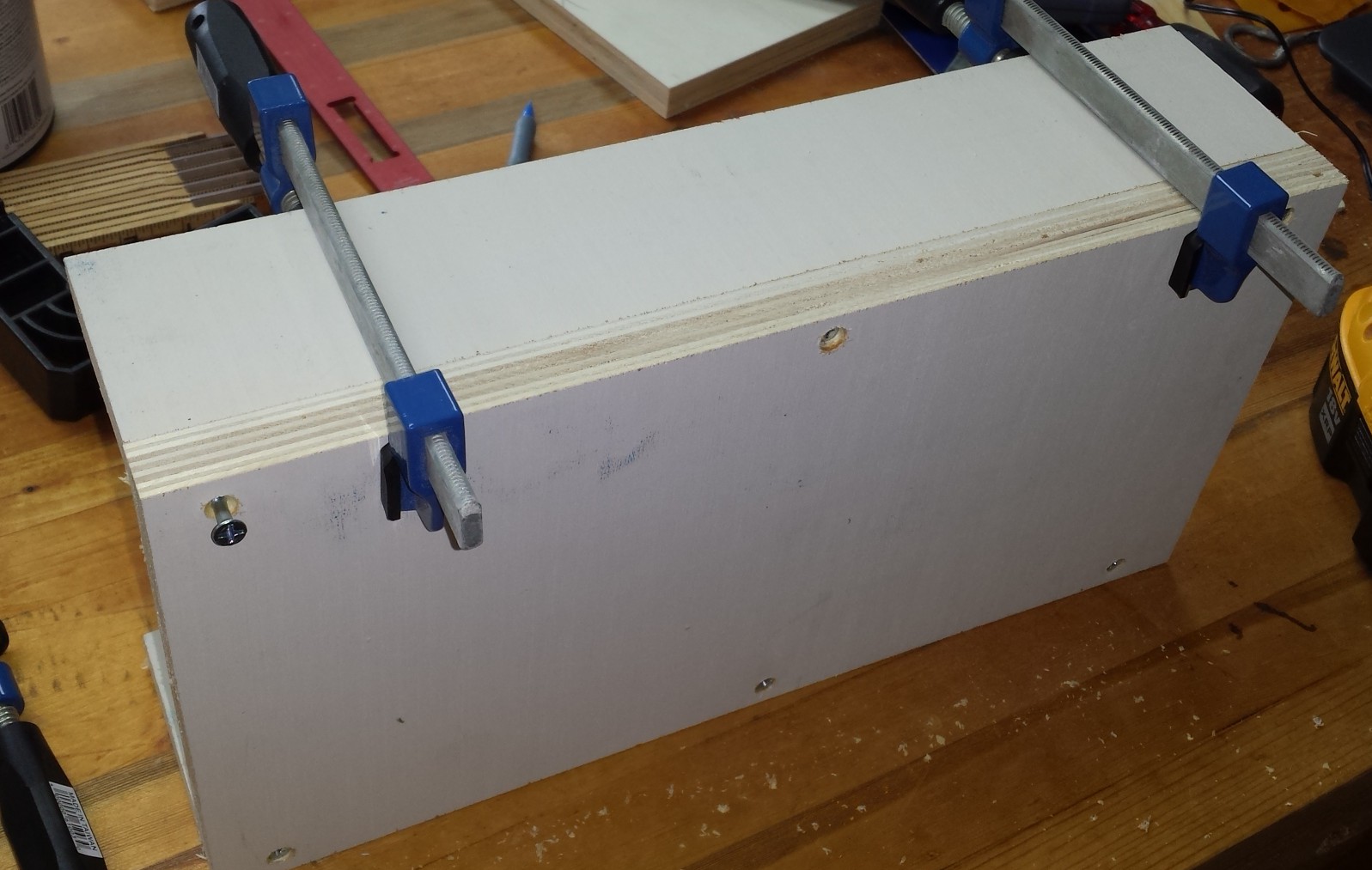
Round 1:  First, I cut out everything, and attached the side fences to the top of the bottom piece as shown below.

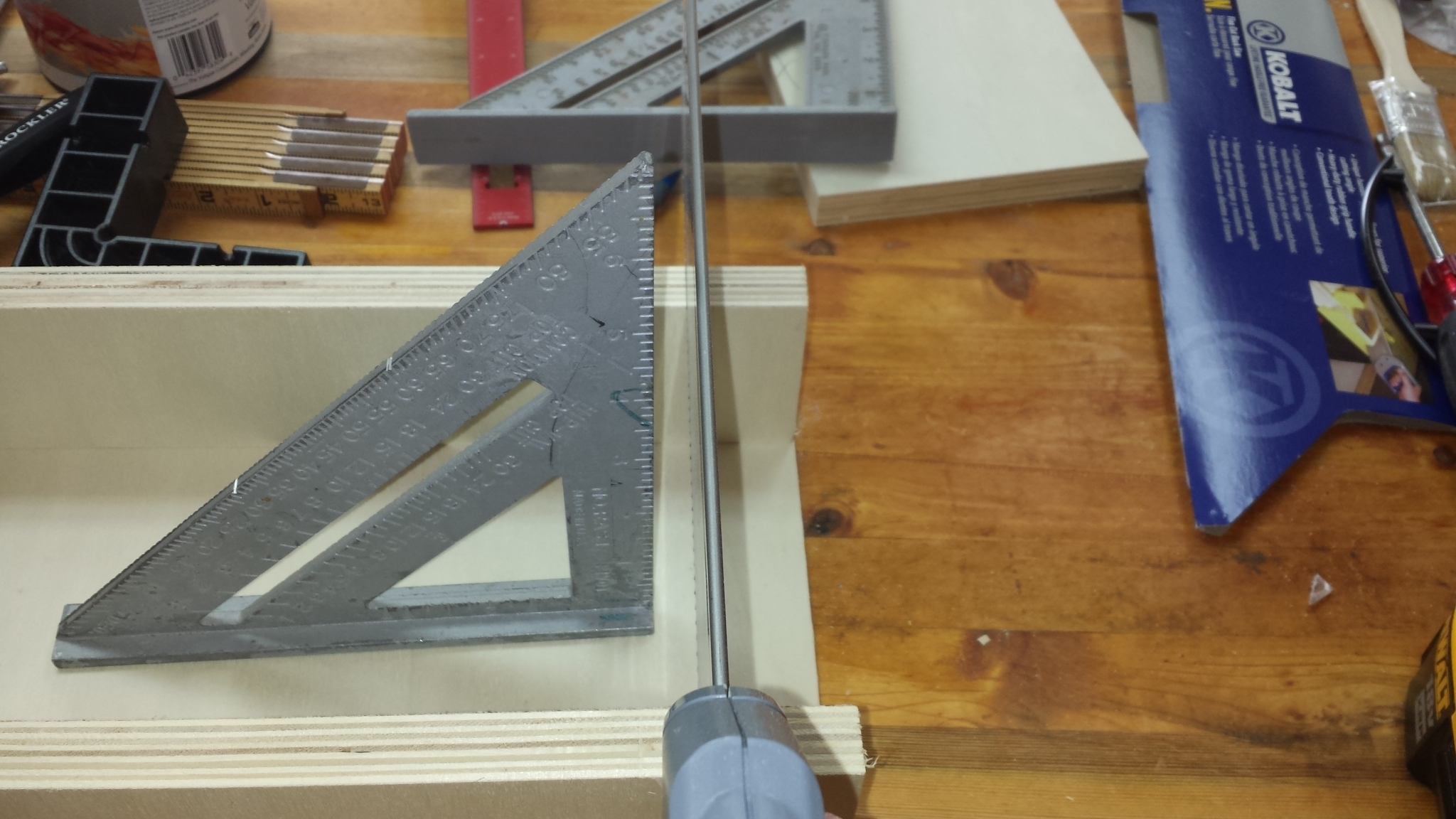
wpid-20141010_173319.jpgThis might not seem like a problem (it didn’t to me at the time), but the error will reveal it self soon.  Next, I started the guide cut by using a square against the front fence.  This acts as a guide for my blade.  Once that is started, everything cut from here out should be square.

wpid-20141010_173505.jpg

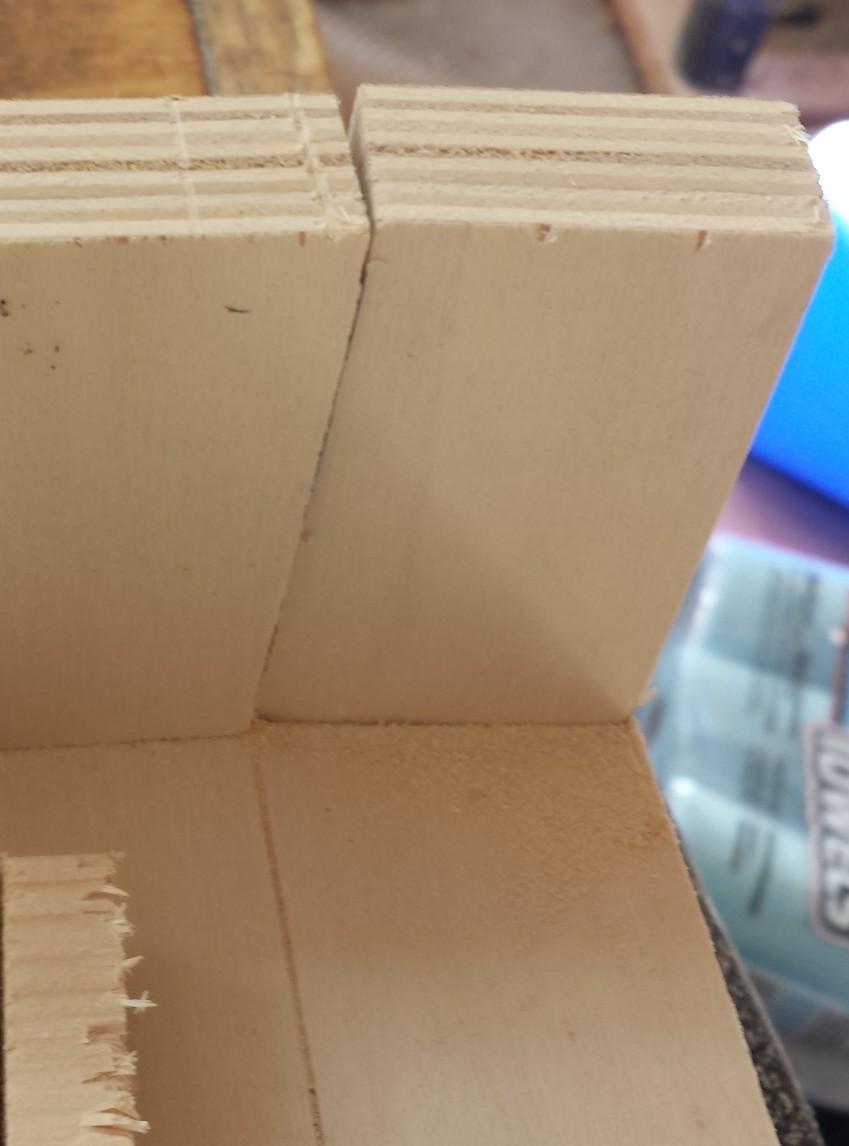
After cutting down 1/10″, I used another square to try to keep the blade vertical.  When the cut is about half an inch in, the saw should guide it self straight the rest of the way.  My resulting cut shows an issue.

wpid-20141010_173614.jpg          wpid-20141010_174527.jpg

The cut wasn’t very straight, and the end section of fence rotated.  The only thing holding it in was a single screw coming up from the bottom.  I should have attached those to the sides of the bottom piece, not the top.  Also, western saws cut on the push.  Holding the part to be cut to the front fence is nearly impossible, and I did not square my saw to the back fence.

Ok, no problem.  Try try again.  Square to the back fence instead of the front, be more careful on the vertical squareness and make new fences to attach to the sides of the bottom part.  Great, lets do it!  The next one even has the front fence cut short and rounded to help get my hand in there and hold the cutting stock firmly against the back fence.


Round 2:  I made the changes, used the squares, and here is the resulting cut.

wpid-20141010_180147.jpg

Hmmm still not doing well on that vertical cut… In fact that almost looks like there is some curve to that cut.  Well what happens when I try to cut something for real?  Jamming that is what happens!  I got completely bound up half way through a piece of pine.

wpid-20141010_180300.jpg

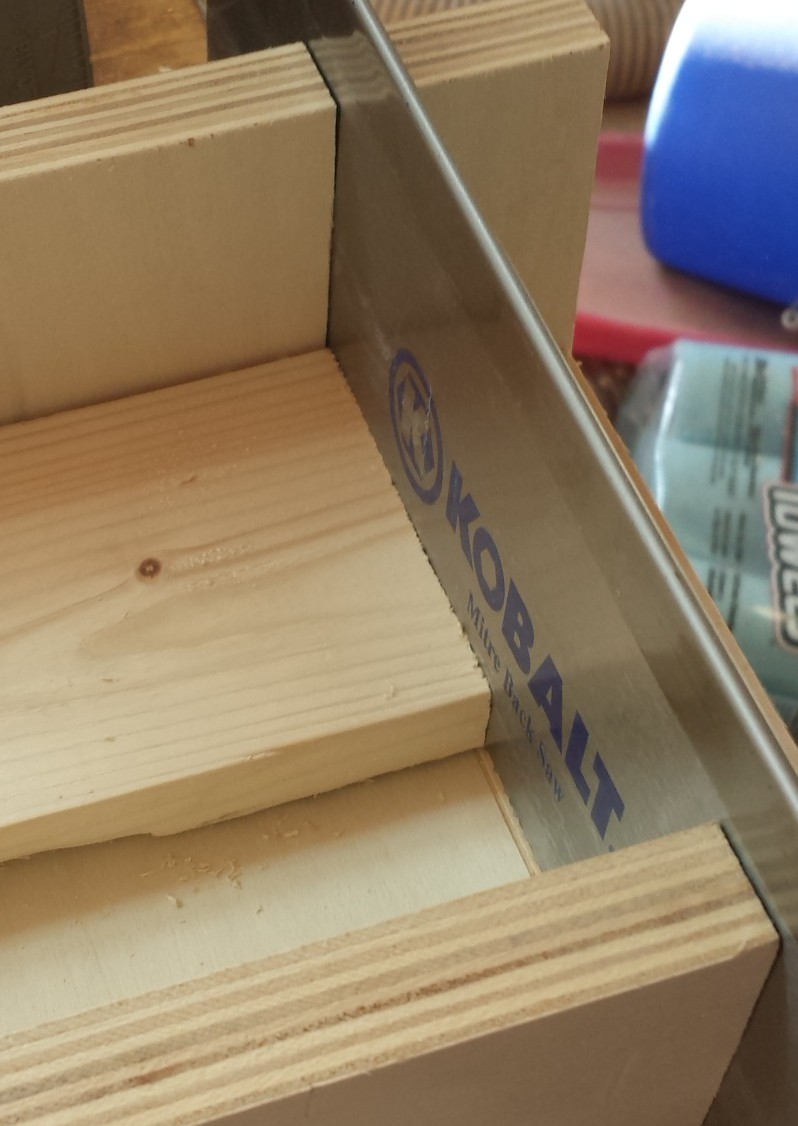
I am starting to think something is wrong with my new saw.  I checked the edge of the saw against a ruler and saw a lot of bow along its length.  It was hard to take a picture of, but there was at least 40 thousandths of an inch gap.  I guess I shouldn’t expect more from a 10 dollar lowes purchase.  My loving wife bought me a good quality crosscut saw for christmas.  It is too small to properly use in a miter box, but let me give it a try.

wpid-20141010_180713.jpgwpid-20141010_180534.jpg


Nice cut, and it did a great job cutting through that pine mentioned earlier.  Very square cut and not a ray of light past the straight edge!

wpid-20141010_180859.jpg

The moral of the story is to buy decent saws.  Too bad new ones are very expensive.  I feel like good old ones are to be had on ebay, but I have no experience sharpening saws.  Maybe that is a project for a future day.  About the only thing I did do right was the cleat on the bottom.  It lets you push the box up against the edge of the workbench, or clamp it in the vise.  I guess I will remove the front fence, and buzz down the back fence.  Basically turn it into a bench hook.

Next adventure, shooting board!