Limoncello

I don’t think I had ever had limoncello before a friend’s wife gifted me some for christmas.  She is a bartender and did some fine drink related gifts this past year.  It was really good stuff, and I wanted to try my hand at making some.  She makes it in huge batches so I was worried about a recipe scale issue.  Instead I read 5 different online recipes that don’t seem to agree at all.

The lemon to vodka ratio was pretty stable at around 8-10ish zested lemons per 750ml of vodka.  The wait time ranged between 3 days and well over a month.  Time to improvise.  I went with 10 lemons into 750ml, and taste tested it along the way. Zesting worked, and I did that to some, but it was slow.  Peeling went much faster, and my peeler didn’t get much of the bitter white stuff under the rind.

With the jar filled and looking pretty yellow right off the bat I waited.  Every other day or so I would do a tiny taste test.  It was harsh, being basically pure vodka, but the lemon flavor started coming out quickly.  I found it to be a good flavor after about a week, so I poured it into a larger bottle through a coffee filter.  The result was a tansparent yellow liquid.  Kind of looks like pee, but tastes nice and lemony.

Most recipes have you adding a lot of simple syrup.  I didn’t want this to be very sweet.  I made a batch of 2:1 sugar to water syrup and added it in small splashes with tastes in between.  The pictures below show before and after adding the syrup.  It is a 1 liter bottle and was probably right around 750ml full before.  I would guess about 1/2 to 3/4 of a cup when in, but that is a guess.  I wanted to take the edge off vodka, but not turn it into some super sickly sweet mess.  I think the balance was good.

I enjoy it warm, but having a small glass straight from the freezer is awesome!  Don’t forget that it is still mostly vodka!  Next will be coming a version with limes and another with oranges.  I can hardly wait!


Final Recipe

  • 10 Lemons
  • 750ml Vodka
  • ~1 C simple syrup to taste (2:1 sugar to water)

Zest or peel lemons being careful not to remove white stuff under rind.  Leave in vodka for around a week, tasting will help guide you.  Filter through a coffee filter into a second container.  Add simple syrup to taste.


Strawberry Madness!

The sun is out, the weather is warm, and we are in peak season of strawberries.  I went to my favorite food market and got a little unhinged with the strawberries.  20 pounds came home with me that day!

MyFile 1

I have been waiting for this day for a while.  My first canning experience was with strawberries many years ago.  We didn’t have most of the right tools, but we picked and canned a load and made the best strawberry jam I had ever tasted.  Now it is time to recreate the experience.

I gave them a wash and pulled the stem end off using a strawberry huller.  I would high recommend this tool for doing any amount of strawberries.  So quick!  The directions called for smashing with a potato masher, but I went for a quick few pulses in the food processor.  12 pounds did a good job filling up the bowl.

MyFile 2

After I had enough strawberries I began processing and canning batches.  You are supposed to do it in small sizes because the pectin can overcook.  The first group was full sugar, while all the rest were some variation of low sugar jam.  This is what it looks like with everything going in the pot.

MyFile 3

Many hours later and dinner time rapidly approaching I had 35 jars full, but still a lot of strawberries.  I had jammed 13 pounds at this point.  Well minus all the ones I ate.  Still, what to do with the remaining 7 pounds?  Three got sliced up and tossed with a small amount of sugar.  Dessert for a week!  The last 4 pounds got hulled and stuck on a cookie sheet bound for the freezer.  I make smoothies for breakfast, and my primary fruit ingredient is typically strawberries.  No reason these can’t go in.

All the jars eventually cooled, so I lined them up and gave them a spiffy label.  25 are a low sugar variety, and 10 are a regular full sugar.  7 cups went into those ten jars.  Kind of hard to imagine 3/4 of a cup of sugar getting wedged into each one of those little jars with all that fruit.  Toast anyone?

Vanilla Extract Starter

I gave away some Vanilla Extract for Christmas, and it was pretty popular.  I ran out of my 4 month batch pretty quickly.  I almost broke open the second pint slated for 6 months, but was able to hold off.  Next Christmas there will be enough for all!

The first batch was small and before my blog, so lets get bigger!  The golden ratio is 1 ounce of vanilla beans to 1 cup of vodka.  B grade beans offer a more robust flavor, and a good clean multiple distillation vodka shouldn’t impart anything extra.  I learned the basic technique from Vanilla Review.  You can do it too, in just a few easy steps!

1.  Obtain vanilla beans, jars, and vodka.

DSC_0003

2.  Cut vanilla into small segments.  (finger for scale, 4 ounces pictured)

DSC_0004 Resized

3.  Place bean fragments into jars.

DSC_0005 Resized

4.  Fill with vodka, and seal.  A date label is useful.

DSC_0006 Resized 5.  WAIT!!!  Unfortunately, this is the hard part.  My 4 month batch turned out pretty well, but I really want these to go the full 6 months.  Occasional shaking is required.  This batch was with 8 ounces of beans going into two quart jars filled to the top with vodka.  Check back in 6 months for the extract reveal.

Smoked Turkey

I love Thanksgiving, but always end up spending it at someone else’s house.  I like all of my family’s cooking, but I am passionate about good turkey!  That and I typically don’t get any leftovers.  Let the turkey-strava-ganza begin!  There will also be mashed potatoes, stuffing, gravy, cornbread, and green bean casserole.

In the past I have smoked a turkey, I have brined a turkey, but I have never smoked a brined turkey… today is that day!  I picked up a 20lb bird from the grocery store after thanksgiving.  I don’t go fancy, just store brand.  Some people recommend doing smaller birds because they cook faster and more evenly.  I say hogwash, because If I am going through all this work, I want a lot of leftovers.  Maybe I should do two small ones next time.


The Brine

I moved the turkey from freezer to fridge a few days before hand so It could start the thaw.  The night before I pulled it out and still had slightly frozen bits in the center.  The good news with brining is that soaking it in salt water should really help ensure that no part is frozen.  I used a really basic recipe because I wanted most of the flavor to come from the smoke.

  • 1 Cup salt
  • 1/2 Cup sugar
  • 1 Gallon warm water

That is all it takes to make a basic brine.  Warm water can help ensure the sugar is all dissolved.  Once I cleaned up the turkey, I placed him in a set of double trash bags.  I don’t have a good container, or any other suitable bags.  Improvise!  With the turkey in, I poured in about 1-1/2 gallons of brine.  I put the whole thing in a roasting pan for easy transport.  The bag was too big and sagged out all over the place.  A little more improvising shored it up with condiment containers to keep the brine level at the top of the turkey.  Back into the fridge till tomorrow.

DSC_0286


Smoke Prep

Good morning turkey, today is your big day!  I pulled him out and gave a quick rinse.  I put the grate in my roasting pan and placed him breast down.  I have done it breast up and down, and I think down is a little better.  It lets the dark meat juices flow downhill into the breast.  I then give it a little rub of vegetable oil and make it a tent.

Take two pieces of foil on top of each other and fold the top edge over a few times.  This makes a large sheet of foil easily without buying that wide foil.  Drape this over the bird and insert a meat probe into the breast.  My philosophy is to try to cook/steam it most of the time, then pull the tent off near the end for a golden color.  Here it is most of the way through when I pulled the tent off.  

DSC_0296

A wireless meat thermometer monitors the meat and grill temperature.  My traegar uses wood pellets to generate heat and smoke and sometimes puts itself out.  Being able to watch both on the couch is pretty awesome!  9.5 hours later the desired temperature was reached.


Results

DSC_0298

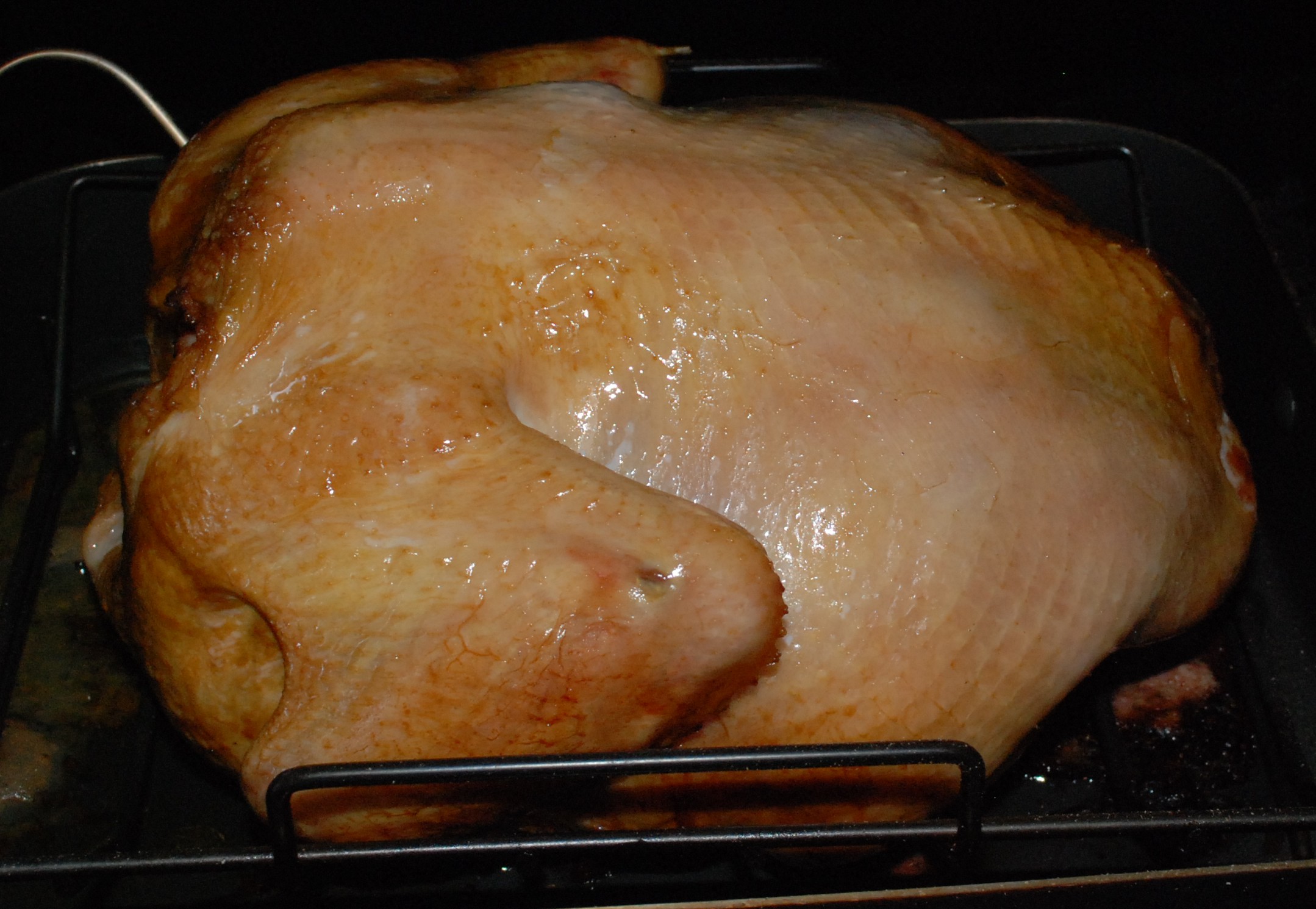
It looks golden brown and delicious.  Let it rest for a good 45 minutes while everything else took a trip through the oven.  Once I couldn’t take it anymore I flipped it over and started to carve.  Gorgeous!!!

DSC_0299

Everything had a nice smoke ring and looks really good.  The flavor was amazing.  A light smoke flavor (I used apple so the smoke wouldn’t be overpowering) was present throughout the meat.  Everything was tender and super juicy.  No dry turkey meat here, just some of the very best turkey breast I have tasted.  Gravy is only an option if you really like gravy.  Totally worth the whole day of babysitting and waiting.

Up next, turkey stock from my freshly smoked turkey!

Sesame Soy Slow Cooker Chicken

This delicious SSSCC recipe was brought to me by an ex from many moons ago.  I have made it a number of times over the years, and decided to christen my sweet new slow cooker with it.   The recipe is super simple and really only involves chicken, soy sauce, and sesame seeds.  (Full recipe at the bottom)  To my surprise I was very low on soy sauce.  I poured what I had on the chicken, and threw a little more water in the bottom of the pot to help with the steaming action.

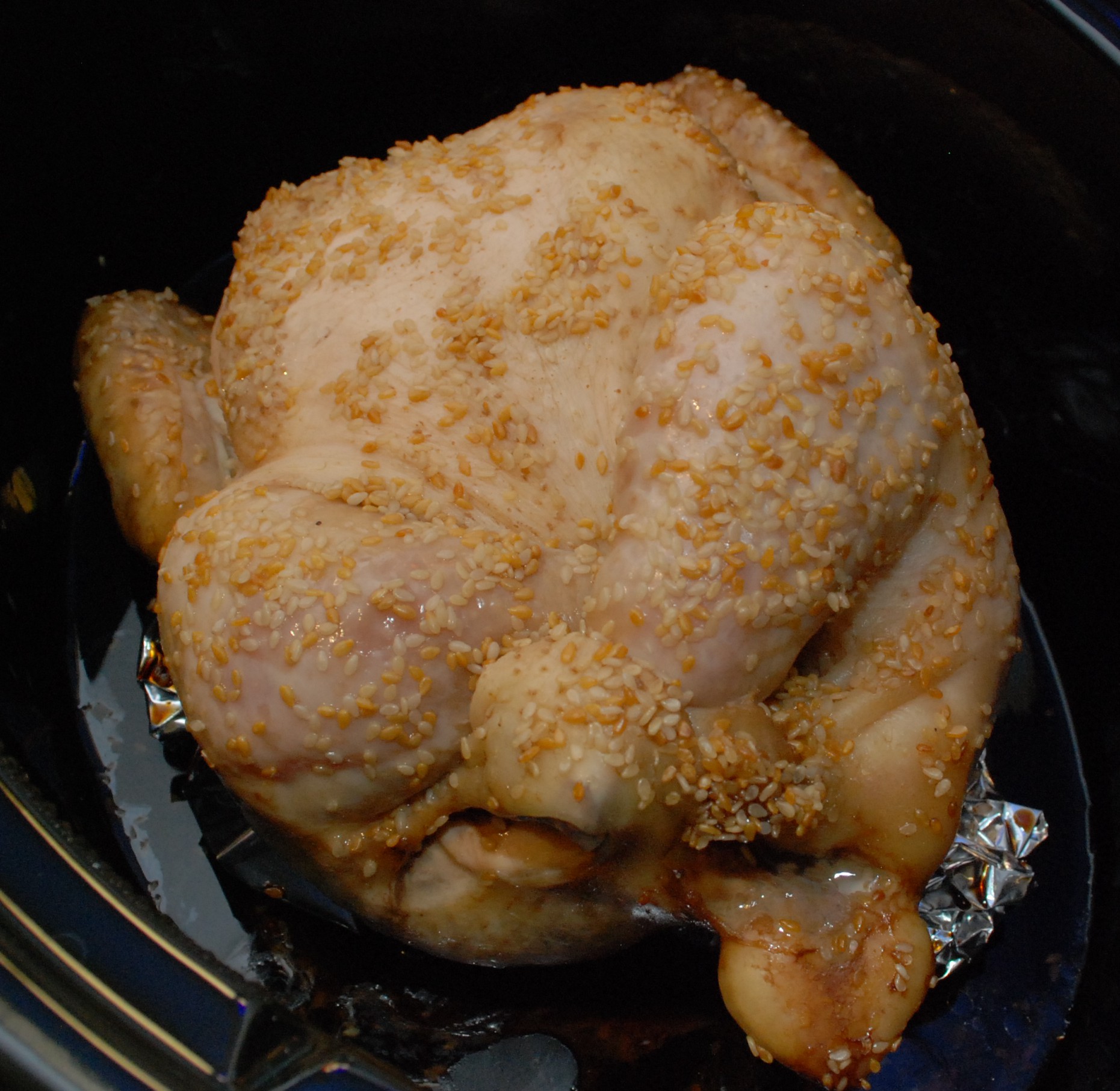
After 8-10 hours on LOW you should have something like this guy ready to go!  I was shooting for 8, but this guy was a little chunky so I gave him another 30 after reading the thermometer.

DSC_0267The results were wonderful.  The soy flavor wasn’t as strong because I only had half of what was needed.  Still, the breast was juicy and tender, the legs were pulled apart easily, but the whole thing didn’t turn to a mush pile.  This is a great basic recipe and could be adapted to a long list of other sauces and flavors.

Take the basic chicken and foil, then add buffalo sauce, bbq sauce, liquid smoke, salsa, marinade sauce, various oil based salad dressings, a few strips of bacon and dry ranch seasoning, and probably 100 other variations.  The cooking method makes a juicy wonderful chicken, the seasoning method is only limited by your imagination!


A Note on Soy Sauce

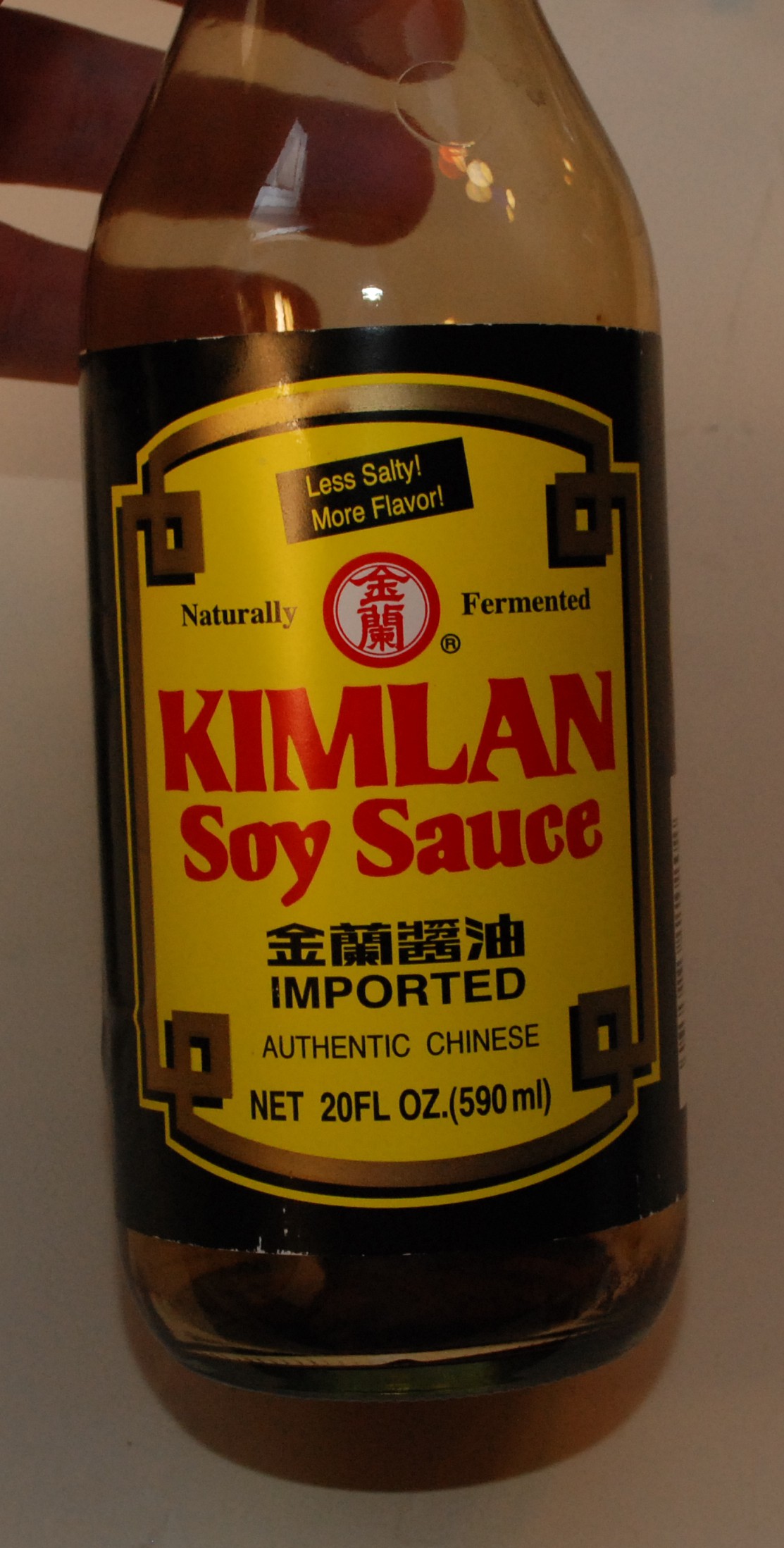
There is a word of difference between kikkoman, and the good stuff.  I would recommend going to an asian market and asking for a good low sodium soy sauce.  I went and was given this.  It is worth the special trip.  The flavor is amazing!  Regular soy sauces taste like salt water to me now.

DSC_0262


 Ingredients and Directions:

  • 1 Plump happy chicken
  • 1 Cup of good low sodium soy sauce
  • 3-4 Balls of tin foil
  • Sesame seeds

Make 3-4 balls of aluminum foil in the bottom of the slow cooker.  These will hold the chicken up off the floor of the pot.  Place chicken on the foil balls, and dump the soy sauce all over the chicken.  Sprinkle a heavy dose of sesame seeds on top of the chicken, and toss the lid on and set to LOW.  8-10 hours later you should have a gorgeous delicious chicken ready for dinner.  Smaller ones can go for 8, bigger pluckers need 10.  No hard and fast rule, but always test with a thermometer.

Scoop or Spoon? – How to flour!

Baking isn’t something I do super often, but I do enjoy it.  My cooking style had always been more art than science.  “A pinch of this, a dash of that, pour until it feels right!”  That doesn’t works well for baking.  Baking is much more of a science.  It took me a while to figure this one out.  How much of a difference does it REALLY make?  I decided to find out by experimenting with flour in what I am calling the….

SCOOP OR SPOON HOLLIDAY SMACKDOWN!

I am making peanut butter cookies for Thanksgiving (Plus PB chips and using homemade peanut butter!) and decided to cut the recipe in half and do half with scooped flour and half with spooned.  The scooped one involves scooping out a mound of flour with the measuring cup, then leveling it off with a knife.  This packs in more flour than the spoon method.  Spooning means you scoop flour with a spoon and shake it into the cup.  Level with a knife.  Seriously, how big of a difference could there be?

Quite a bit of a difference as it turns out.  The recipe called for 2-1/2 cups of flour.  I cut that to 1-1/4 cups.  They measure 6-5/8 oz for the scooped version, and 5-3/4 oz for the spooned one.  Assuming the spooned is exactly what you want, that is a 15% increase in flour by weight.  That doesn’t sound terrible, but maybe it is.

The only way to know for certain is to go through with the half batches.  I creamed all the sugars as one big batch and divided them in half by weight.  The baking soda, salt, and baking powder were measured, combined, weighed, and divided.  This is a lot of work and a pile of dirty dishes for cookie science!  Once combined I made sure both went into the fridge (1hr according to the recipe) next together and in the same container.  The spooned batch was lighter in both color and texture.

They came out of the fridge at the same time and shared space on the cookie sheets.  A 1″ cookie scoop regulated the size to make sure that didn’t vary between the batches.

Once cooled I tested one a bunch of each.  It isn’t as big of a difference as I thought it might be.  The spoon cookies were lighter and soft on the inside while having a crisp on the outside.  The scoop ones were heavier and chewier.   I guess I prefer the spoon, but sometimes a dense PB cookie is pretty awesome.  Maybe this makes a bigger difference in sugar or chocolate chip cookies.  This recipe has about half the flour as a chocolate chip recipe.  If this were mythbusters we would say plausible but not confirmed maybe?  Regardless, I got to eat cookies for science!!!

On a completely unrelated note, I think I have eaten too many cookies.

Big Apple Batch!

I am getting better at batch processing food for canning.  There was a nice swing of chop-boil-mill going on yesterday  Apples are on sale here so we went to our local produce market and stocked up with 37 pounds of galas, pink lady, braeburns, fujis, and honey crisps.  I was going for 50 pounds, but stopped when the box they gave us was getting pretty full.  Good thing too, my sink can’t hold any more!

DSC_0130

I made a previous post detailing how I make applesauce and apple butter, so see that if you want instructions.  I filled up the crock pot for butter, and jarred the rest.  In all 37 pounds of apples produced a full crock pot (4 quarts of sauce -> 10 half-pints of butter) and 7 quarts of applesauce (a very full stock pot!).  This is a good size because my crock pot was full, and my canner only holds 7 quart jars.  Next time I have a weekend at home I can use a few sauce jars to make more butter.  Hooray for fall!

Based on my previous few attempts I am producing 1 quart of sauce for just under 3 pounds of apples.  50 pounds would get me a full crock pot and two rounds of quart jars in my canner.  That would be a full afternoon!

DSC_0138

Peanut Butter

Homemade peanut butter is one of life’s simple pleasures.  It is pretty easy to make, stores well, and every batch I have ever made tastes good.  A question that immediately comes to mind is: “Why make peanut butter?”  After all, it is cheap and plentiful at the store.  Even if you were just looking to avoid the hight fructose corn syrup that exists in most there are many “natural” brands that exist without added sugar.  That is all true, and yet still I like to make my own.  Why?

I think it comes out tasting better than the “natural” store bought brands, and it really doesn’t take much work.  Plus you can tweak things to your liking.  I enjoy a little honey in my peanut butter.  Some things are just worth trying to make once.  If only to see how it gets to the shelves of your stores.  It is easy to forget how much modern industrialization has saved us in labor and time.  An occasional reminder is refreshing.


 Directions

  1. I start with 2 cups (~10oz) of dry roasted peanuts (you can use honey roasted or any other nuts for that matter) in a food processor.
  2. Turn food processor on.  At one minute it should look coarse but kind of like peanut butter (see picture)
  3. At two minutes, it will look about done.  Don’t stop there!  I take the top off and scrape down all the sides to make sure everything is getting combined well.
  4. Take this time to add ingredients
    1. 2-3 teaspoons of peanut oil (for added creaminess)
    2. 1 Tablespoon of honey (I like tupelo)
    3. 1/4 teaspoon of salt
  5. Continue processing for an additional minute, and you have peanut butter!

Ingredients: I have worked out those ratios based on my tastes.  You can get by with out adding anything or by adding lots of stuff.  Just don’t go overboard with the salt, that can sneak up on you.  The two cups of starting peanuts used my 20oz jar in two pretty even batches.  Dropping down slightly to a 16oz jar of peanuts should be fine.

Food Processor: I have made this with a smaller food processor and it had a lot of trouble keeping up.  If yours doesn’t look like my picture at the set times, then keep going till you get the right texture.  Drop back on the amount of peanuts next time.  Mileage may vary with the quality and power of food processor.

Storage: I stick mine in cleaned half pint mason jars.  The 20oz of peanuts gave 3 half-pint jars of peanut butter.  These can not be canned with normal methods, but do store well in the fridge for a few months.  These jars will not last that long in the Hansel household.

Cold peanut butter tough to spread?  Give it a 20 second trip through the microwave to get the right viscosity.  A longer trip will make it more like a dessert drizzle for ice cream!  The texture is pretty smooth, but you will never get it as smooth as the skippy guys do.  Crunchy peanut butter can be made by chopping up a small batch of nuts in the processor before hand, and combining in the final few seconds of your batch.

-Chase

Salsa Experiment 1

previous post explained my methodology for salsa experimentation.  True to that, I have started with my most experienced version of salsa.  Food processor cut, and pot cook.  I upped the size to make enough for a good canning.  In doing so, I think some of the quantities will have to be altered.  Other than that, the results were good.


Ingredients:

  • ~10lb of Roma Tomatoes
  • 8 Bell Peppers (multiple colors)
  • 2 Onions
  • 3 Bulbs of garlic
  • 1 Bunch of Cilantro
  • 8 Small Habaneros
  • 6 Limes
  • 1/4 Cup Vinegar (evens out heat, and important acid for canning)
  • 1 tbs Cumin

This worked out well and was a very tasty salsa.  I might up the habaneros next time, and cut down on the bell peppers.  It was a little wattery at first, and not quite enough spice.  I am a lightweight on spice, so add a lot more hotness if you are a fire head.

UDPATE: Now that I have eaten a pint or two of this I think it needs fewer bell peppers.  Next time I will drop down to 4-5 peppers and add a few more tomatoes.  The spice starts off mild and has a slow buildup after a while.


Tomato Core and Seed

A small tomato corer or melon baller does a great job of getting the stem end out, and de-seeding.  I find it is best to chop the tomato in half (top and bottom) and scooping out the seeds from there.  It is quick and easy if you have the tools.

Peppers

Peppers are de-seeded by first cutting them in half, and again use a melon baller to scoop out the seeds and white material.  Habaneros have most of their heat in the seeds and white center.  The flesh has some spice, but also a lot of flavor.  Use the baller to remove the center bits and keep the delicious flesh.  Also, WEAR GLOVES!  I had an interesting experience with inserting my contacts a full day after chopping habaneros with bare hands once.  Not pleasant.

Food Processor

The food processor is a wonderful invention of the modern age.  It does have a few issues though.  First, you really don’t want to overload it.  Putting too many ingredients in can cause some to become mush, and others to jump around on top un-chopped.  Every food processor has its limit, so start small, and work your way up until you find yours.  Never use the ON feature either, if you have a pulse button.  Pulsing manually helps keep things mixed up and aids consistency.

When doing salsa, I want some ingredients to be a little coarser.  Putting in only a single pepper, or 2-3 tomatoes at a time and doing a few quick pulses gives good results.  Again, If I threw twice that in and tried it the results would be all across the map.  I quarter the big peppers and onions before putting them in, while the tomato halves get thrown in as is.  Cutting these smaller to start with, might help the processor out.  I will try that in the future.

Cook Down

I cooked down the ingredients for 2-3 hours to concentrate flavor and reduce water content.  We had a party to get to, so some of this got spooned off and offered fresh out of the pot.  The rest was refrigerated and canned the next day.  I have done this a number of times with good results.  Sometimes you just don’t have a whole day to can.

Overall I am very happy with this salsa.  It only took about 2 hours to make from start to finish plus the cook down and canning.  The food processor and melon baller make things go quickly.  The texture is fine with a few monster chunks that didn’t get through the food processor right.  There was a lot of water, but this could have been from the high pepper content.  I would rate it a solid salsa with an easy prep and cleanup.  I think the pan searing will offer a bolder smokey flavor, and the mill might improve texture.  Still, this is a good go-to recipe for salsa.

-Chase

How to salsa… Not the dance

Let me start by saying that I love salsa.  It can be a wide variety of things with different techniques, ingredients, and styles.  I have experimented a bit with different versions of salsa and wanted to document a few key ways to make it.  First off, Pico De Gallo is delicious, but not what I am going for.  Pico is with fresh, uncooked, ingredients.  I am looking for a cooked salsa that I can can (in a jar) for future use.  Fun fact, salsa means “sauce” in spanish!

I am not going to do a lot of ingredient variation in my experiments.  I have a set of things that make a good salsa and want to focus more on the salsa making techniques than the ingredients.  Specifically how the vegetables are chopped or milled, and how they are cooked.  Texture is an important part of eating, and the process of cutting or smashing could release different flavors.  Similarly, the cooking method can impart or alter flavors.  I am going to break up the different techniques into a table and slowly check off each version, documenting as I go along.


 Vegetable Cutting

There are really three ways of getting this done as I see it.  Chopping by hand, food processor, and food mill.  The hand method can provide select sizing of ingredients, and not “mush” anything along the way.  It is very slow, and I like a finely chopped salsa.  That leaves chopping ingredients via a food processor and a food mill.  I have used the food processor with good results, but it can liquify the ingredients too much sometimes.  The mill will be new to me, but promises consistency.  I will be using this attachment to process the ingredients.

Cooking

The raw ingredients have to be cooked.  I have used two different techniques to cook them.  First is to chuck everything into a pot and cook it all down.  Easy, effective, and it mingles the flavors.  This works well for canning, because you have to heat everything up enough to can it safely.  The other way is to sear the ingredients on a hot cast iron skillet before combining.  I have done this with out any cook-down, and it yielded great results!  This would still require some time in the pot before canning.


I made a 2×2 salsa matrix to show how the combination plays out.  Think of it as some sort of salsa round robin challenge.  May the odds be ever in your favor!

Slide1

-Chase