Printer Upgrade Part 1

While out on our euro-trip the MK2.5 upgrade for my beloved Prusa printer came in.  I had finally plowed through enough chores to get started on the upgrade when I realized you need to print everything first.  I ordered this 6 months ago and could have easily lined up all the replacement parts by now.  Oh well, shame on me for not reading ahead.  They did include a 1/2kg spool of PETG to print everything with, so lets get that started.

DSC_1206

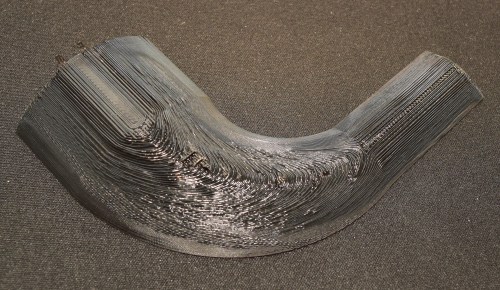
Now I know my bed is shot, thats why I wanted this upgrade.  It gives you a double sided spring steel printing bed.  Still, I couldn’t get the first layer of Prusa supplied PETG to stick to save my life.  This was my best attempt, and this was pretty bad.

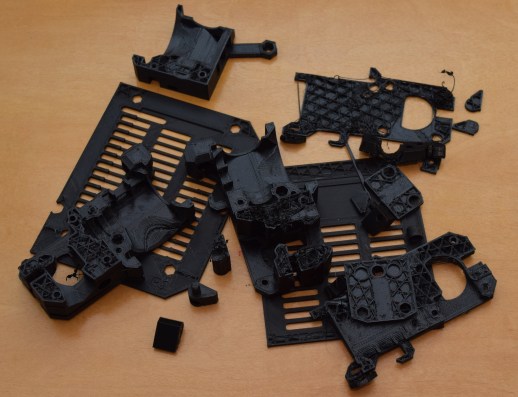
I switched to some Push Plastic brand PETG that I had around and it initially looked golden.  Soon though I ran into issues.  There were z-layer striations in many of the prints like the nozzle was partially jamming.  I thought some of the odd and difficult to print features were to blame and broke up the prints into smaller batches.  These batches had problems too.  I spent 2 days printing with different settings, cleaning out the nozzle, replacing the nozzle, taking everything apart, switching to PLA, and doing about 10 other things.  All I did was get more frustrated and produce a pile of garbage.
DSC_1208

I was incapable of producing small parts without error and big parts would completely jam before finishing.  These were the most horrible frustrating times I have ever had with a printer.  Even worse than my monoprice, and that is saying a lot!

I thought the hot end section was damaged, and on one of the tear downs to look for issues, I decided to give the extruder a rotate.  I had checked its pin out with a multimeter, and inspected the wires for frays, but a single rotation by hand gave me the clue I needed.  It was nearly impossible to turn.

DSC_1207

Here is what the inside of a Prusa MK2 extruder motor looks like in case you ever wondered.  The bearing on the left is fine, the one on the right is frozen solid.  They are a smaller size than the 608 bearings I have around, and that most people use for projects.  I ordered some to repair this unit, and contacted Prusa about getting a whole new extruder.  If it isn’t too expensive I will eventually swap my repair job for a new unit.

The bearings will be in shortly, but I am dead in the water till then.  Once repaired I will, hopefully, be able to finish printing all the upgrade parts, then I can have a whole new extruder setup and print surface.  Until then, this is what my poor printer looks like.  Never a good site.  Nice use of my printed organizer tray.  It keeps screws and bits separated and organized when you take something apart.

DSC_1209

Euro Trip!

The wonderful wife and I went on a little trip to England and France.  I have a number of complaints about France, but this isn’t a travel blog, its a craft blog!  One of the woodworking highlights was a visit to the Victoria and Albert museum.  They had a furniture exhibit that showed an exploded cabinet with all the traditional joinery.

20180411_124051

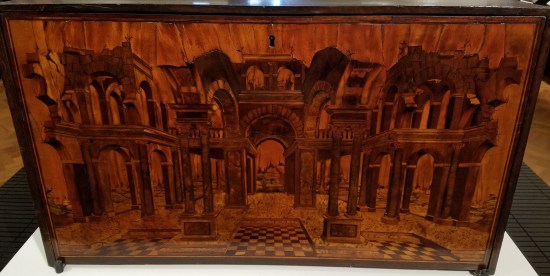
They also had many different examples of marquetry and other types of highly decorative woodworking.  Stunning!

20180411_124203

The whole building was a work of art even without any contents.  It is a piece of history too.  On the way out we walked past one of the sides and I slowly noticed something was wrong.  Instead of immaculate, the building wall was a little dreary.  It had a lot of chips and damage.  In fact that damaged looked kind of specific.  Like it was hit by something ballistic.  The realization came over me that this could be left over from the war.  At that point, we came upon this portion of the wall.

20180411_134954


Further on in London we went to Kensington Palace.  It is where some of the royalty live, and has something about queen Victoria and princess Diana’s clothes or whatever.  On the plus side I got to be royalty for a few minutes!  Having had my fill of royal baby clothes I left my fearless partner to take her time and sped ahead to the cafe.

I was most of the way through when I had to go down a large stair case that caught my attention.  It was a 30×30 foot area that was at least 20 feet tall that was completely paneled with quarter sawn oak.  By the time I got to the bottom I became really interested in its construction and stopped to inspect up close.  After a minute the attendant asked me if I was ok.

I proceeded to give the guy a small talk on how frame and panel construction is done.  The picture above is how my wife found me!  The guy had worked there for years and never had anyone stop at the bottom of the stairs like that.  I explained to him how the large panels will grow and shrink with the seasons, but the relatively thin frames will keep the doors and structure stable.  Once I said that he noticed a sliver of color difference at the edges of the panels from seasonal movement.  He had been there for years, but was seeing all kinds of new details with a little knowledge.

I was lucky apparently, this wing was going to be closed off for renovation within the next week or two.  The staircase was from the 1600s and needed some help.  Lucky me!  A house full of royal artifacts, and I was apparently the only person to appreciate the fact that a million hours had been spent building this room.  It was a lot of oak.


Aside from England we had a decent river cruise on the Seine in France.  The boat we were on was pretty swanky.  They had a frame of gorgeous honeycomb at breakfast for your oatmeal.  That can’t have been cheap.  Makes me miss our bees.

20180415_080844

20180416_112702

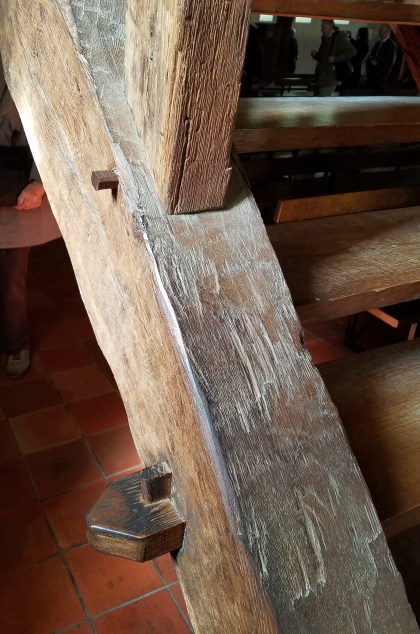
Our tours took us through a number of old abbeys and churches.  Much of the stone work was marvelous, but once again, I have an eye for staircases.  This whole place had hundreds of pegged mortise and tenon joints.  Otherwise the only real woodwork of interest were some very old doors here and there.  I was too busy ogling to get any pictures.

I should start a tour company that just takes you places with really cool woodworking.  Wood Wonders of the World has a nice ring to it!


Printing With Supports, DC Fittings

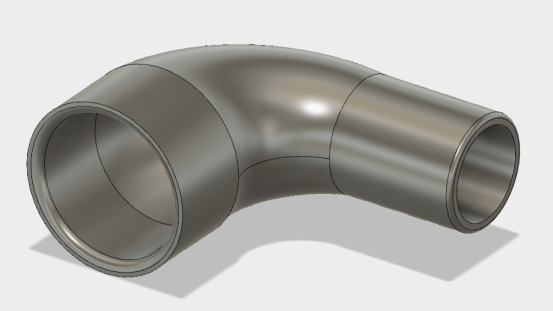
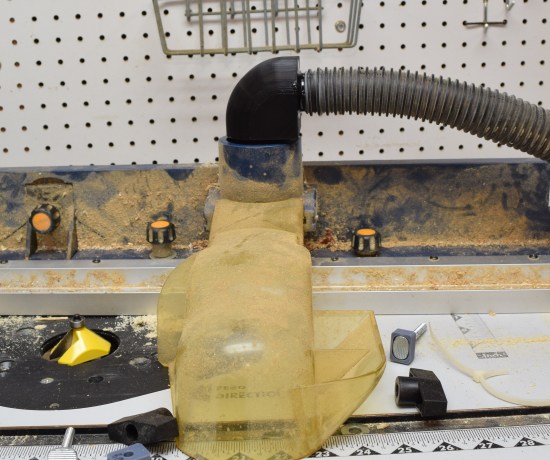
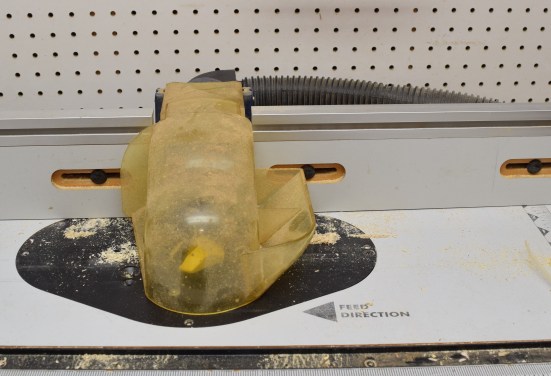
I started off wanting to create more custom dust collection fittings.  This time for my router table.  I need something to go from the back of the fence to the dust hose, and take a tight 90 degree turn.  I quickly came up with a 3D design that smoothly transitioned between the two diameters.

Screen Shot 2018-04-05 at 7.03.43 PM.png

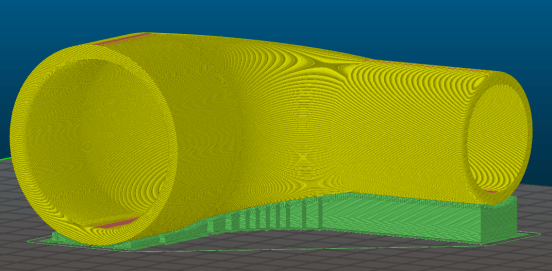
This isn’t a simple print.  Previously I used a PVC elbow to make the turn, but I wanted to work on my support skills. The shape starts large on the left, but gets smaller on the right.  That means very little is ever touching the print bed.  I knew this would require a lot of support material to work, but thought it would be a good challenge to fiddle with support settings so that bottom surface was as smooth as I could get it.

Screen Shot 2018-04-05 at 7.09.30 PM.png

The slicer software shows in green the support material.  I can only print one material at a time.  What it does is tries to make a very sparse little structure just below the main model surface.  The printed model will droop a little bit, but hit the support and not droop any further.  If you get it right, the bottom looks good, but is able to be broken away from the support.  That is the theory at least.  In practice, anything I have printed with support has looked horrible on the bottom.


I started with the default settings that were recommended for my printer.  Instead of printing the whole thing I only let it print the bottom bit just past the support.

DSC_1200

It made it out alive, but looks rough.  The bottom layers are pretty loose and separated from each other.  Could I improve on this?

DSC_1202

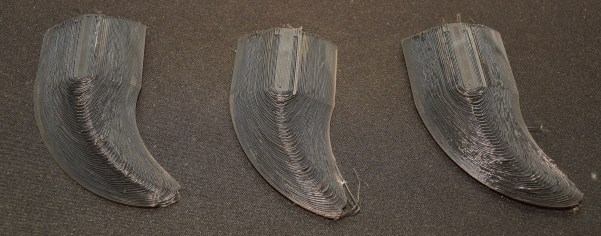
Not really as it turns out.  One trick is to reduce the print temperature.  If it is cooler it will solidify faster and not droop as much.  I also tried modifying that support surface to be more solid so it would offer smoother support.  On every one, the edge would peel up and get caught by the nozzle.  They all failed at roughly the same spot.  No big deal, go back to the settings I started with.

DSC_1203

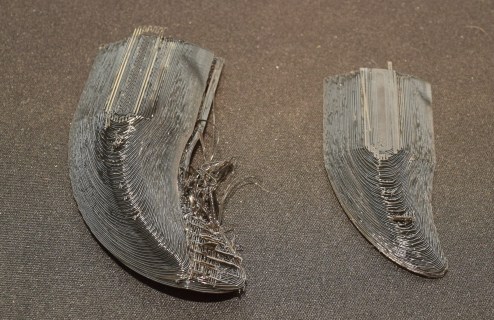
The left one was the original settings, and the right one had the support structure even closer than before.  All of them fail in the same way, that thin bit on the bottom right bends up and catches the nozzle.  Printing the support with no gap would make it hold well, but might make removal difficult.

DSC_1204

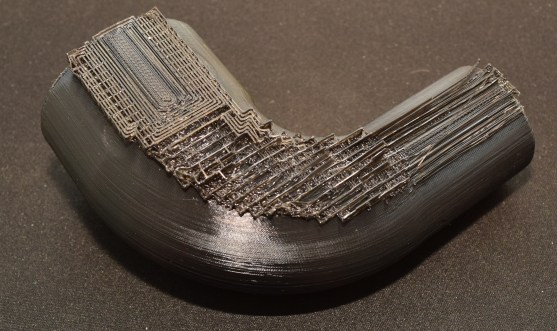
Ok, the print didn’t fail, that thin bit was firmly stuck down, but the support structure is welded on there.  Time for a re-think.


I wanted elegant, but now I am going with simple.  Instead I printed a tube to connect to the hose, a tube to connect to the router, and a block with a swept section that connects the two.  5 minute epoxy is the universal force that binds us together.

This lets me print each segment in the ideal orientation and then put them together later thus maximizing the ability of the printer in each situation.  The final result works well.  So much for increasing my supported print skills.

DSC_1192

DSC_1193

Green Power Station

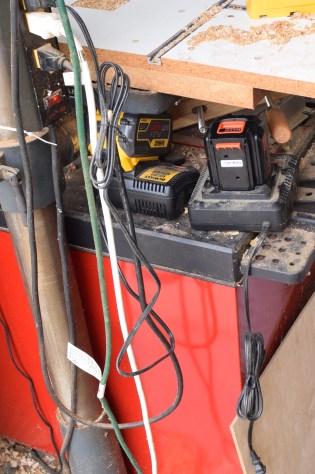
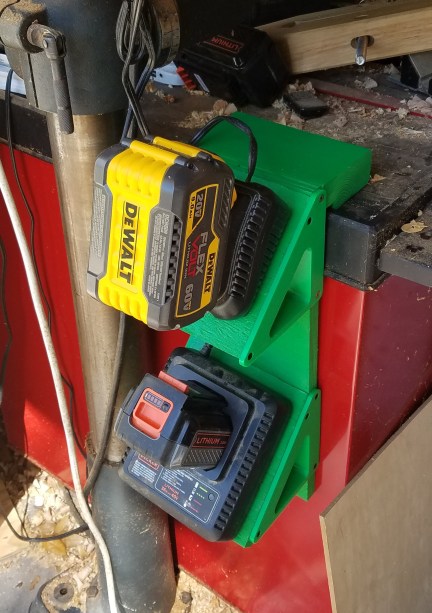
DSC_1186I have a poor solution to storing my yard tool batteries.  I never developed a clear place for them, so they ended up piled onto the cart that holds all my drill press junk.  That seems to be the story of my organizational life.  Either make a place for something, or expect it to be awkward and always in the way.

No more, I am going to clean this up a bit and make a specific place for these chargers.  Behind the drill press is a good location.  It is right next to the garage door and easily accessible when I am mowing.  I had a few ideas for mixed wood and printed brackets in my head and decided to use this as an opportunity to try something.

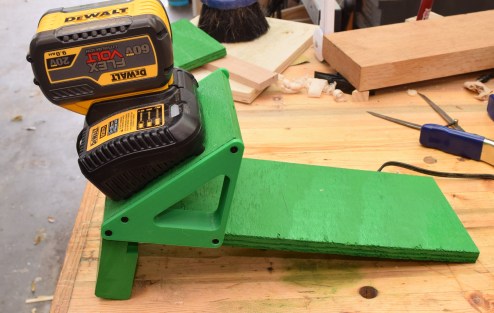
Angled braces are doable in wood, but can be a little tough to make symmetric.  This printed bracket ties the two pieces together well and should be able to support a massive amount of weight.  I don’t need it to in this case, but it was a good test.

They are green because I had some older green filament I wanted to use up.  Might as well go green on everything.  The wooden parts got a spritz of some well matching green I happened to have.

Once dry the brackets made installation pretty simple.  It holds the mounting plate at a consistent 45 degree angle and is pretty strong even with only one side installed.  I mounted the top charger so I could figure out impingement free placement for the lower charger.

DSC_1189

The L piece the two chargers attach to has a notch in it so it will hang on a lip on the red toolbox below my drill press.  The drill press area is still a hot mess, but this ticks one problem off the list.

20180401_152746.jpg

I Got Published!

The May/June 2018 edition of Fine Woodworking magazine has arrived and I got published in it!  I was starting to wonder if that would ever come out, I submitted it in January 2017.  I just submitted another tip a few weeks ago but got rejected.  Who knows, maybe I can get one or two publications ever decade.

20180329_174755

Smoker Rehab 2018

Two years ago I pulled my old smoker out and gave it a complete overhaul.  It needs a little help again.  Nothing dramatic, but the paint is chipping up with rust blisters in places.  Best to get to that before they become dramatic.

A heavy grit flap sander pad on my angle grinder did a good job of cleaning off the paint and exposing fresh metal.  I think I used a wire brush last time, but this works a lot better.  So much better in fact that it revealed a lot more bad paint than I had originally thought.  I had sites all over the smoker that needed grinding and repainting.

Out came the high temp primer and paint.  I basically ended up repainting 75% of the smoker.  That was a lot more dramatic that I set out to do, but I figure it is a lot cheaper than having a rusted out smoker.

With it safe from the elements for a few more years I had one trick to install.  I wanted to customize the front fold out table.  I figured some kind of Florida BBQ sign was in order.  I was going to make it look like a caution road sign, but then thought that would reflect poorly on my cooking.  Watch out for this guy’s food!

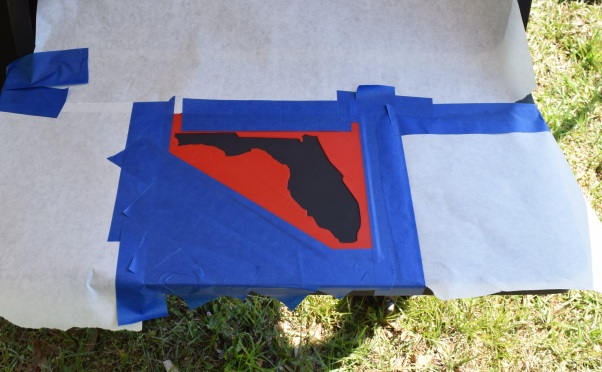
I would historically use my mill to cut a stencil from thin plywood or hardboard.  I haven’t used it in ages and need to spend a day on repairs and re-learning how to use it.  Instead I tried to 3D print a stencil.  It can make finer curves and lines anyways.

DSC_1177

I sprayed the back with some light hold adhesive hoping that would keep spray paint from seeping under while letting me pick the stencil back up.  I masked around it and sprayed away.

DSC_1178

The edges weren’t as clear as I had hoped, so for the BBQ letters I sprayed more adhesive and make sure to rub it onto the grill table really hard.  That probably would have gone ok, but I sprayed too much paint and it seeped under.  Multiple lighter passes would have worked better.  I used too much adhesive and it left residue on the table.  I will wait a few days for the paint to really cure well before hitting it with a solvent.  I also didn’t mask enough and got a little over spray on the grill.

DSC_1181

Up close it has a lot of issues, but from afar it isn’t bad.  All lessons learned for next time.  Maybe in 2 more years when it needs another paint touch up I will have a better plan for branding it.  The smoker will be 11 years old at that point!

Belt Sander Grinding Table

*Update* I got this thing published!

I have been wanting to move my hand tool grinding to a belt sander.  My hand grinder works, but is really tough to get an accurate angle.  Also despite the slow speed I have still managed to burn blades on it.  Belt sanders remove material more slowly, but don’t get nearly as hot.  The build is hard to explain, so I will start with the finished product.

DSC_1140

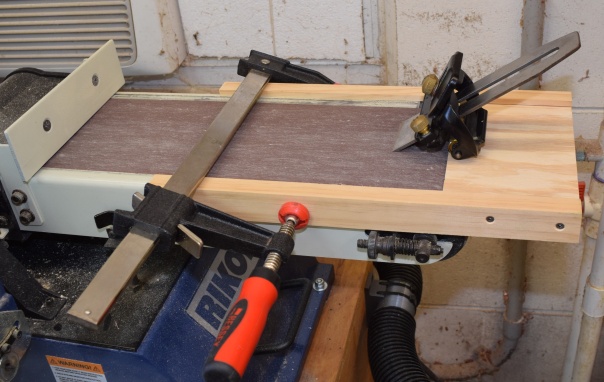
It is essentially a small flat surface that sits on the same plane as the moving sanding belt.  Because the table isn’t moving you can use your favorite honing guide jig to keep a really accurate angle.

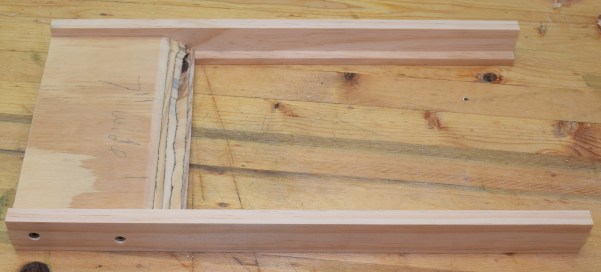
The table is held in place with an “L” shaped piece of wood.  I cut the groove on the table saw wide enough to catch the top of the sander surface, but not so wide it interferes with the moving belt.

DSC_1136

I attached a piece of plywood to the inside of that L so that the top of the plywood would be co-planar with the top of the sander.

DSC_1137

DSC_1138

I took the table surface to the belt sander to cut that angled shape.  It needs to conform as closely as possible to the flat top of the sander so you don’t end up grinding on the rounded section of the belt sander.  I had issues with the pine sliding on the painted sander sides so I threw a few pieces of PSA backed sand paper on it to prevent the jig from sliding around.  Finally a clamp keeps it all in place and very stable.

DSC_1139

I reground a plane blade and a few chisels that needed resetting or bevel changes.  The little table worked like a charm.  I can go from the belt grinder to my honing stones without even taking the tool out of the honing guide!

Sander Dust Collection Fittings

This falls into yet another “project I started over a year ago” category.  Not sure how it fell off the radar, but it did.  Dust collection is a wonderful thing to have, but there appear to be no standards.  Every piece of equipment has a different hose size.  I wanted to plumb my two main bench-top sanders together in a clean and easy way.

I started by adapting the back of my spindle sander to a PVC elbow, and then to a ribbed segment that would accept some flexible hosing.  5 minute epoxy is all you need to join the plastic pieces.

I cut a small length of hose and attached another hose coupler.  One side is ribbed to keep the hose from coming off, the other is smooth.  The hose slides on and off easily, but seals well enough to be a good vacuum.  I printed some mounting blocks that have a path through them to pass zip ties through.  This holds the coupling down without any complex clamp mechanisms.

DSC_1133

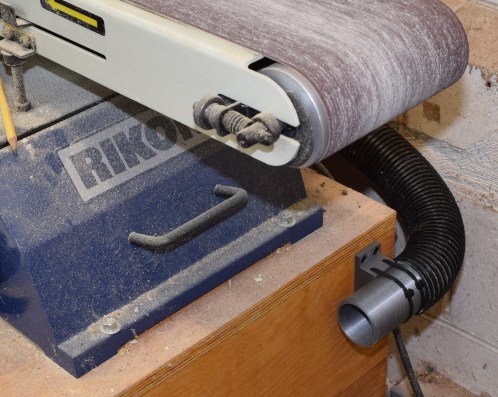
Similarly I went to the stand that has my disk/belt sander and attached hosing so I could get to it on the side of the machine.

DSC_1132

Now the vacuum built into the disk/belt sander can service both it and the spindle sander with just a quick re-plumb.  Cheers to less dust in my lungs!


Work Sharp Freehand Sharpening

I printed a freehand sharpening guide for my Ken Onion Work Sharp, and found it works a lot better than the guides that come with it for odd knife and handle shapes.  Honestly at this point, it is the only way I sharpen with this tool.

Don’t own a 3D printer, no problem.  Just cut a block of wood with the desired angles and sight down the edge of the wood.

Folding Tablesaw Extension

I like my table saw.  It has a much larger top than a contractor saw, but was more affordable than a full cabinet saw.  I will likely upgrade some day, but am fulfilled for now.  That doesn’t mean I can’t make it better.  A folding extension would really help with large and long pieces that want to fall off the back side of the cut.

I started without a few ideas of how best to build an extension, but not a fully fleshed out plan.  That can lead to trouble, but it worked out pretty well in my case.  I bolted on a wide board to the back to act as a good starting point.  I used some of the laminate covered plywood from my table saw fence to build two fins facing outward.  The idea is to use these as a hinge surfacesd.  I made sure the slick plastic was facing out on all sides.

Ideally the extension meets seamlessly with the end of your table.  In my case the the fence has bits that hang down below the surface and would interfere with an extension.  I dropped the extension surface slightly and had to live with a gap.  Small parts could fall through, but big and long cuts will droop enough to engage the new surface.

DSC_1105

From there I used more of the plywood to straddle the fins I had made earlier and drilled through everything with a 1/4″ bolt to act as a hinge.  Initially the outside corner of the fixed fins wouldn’t let the extension down all the way, but a small bit of rounding freed them.

The extension rotates freely with the interfaces being plastic on plastic.  I added a cleat underneath and another to the table saw.  No fancy mechanism, just a simple bit of cut 2×4.  Magnets in the brace keep it held against the tablesaw when not in use.  Everything feels pretty sturdy when in place.

Other than the compromises with respect to meeting the table saw surface it turned out well.  It doesn’t add too much size to the saw when folded up, and provides a decent extension.  I might want it bigger in the future, but I should be able to unscrew the top surface while leaving the hinge pieces in place.  I could install one much wider and longer not have it take up any more space.  I will have to try this out for a few weeks and decide.  There is enough plywood left over to make the extension either a lot wider, or longer.